





An Audacious Goal for a New Era
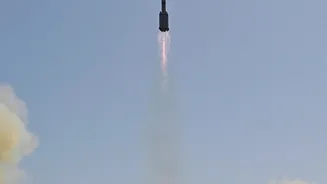
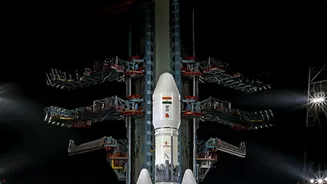
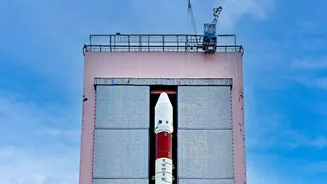
Following the historic success of its Vikram-1 rocket, which achieved orbit on its very first attempt in July 2026, Skyroot Aerospace has set its sights on a dramatic escalation of its operations. The company's founders have announced a target of achieving
the capacity to produce one rocket per month starting in 2027. While this production rate won't immediately translate to a monthly launch, the ambition itself is a powerful statement. It signals a shift from one-off test flights to a future of regular, commercial space access, a key milestone for India's burgeoning private space industry. The Vikram-1 is the company's workhorse, a launch vehicle designed specifically to cater to the booming small satellite market. By aiming for such a high operational tempo, Skyroot is positioning itself not just as a pioneer but as a reliable, high-frequency service provider in the competitive global launch market.
From Government Monopoly to Private Partnership
This moment would have been unthinkable just a decade ago. For decades, space was the exclusive domain of the Indian Space Research Organisation (ISRO). However, a landmark policy shift in 2020 opened the floodgates for private enterprise. The creation of the Indian National Space Promotion and Authorisation Centre (IN-SPACe) was the masterstroke, creating a single-window agency to nurture, regulate, and facilitate private space ventures. IN-SPACe acts as a bridge, giving startups like Skyroot access to ISRO's world-class testing facilities, technological expertise, and even its launchpads. This symbiotic model allows the private sector to innovate at speed without having to build every piece of infrastructure from scratch, while freeing ISRO to focus on more ambitious deep-space and scientific missions. The result has been an explosion of growth, with the number of Indian space startups soaring from just a handful to over 400 in a few short years.
A 'Cab Service' to the Cosmos
The core business model for Skyroot and its domestic rivals is to become the space equivalent of a cab service. For years, small satellite operators had to 'hitchhike', booking their payloads as secondary passengers on large rockets heading to a predetermined destination, much like taking a bus. This meant long waits and little control over the final orbit. Private launchers like Vikram-1 offer a dedicated ride. They cater to customers who need to get smaller payloads of up to 480 kilograms to very specific orbits on their own schedule. This agility is crucial for the deployment of satellite constellations for communications, Earth observation, and more. By making space access cheaper, faster, and more customer-focused, Indian companies are tapping into a massive global market that is currently constrained by a lack of launch supply.
The Billion-Dollar Race to the Stars
Skyroot's ambition is a clear indicator of the immense economic potential at stake. India's space economy, currently valued at around $8.4 billion, is projected to surge to over $40 billion by 2033. This rapid expansion is attracting significant investment, with hundreds of millions of dollars in venture capital flowing into the sector. The government is further fuelling this fire with favourable foreign direct investment policies and dedicated funds for space-tech. Skyroot, which became India's first space-tech unicorn, is a testament to this new reality. However, the path ahead is not without challenges. The company must prove it can reliably replicate its launch success, scale its manufacturing processes without compromising quality, and compete with established international players like SpaceX and Rocket Lab. Yet, the successful flight of Vikram-1 has already given it a crucial advantage: demonstrating reliability to customers whose expensive payloads cannot tolerate failure.