



Why Temperature Is Not Just a Number
In candle making, temperature is the invisible hand that dictates everything from appearance to performance. If you pour wax when it's too hot, you risk cosmetic flaws like sinkholes, where the wax contracts as it cools, leaving a cavity in the center.
Pouring too cool can cause 'wet spots', which are air gaps that form when the wax pulls away from the container, or 'frosting', a crystalline pattern common in natural waxes like soy. Beyond aesthetics, temperature fundamentally affects your candle's scent. Getting it right ensures the fragrance oil binds chemically with the wax, resulting in a strong, consistent 'scent throw' when the candle is lit. Rushing these steps or guessing the temperature is often the primary reason a homemade candle doesn't turn out as expected.
The Three Crucial Temperature Stages
Think of the process in three key thermal stages. First is melting the wax; most types should be heated gently in a double boiler to around 85°C (185°F). This ensures all crystals are fully melted for a smooth consistency. The second stage is adding fragrance. This is often where things go wrong. Add your fragrance oil when the wax is too hot, and the delicate scent notes can burn off and evaporate before the candle even sets. Add it when the wax is too cool, and the oil won't bind properly, leading to a weak scent or even oil seeping out of the finished candle. For most soy and paraffin waxes, the sweet spot to add fragrance is typically around 82-85°C (180-185°F). Finally, there's the pouring temperature, which is always lower than the fragrance temperature and varies significantly by wax type.
A Guide to Pouring Temperatures
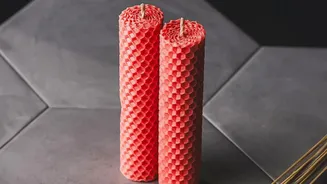
The ideal pouring temperature depends heavily on the type of wax you are using. These are general guidelines, and it's always best to check the manufacturer's specific recommendations, as blends can vary widely. Soy Wax: This popular natural wax is sensitive. For a smooth top and good glass adhesion, it's best to pour on the cooler side. Many container soy waxes perform best when poured between 52°C and 63°C (125°F to 145°F). Some brands can even be poured as low as 38°C (100°F). Pouring cooler within the recommended range helps minimize frosting. Paraffin Wax: This wax is more versatile. For container candles, a pouring temperature between 65°C and 77°C (150°F to 170°F) is common. Pillar candles, which are made in molds, often require a hotter pour, around 77°C to 82°C (170°F to 180°F), to capture detail and may need a second pour to fix sinkholes caused by shrinkage. Beeswax: Known for its natural honey scent and slow burn, beeswax has a higher melting point. It should generally be poured at a hotter temperature, typically around 71°C to 77°C (160°F to 170°F), to avoid rapid cooling issues.
Troubleshooting Common Temperature Mistakes
If your finished candles aren't quite right, temperature is the first place to look. Problem: Ugly sinkholes or cracks on the surface. Cause: The wax was likely poured too hot, and it cooled too quickly and unevenly. The bigger the temperature difference between your wax and the container, the more dramatic the shrinkage. Solution: Pour at a lower temperature. Also, try preheating your glass containers slightly with a heat gun or in a warm oven (to about 38°C or 100°F) to slow down the cooling process. Problem: The candle has 'wet spots' or doesn't stick to the glass. Cause: The wax cooled too fast and pulled away from the sides of the container. This is especially common in colder rooms. Solution: Ensure your jars are clean and warm before pouring. Let candles cool slowly, spaced apart, and away from drafts. Problem: The candle has a weak scent. Cause: You likely added the fragrance oil when the wax was either too hot (burning it off) or too cool (preventing it from binding). Solution: Use a thermometer and add your fragrance at the recommended 82-85°C (180-185°F) window, stirring gently but thoroughly for a full two minutes to ensure it fully incorporates.