




What Are Large Sky Surveys?
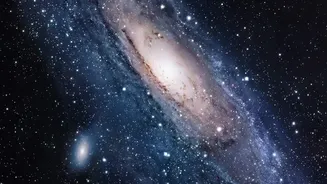
Think of astronomy and you might picture a lone scientist peering through a telescope at a single, specific star. That’s part of it, but another crucial approach is to map vast portions of the sky systematically. This is what an astronomical survey does.
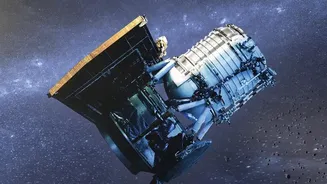
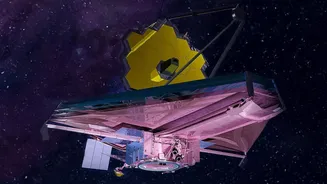
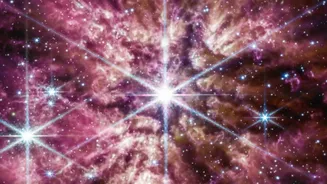
Instead of focusing on one target, surveys create enormous catalogs of celestial objects, recording their position, brightness, and other properties. These cosmic censuses are fundamental to modern astronomy. They provide the raw data needed for statistical studies, help astronomers spot transient events like supernovae, and identify interesting targets for more detailed follow-up observations with powerful telescopes like the James Webb Space Telescope. They can cover the whole sky or specific patches, and operate across different wavelengths of light, from radio waves to infrared.
Pioneers of Cosmic Mapping
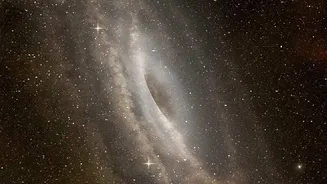
The tradition of cataloging the sky is as old as astronomy itself, from Charles Messier's 18th-century list of nebulae to the photographic plates of the 20th century. A major leap into the modern era came with projects like the Sloan Digital Sky Survey (SDSS). Starting in the 1990s, SDSS began creating the most detailed three-dimensional maps of the Universe ever made, transforming astronomy from a data-poor to a data-rich science. By capturing images and light signatures (spectra) from millions of galaxies and quasars, SDSS has been instrumental in understanding the large-scale structure of the cosmos, the history of our Milky Way, and the nature of dark energy. It set a new standard for collaborative, data-intensive astronomy.
A New Generation of Cosmic Canvases
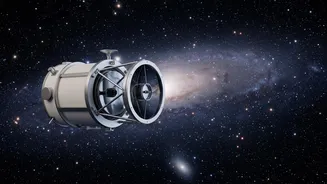
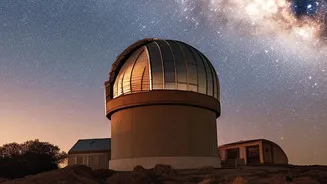
Today, we are in a golden age of sky surveys. In Chile, the Vera C. Rubin Observatory began its Legacy Survey of Space and Time (LSST) in 2025. This ground-based telescope will photograph the entire southern sky every few nights, creating an unprecedented movie of the cosmos and capturing countless transient events. In space, the European Space Agency’s Euclid telescope is mapping about a third of the sky. Its main goal is to understand the mysterious dark energy that is causing the universe's expansion to accelerate. Euclid does this by observing the shapes and distribution of billions of galaxies over cosmic time. These missions, along with others, are creating datasets of unimaginable scale, pushing the boundaries of what we know about the universe.
Enter the Nancy Grace Roman Telescope
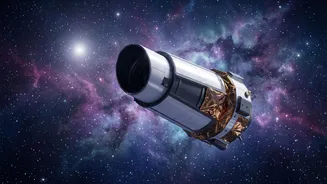
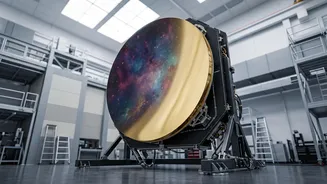
Launched on August 30, 2026, NASA's Nancy Grace Roman Space Telescope brings a unique and powerful set of capabilities to this cosmic quest. Named after NASA's first chief of astronomy, it has the same size 2.4-meter mirror as the Hubble Space Telescope, giving it incredibly sharp vision. Its key advantage, however, is its Wide Field Instrument, which provides a field of view 100 times larger than Hubble's. This allows Roman to survey large patches of the sky with Hubble-like clarity but thousands of times faster. Its primary goals are to hunt for exoplanets using a technique called gravitational microlensing and to probe the nature of dark energy through multiple methods, including observing distant supernovae and mapping how cosmic structures have grown. Roman's first images are anticipated in early 2027.
A Collaborative Universe
These powerful observatories are not competitors; they are collaborators. Each survey has different strengths. Euclid maps a vast area, but less deeply. Roman surveys a smaller area but with greater depth and precision, seeing fainter and more distant objects. The ground-based Rubin Observatory provides a constant stream of data on the changing sky in visible light, which complements the space-based infrared views of Roman and Euclid. For example, Euclid and Roman will study dark energy with complementary strategies, making their combined results more powerful than either could achieve alone. Roman can perform deep-dives on targets identified by Rubin, and together they will provide a more complete picture of everything from exoplanets to the fundamental nature of the cosmos.