




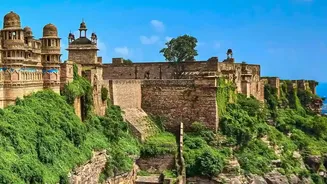
Chittorgarh Fort: The Citadel of Resilience
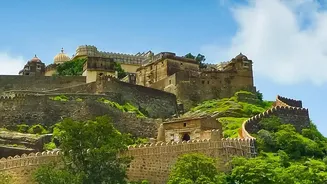
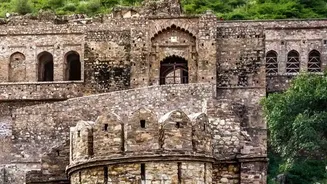
Sprawling across a hilltop in Rajasthan, Chittorgarh Fort is one of the largest in India and a testament to endurance. Its history is marked by legendary sieges, which it withstood for long periods thanks to its remarkable self-sufficiency. The fort famously
once held 84 water bodies, and today, 22 of them—a mix of ponds, wells, and stepwells (baolis)—still exist. These reservoirs could collectively store billions of litres of harvested rainwater, enough to sustain a massive army and population for years without outside access. Visitors enter through a series of seven massive stone gates, or 'pols', including the Ram Pol and Padan Pol. These gates were designed with sharp turns and pointed arches to thwart enemy elephants and slow down invading armies, showcasing a blend of formidable defence and sophisticated urban planning. Within its walls lie ruined palaces and numerous temples, each telling a story of the Mewar dynasty's pride and sacrifice.
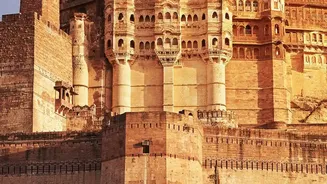
Mehrangarh Fort: A Palace in the Sky
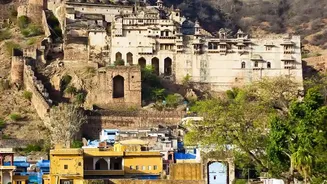
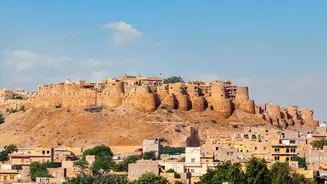
Rising 400 feet above the city of Jodhpur, Mehrangarh Fort appears to be carved directly from the rock it stands on. While its exterior is rugged and intimidating, the inner complex reveals a world of astonishing beauty. The fort contains some of the most exquisite palaces in Rajasthan, such as the Phool Mahal (Palace of Flowers), with its lavish gold filigree work, and the Moti Mahal (Pearl Palace), which served as the grand audience hall. Getting inside requires navigating seven gates, including the Jai Pol (Victory Gate), which commemorates military success. But perhaps its most vital feature is the centuries-old water harvesting system. The architects ingeniously used the natural slopes of the hill to channel rainwater into lakes like Ranisar and Padamsar at its base. From there, a system of Persian wheels and aqueducts lifted the water hundreds of feet up to tanks within the fort, ensuring the royal residence never ran dry in the arid climate.
Golconda Fort: Engineering and Acoustic Marvel
Located near Hyderabad, Golconda Fort was once the heart of a flourishing diamond trade, and its engineering brilliance is legendary. The fort is renowned for its incredible acoustic system; a handclap at the main entrance, the Fateh Darwaza, can be heard clearly at the Bala Hissar pavilion, nearly a kilometre away at the highest point of the fort. This served as an ingenious warning system against intruders. The fort’s water supply was equally advanced. An intricate system of clay pipes and Persian wheels brought water up from nearby lakes to the summit, feeding the palaces, gardens, and baths. This network of aqueducts and reservoirs demonstrates a sophisticated understanding of hydraulics that allowed a thriving community to exist atop a granite hill. The fort's gateways were studded with iron spikes to deter war elephants, blending practical defence with unparalleled engineering.
Amer Fort: Where Art and Strategy Meet
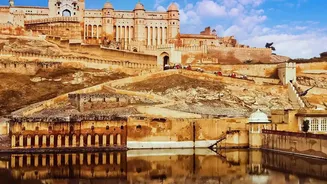
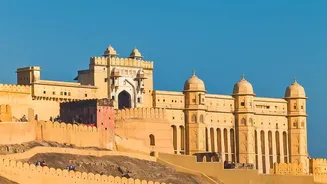
Reflected beautifully in Maota Lake, Amer Fort near Jaipur is a stunning fusion of Rajput and Mughal architectural styles. Inside its sand-coloured walls, visitors can wander through a labyrinth of courtyards, halls, and private chambers. The Sheesh Mahal (Mirror Palace) is particularly famous, with its walls and ceilings inlaid with thousands of tiny mirrors that glitter like stars with a single candle flame. The fort's water system was a two-part marvel. Rainwater was harvested directly within the palace complex in a series of underground tanks. Additionally, water was lifted from Maota Lake below using a complex relay of animal-powered pulley systems, known as 'rehant', through a series of structures all the way up to the fort. This system ensured that the lush gardens and royal quarters had a constant supply of water, turning a dry hilltop into an opulent oasis.