


The Foundation of Flavour
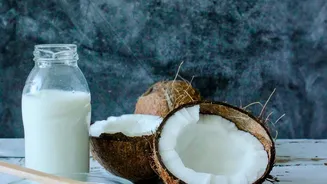
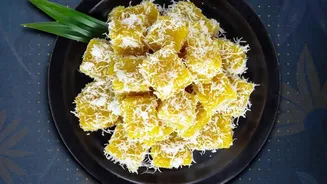
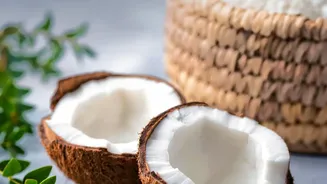
To understand Malaysian kuih is to understand its core components. Coconut, used in many forms from freshly grated flesh to rich, creamy milk (santan), provides a luscious, fatty base that balances sweetness. Palm sugar, or gula melaka, is a dark, unrefined
sugar harvested from the sap of coconut palm flower buds. Unlike white sugar, it offers a complex, deep caramel flavor with smoky undertones that is central to many desserts. Finally, rice—most often glutinous rice or rice flour—provides the structure. It can be steamed whole for a chewy bite, or ground into flour to create soft, bouncy, or jelly-like textures. Together, these three ingredients create a symphony of taste and texture that is uniquely Malaysian.
Onde-Onde: The Molten Sugar Bomb
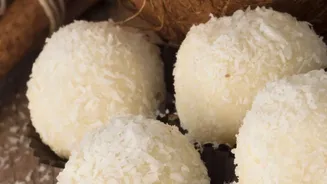
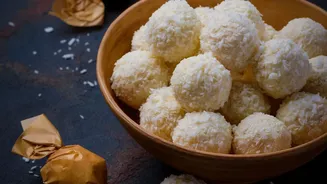
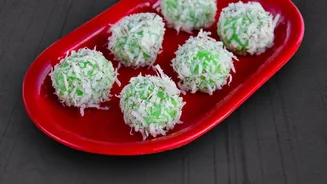
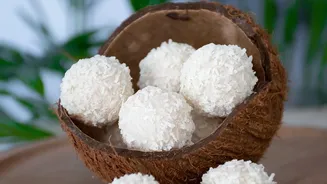
Perhaps one of the most playful and beloved examples of kuih is the onde-onde. These are small, chewy balls made from glutinous rice flour, often infused with the fragrant juice of pandan leaves, which gives them their signature green hue and a subtle, vanilla-like aroma. The real magic, however, lies within. Each ball is filled with a small nugget of gula melaka. When the onde-onde are boiled, the dough cooks and the palm sugar inside melts into a liquid syrup. After being rolled in a coating of freshly grated coconut, a bite into a warm onde-onde results in a delightful burst of sweet, molten caramel. It's a perfect package of chewy, sweet, and creamy.
Kuih Seri Muka: The Two-Faced Delight
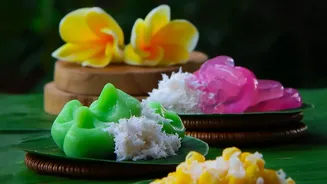
Kuih Seri Muka, which translates to "pretty face cake," is a two-layered dessert that showcases both the texture of rice and the richness of coconut. The bottom layer consists of glutinous rice steamed with coconut milk until it is cooked through and compacted into a dense, chewy base. The top layer is a smooth, wobbly custard made from coconut milk, eggs, sugar, and pandan juice. The result is a beautiful contrast in textures: a firm, slightly salty rice foundation and a sweet, fragrant, and silky-smooth custard top. Some variations use palm sugar in the custard for a brown top, while others use blue pea flowers to tint the rice layer a stunning natural blue.
Kuih Lapis: The Rainbow You Can Eat
Instantly recognizable for its colourful stripes, Kuih Lapis means "layered cake". This steamed cake is a labour of love, as each thin layer is poured and steamed individually before the next is added. The batter is a simple mixture of rice flour, tapioca flour, sugar, and coconut milk. Different portions of the batter are coloured, traditionally with pink or red hues, creating the cake's iconic appearance. The texture is firm, bouncy, and slightly sticky. Part of the joy of eating kuih lapis, especially for children, is peeling off and eating each soft, coconutty layer one by one.
Pulut Inti: The Sweet Rice Parcel
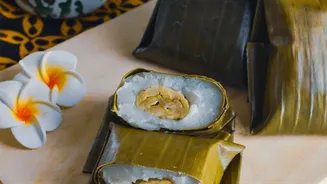
Pulut Inti is a humble yet satisfying snack often wrapped in a pyramid shape using banana leaves. The base is steamed glutinous rice, made rich and fragrant with coconut milk. The "inti" or filling, which sits on top, is a sweet and moist mixture of freshly grated coconut cooked down with gula melaka until it becomes a thick, caramelised topping. The combination of the sticky, savoury-leaning rice and the intensely sweet coconut topping is a classic pairing. The banana leaf wrapper not only serves as a natural packaging but also imparts a subtle fragrance during the steaming process, adding another layer of flavour to this traditional treat.