





A Rollercoaster of Readings
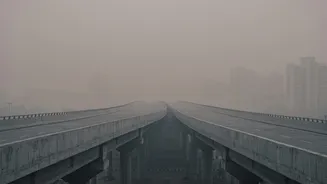
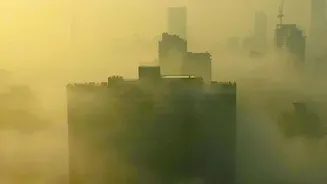
The first week of October 2026 has seen Delhi's Air Quality Index (AQI) bounce between the 'moderate' and 'poor' categories, sometimes within the same day across different localities. On October 7, the city-wide average AQI was a 'moderate' 136, a noticeable
improvement from the days prior which saw figures hovering in the high 170s and 180s. This fluctuation is a departure from the steady, sharp decline often seen as the monsoon withdraws. While the overall average for the first week of October was 171, making it the second most polluted in six years, the day-to-day variability has been the dominant story. Some areas like Dwarka and Mundka have consistently recorded 'poor' air, while others have enjoyed clearer skies, showcasing the hyper-localised nature of pollution.
The Wind as a Temporary Saviour
The primary reason for this temporary relief is meteorological. Favourable wind patterns have played a crucial role in dispersing pollutants that would otherwise accumulate. Intermittent spells of winds from the northwest, sometimes reaching speeds of up to 22 kmph, have helped to flush out locally generated pollutants. However, forecasts from the India Meteorological Department (IMD) and other agencies warn this is a fleeting phenomenon. As winter approaches, wind speeds are expected to drop significantly. This calming of the atmosphere creates a lid over the city, trapping pollutants close to the ground and leading to the sharp spikes in AQI that define Delhi's winter. The current variability, therefore, is a direct result of atmospheric conditions that are strong enough to disperse some pollution, but not consistent enough to keep the air clean.
The Slow Burn from the North
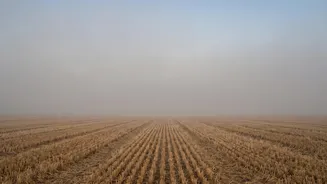
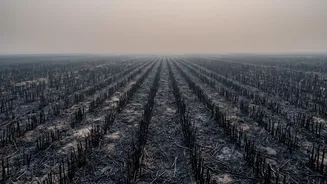
The other major factor is the staggered start to large-scale stubble burning in neighbouring states. While farm fires have begun in Punjab and Haryana, the numbers recorded in early October are lower than in previous peak years for the same period. According to data from the Indian Agricultural Research Institute (IARI), Punjab recorded 88 stubble burning incidents between September 15 and October 6, the lowest figure for this period in seven years. This doesn't mean the threat has passed. The main harvesting season is still ramping up, and the bulk of stubble burning typically occurs later in October and into November. The current favourable winds are also carrying some of the smoke away from Delhi for now. However, once the wind direction shifts and speeds drop, the full impact of this year's farm fires will be felt across the Indo-Gangetic plain.
Pre-emptive Action and New Rules
Authorities are not standing by idly. The Commission for Air Quality Management (CAQM) has already rolled out a revised and stricter Graded Response Action Plan (GRAP). This year, several key restrictions have been brought forward to Stage I of the plan, which is triggered at a 'poor' AQI level. These include curbs on certain inter-state buses that are not BS-VI compliant and restrictions on the use of diesel generator sets. Furthermore, the 'No PUCC, No Fuel' rule is being enforced more stringently to ensure vehicles have valid pollution certificates. Flying squads have also been deployed in 34 districts across Punjab and Haryana to monitor and report stubble burning incidents on the ground, coordinating directly with the CAQM. These measures aim to curb pollution at its source before it spirals out of control, though their ultimate effectiveness depends on strict enforcement and public compliance.