





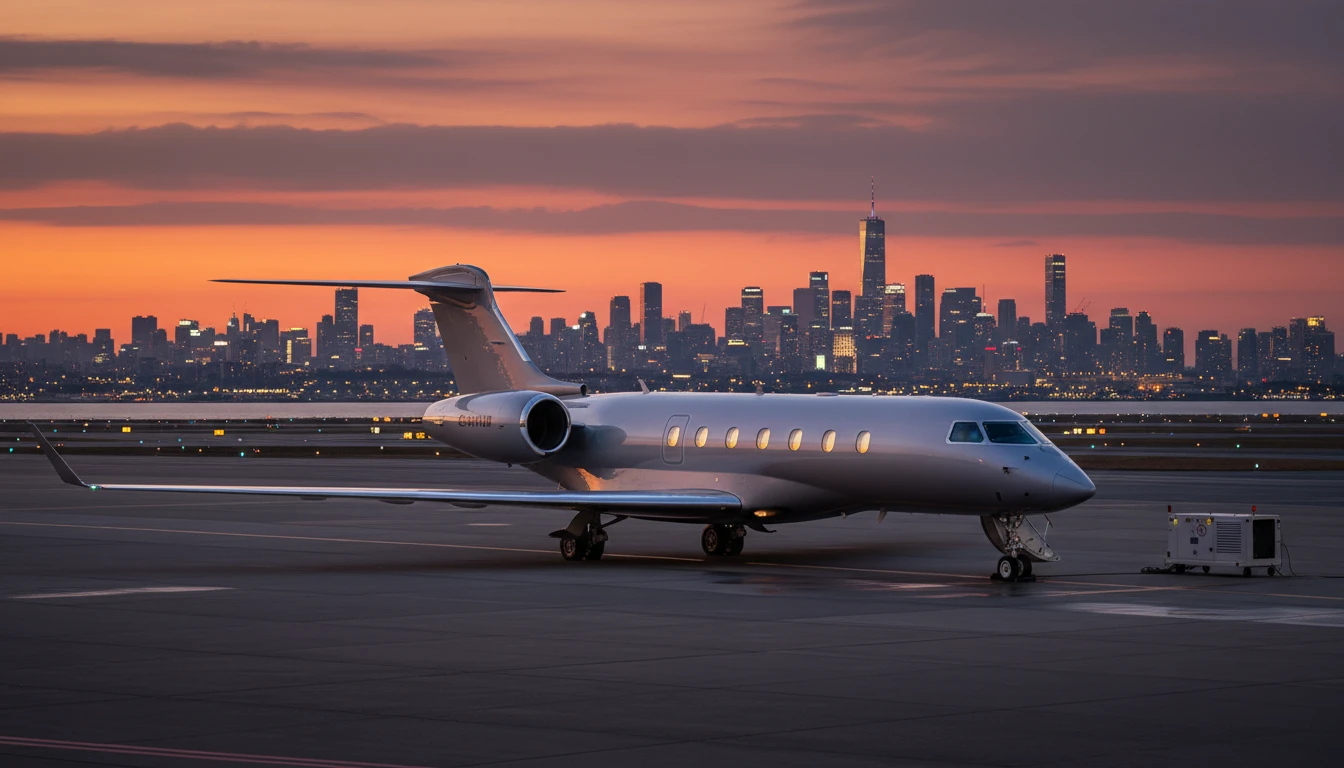



The New High-Flyers of Tech
The private aviation landscape in 2026 is being dramatically altered by a massive influx of new money, primarily from two sources: artificial intelligence and aerospace. Major liquidity events, like SpaceX's landmark IPO, have created a fresh wave of billionaires
and multi-millionaires among founders, early employees, and venture capitalists. This new wealth is flowing directly into luxury assets, with private jets being a top-tier acquisition. Aviation law firms are reporting significant spikes in business, with one attorney seeing a 25% jump in aircraft purchase agreements in early 2026 alone. Unlike the traditional, older demographic of jet owners, this new cohort is younger, often comprised of first-generation, self-made individuals. Data from fractional providers like Flexjet confirms a notable shift toward a younger client base, changing the very profile of who owns and uses private jets.
Skipping the Queue for Larger Jets
Historically, a new entrant to private aviation might start with chartering flights or buying a small, pre-owned aircraft. That pattern is rapidly disappearing. The new tech buyers are bypassing the traditional entry points and going straight for larger, more capable aircraft. Industry experts have noted a trend where first-time buyers are acquiring super-midsize jets like the Bombardier Challenger 350 or heavy jets like the Gulfstream G450, which cost tens of millions of dollars. This leapfrogging is straining the market, with some analysts warning of a potential jet shortage as demand outpaces the long production timelines of manufacturers. The demand is reflected in flight activity; in the first five months of 2026, flights by private owners climbed 13.4% compared to the previous year, with shared-ownership programs also seeing an 11.8% rise.
A Cabin Fit for a Coder
The demands of this new clientele extend beyond just speed and range. While ultra-long-range jets like the Gulfstream G700 and Bombardier Global 8000 are popular for their ability to connect global business hubs non-stop, the interior features are just as crucial. These buyers view their aircraft as a productivity tool—an office in the sky. As a result, there is a premium on best-in-class, high-speed satellite internet for seamless connectivity, allowing teams to work and code collaboratively while in transit. Custom interiors are being designed less like luxury lounges and more like flying boardrooms or engineering labs. This tech-centric focus is a distinct departure from the priorities of the past.
The Push for Greener Skies
While it may seem counterintuitive, this new generation of flyers is also bringing a heightened awareness of environmental impact to the notoriously carbon-intensive private jet industry. There is a growing interest in and demand for Sustainable Aviation Fuel (SAF), a renewable fuel that can reduce CO2 emissions by up to 80% over its lifecycle. While SAF is still more expensive and less available than traditional jet fuel, operators are increasingly offering it to appeal to this environmentally conscious clientele. Major manufacturers are also incorporating aerodynamic improvements and lighter composite materials into new models to improve fuel efficiency, responding to a market that is beginning to factor sustainability into its purchasing decisions.
Industry Scrambles to Keep Pace
The surge in demand is forcing the entire private aviation ecosystem to adapt. Manufacturers like Gulfstream and Bombardier are dealing with extensive order backlogs. Fractional ownership and charter companies such as Flexjet and NetJets are aggressively expanding their fleets to meet the demand, placing multi-billion dollar orders for new aircraft. This boom is not just confined to traditional tech hubs; areas near SpaceX's operations in Texas have seen business jet traffic spike dramatically. The industry is in a race to not only build jets faster but also to tailor its marketing and services to a new generation that values technology, flexibility, and, increasingly, sustainability in their travel choices.