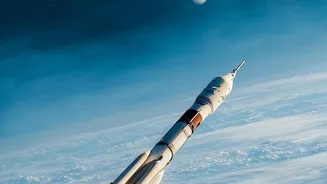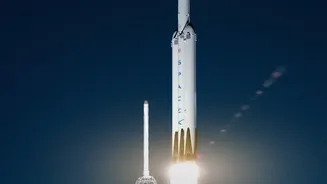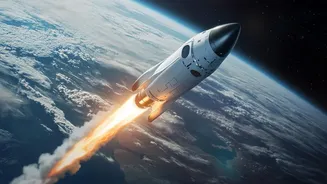






A Landmark Day in Spaceflight
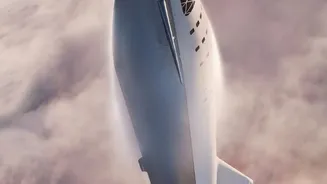
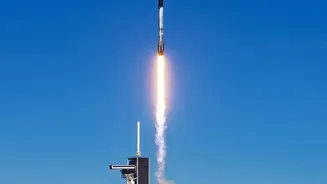
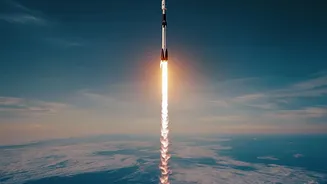
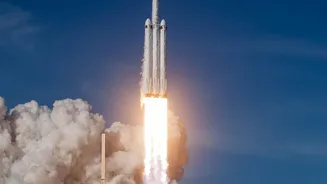
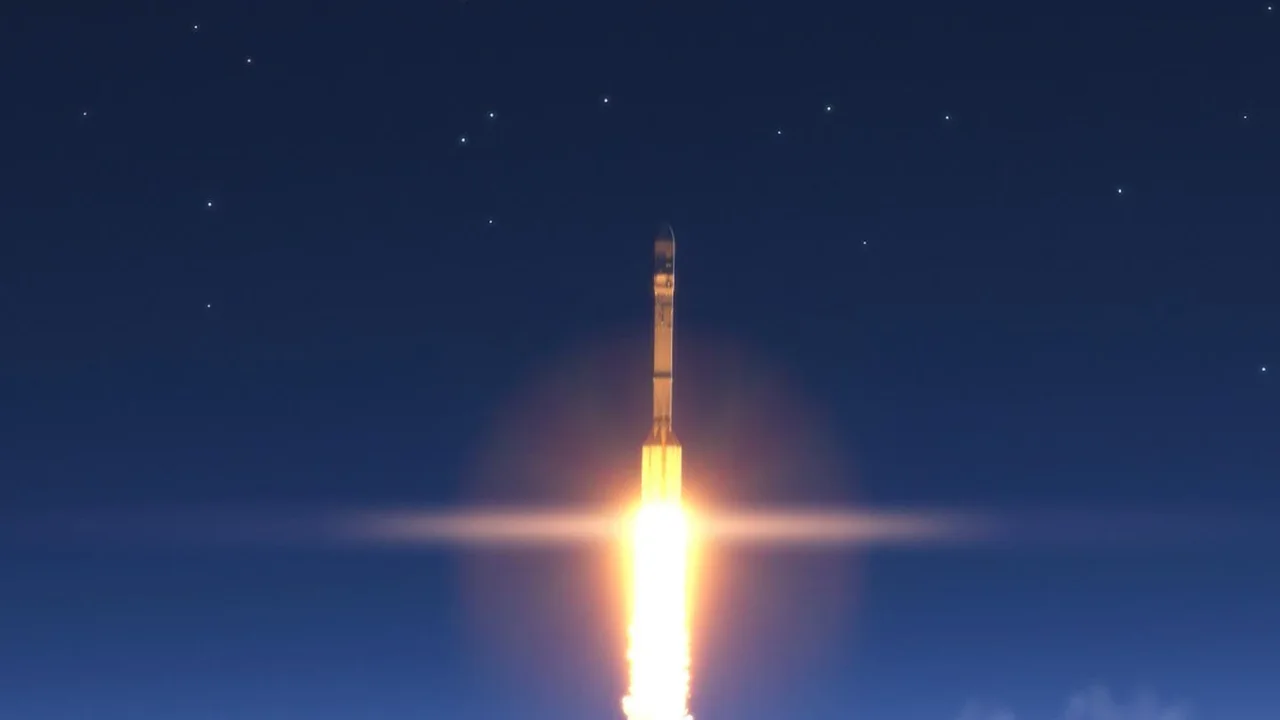
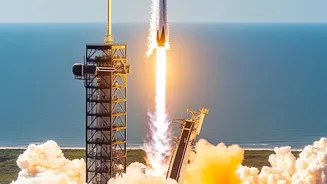
On its 14th test flight, the towering Starship vehicle lifted off from Starbase, Texas, and achieved what no prototype before it could: a stable orbit around Earth. The mission, while not without its own tense moments including the early shutdown of an engine,
marked a resounding success for the ambitious program. After reaching its intended altitude, the vehicle successfully deployed 26 next-generation Starlink V3 satellites, making this not just a test but an operational mission. The flight was originally planned to last nearly ten hours, but a decision was made out of caution to shorten the mission, concluding with a controlled splashdown in the Pacific Ocean after about three hours. While the Super Heavy booster also completed its portion of the flight with a splashdown in the Gulf of Mexico, the day's primary victory was clear: Starship is now an orbital-class vehicle.
More Than Just Reaching Orbit
Getting to orbit is a rite of passage for any serious launch system, but for Starship, it’s merely a checkpoint on a much longer journey. The mission’s success validates the fundamental design of the world's most powerful launch vehicle, proving it can withstand the ascent and operate in space. This flight also demonstrated Starship's capability as a payload delivery system, using its unique 'Pez dispenser' mechanism to release the Starlink satellites. This is crucial for SpaceX's business model, as Starship is designed to deploy the company's satellite constellations far more efficiently than the workhorse Falcon 9 rocket. One Starship launch can carry the bandwidth equivalent of roughly 20 Falcon 9 flights, a staggering increase in capacity that will be essential for building out future space-based networks.
The Holy Grail: Full Reusability
The ultimate goal for Starship has never been just to reach space, but to do so in a way that radically transforms the economics of getting there. The program is built around the concept of full and rapid reusability. This means not just recovering the first-stage booster, which SpaceX mastered with its Falcon 9, but also recovering and reusing the upper stage—the Starship spacecraft itself. During operational flights, the plan is to have both the Super Heavy booster and the Starship vehicle return to the launch pad to be caught by giant mechanical arms on the launch tower. This 'catch' method is designed for an incredibly fast turnaround, enabling a launch cadence that sounds like science fiction. This system is what separates Starship from every rocket that came before it, promising to lower the cost of accessing space by orders of magnitude.
The Road to the Moon and Mars
With this successful orbital flight, the path forward becomes clearer, though still challenging. The next major hurdle is perfecting the landing and recovery of both stages. SpaceX has already successfully caught the Super Heavy booster on previous flights, but attempting to catch the Starship upper stage is the next great challenge. Beyond recovery, SpaceX must demonstrate on-orbit propellant transfer, where one Starship refuels another in space. This technology is absolutely critical for missions beyond low-Earth orbit, such as trips to the Moon and Mars, as it allows the spacecraft to depart for its destination with full tanks. NASA is watching closely, as it has selected Starship as a key component of its Artemis program to return humans to the lunar surface. A version of Starship is slated to be the lander that will carry astronauts to the Moon's south pole, potentially as early as 2028.