







Kerala is aiming for the skies with a new plan for India's first airline from the cooperative sector. The government has given its nod, sparking excitement, but a closer look reveals that this ambitious project has a long journey ahead.
What is the Big Idea?
The Kerala government
has approved a proposal to launch a new airline, tentatively named 'Co-Keralam' or 'Co-Kerala'. Announced by Chief Minister V.D. Satheesan, the venture aims to be India's first airline to operate under a cooperative model. The project will be managed by the newly formed Kerala Civil Aviation Development Cooperative Society. The primary goal is to enhance regional air connectivity, linking cities within Kerala and connecting them to major hubs in neighbouring states like Bengaluru, Chennai, and Mangaluru. The announcement has been positioned as a major step forward for Kerala's powerful cooperative movement, extending its reach from traditional sectors like banking into the capital-intensive aviation industry.
The 'Co-operative' Funding Model
Unlike a typical airline funded by a large corporation or the government, this project plans to raise capital from within the cooperative ecosystem itself. The proposed financial structure involves around 200 cooperative societies investing ₹2 crore each, aiming to generate a total corpus of ₹400 crore. This model is inspired by the successful public-private partnership of Cochin International Airport (CIAL), which was also built with contributions from a broad base of investors. The key selling point is that this structure will not place any financial burden on the state government's budget. The Chief Minister will serve as the company's Chairman, with the State Cooperative Minister as Vice-Chairman, ensuring government oversight.
Who Is in the Cockpit?
The initiative is being spearheaded by C.N. Vijayakrishnan, the well-regarded Chairman of the MVR Cancer Centre and Research Institute. The Chief Minister has highlighted that the team responsible for the success of the MVR Cancer Centre and the Calicut City Service Cooperative Society will be instrumental in getting the airline off the ground. This leadership is intended to bring a track record of successful project execution from the social and cooperative sectors to the complex world of commercial aviation.
The Flight Plan: What We Know
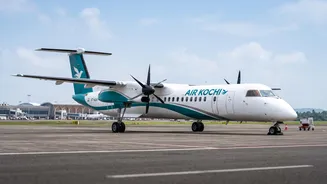
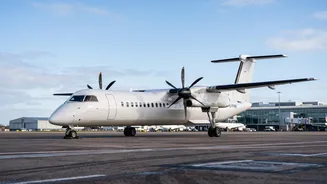
The initial proposal is modest and focused on regional connectivity. The plan is to start operations with two leased 72nd seater aircraft, based out of Kochi. The proposed network would link Kochi with other airports in Kerala like Kozhikode and Kannur, as well as nearby cities including Bengaluru, Chennai, Coimbatore, Madurai, and Mangaluru. To make travel more accessible, proposed ticket fares are expected to range between ₹3,500 and ₹7,000. There's also a plan to offer discounted fares for seats that remain unsold closer to the departure time, a move aimed at maximizing occupancy and offering value to last minute travellers.
The 'Pending' Part: Major Questions Remain
Despite the optimistic announcement, the project is still very much on the drawing board. The government's 'approval' is a green light to proceed with planning, not a final clearance to fly. The airline must still navigate the rigorous and lengthy process of securing an Air Operator's Certificate (AOC) from the Directorate General of Civil Aviation (DGCA). This involves multiple stages, including detailed inspections, acceptance flights, and proving flights on intended routes. Furthermore, specific agreements for leasing aircraft, finalising flight schedules, and getting slots at busy airports are all critical steps that are yet to be taken. While the ambition is clear, the operational, financial, and regulatory nuts and bolts are still missing.