





The Problem: Mumbai's Sky Glow
Mumbai is one of the most light-polluted cities in India. This immense 'sky glow'—a dome of bright light hovering over the metropolitan area—is caused by streetlights, billboards, office buildings, and residential lights. This artificial brightness scatters
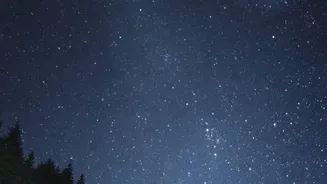
in the atmosphere, washing out the faint light from distant stars and galaxies. For city dwellers, this means the universe is reduced to only the Moon, planets, and a handful of the brightest stars. The majestic sight of the Milky Way, a band of thousands of stars that our ancestors saw nightly, is completely invisible from within the city limits. Studies show that radiance levels over Mumbai have been steadily increasing, pushing the boundaries of light pollution even into surrounding areas like Sanjay Gandhi National Park.
The Solution: Journey to a Dark Sky
To truly experience the night sky, you need to travel away from the city's luminous haze. Astronomers measure sky darkness using the Bortle Scale, where Class 9 is an inner-city sky and Class 1 is a pristine, dark wilderness sky. Mumbai registers as a Bortle Class 8-9, while the goal for good stargazing is to find a location that is Class 4 or lower. Fortunately, the Sahyadri mountain range acts as a natural barrier, blocking much of the city's glow and creating pockets of darkness ideal for astronomy. A drive of just 100-150 kilometres can be the difference between seeing a dozen stars and seeing thousands.
Top Spot: Bhandardara
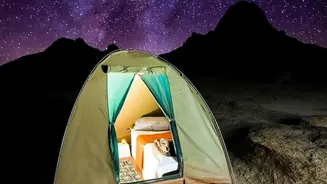
Roughly a 3-4 hour drive (about 165 km) from Mumbai, Bhandardara is a premier destination for amateur astronomers. Its high altitude and significant distance from urban centers result in exceptionally dark skies, often ranking as Bortle Class 3-4. On clear, moonless nights, the Milky Way is not just visible but appears with discernible structure. The area around Arthur Lake and the Wilson Dam offers wide, open horizons. Many local operators and Mumbai-based astronomy groups like Stargazing Mumbai and Horizon Astronomical Society host overnight camping and stargazing events here, often providing high-powered telescopes and expert guidance.
Accessible Escape: Naneghat and Dehene
For those seeking a quicker getaway, Naneghat and the nearby village of Dehene are excellent choices, located just a couple of hours' drive from Mumbai. Situated in the foothills of the Sahyadris, these spots offer a significant improvement in sky quality. Dehene, in particular, is a popular site for 'Starparties' hosted by astronomy clubs, providing wide-open fields perfect for setting up telescopes and cameras for astrophotography. Mahuli, near Asangaon, is another accessible location praised for its dark skies and open flatlands, making it a favourite for both beginners and seasoned stargazers.
Remote Gem: Jawhar
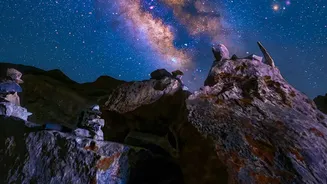
Located about 130 km from Mumbai, the tribal town of Jawhar is another haven for dark skies. Described as Mumbai's "dark sky escape," it offers Bortle Class 4 skies, which is a massive leap from the city's Class 9. The post-monsoon months, from November to May, are considered the best time to visit, as the air is dry and transparent, offering crisp views of celestial objects. The hills of the Sahyadris surrounding Jawhar provide an excellent shield from distant light pollution, making it a go-to spot for the city's amateur astronomy community to get their first genuine glimpse of the Milky Way.
Tips for Your Stargazing Trip
To make the most of your escape from the city lights, a little preparation goes a long way. First, check the lunar calendar and plan your trip around a new moon, as a bright moon can wash out stars just like city lights. Allow your eyes at least 20-30 minutes to fully adapt to the darkness; avoid looking at your phone screen during this time. If you need a light, use a torch with a red filter, as red light has the least impact on your night vision. Finally, download a stargazing app like SkyView or Star Walk before you go. These apps use your phone's GPS to create a real-time map of the sky, helping you identify constellations, planets, and even satellites passing overhead.