





What is SMOPS-2026?
The International Conference on Spacecraft Mission Operations (SMOPS) is a key event where global space agencies, scientists, and industry leaders gather to discuss the future of managing missions in orbit. The 2026 conference, held in Bengaluru and jointly
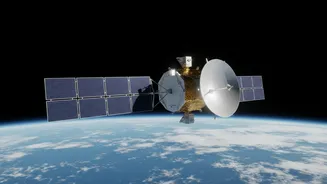
organised by the Indian Space Research Organisation (ISRO), is buzzing with one central theme: the shift towards smarter, more autonomous operations. Far from a theoretical discussion, ISRO Chairman V. Narayanan noted that AI and machine learning have moved from being abstract concepts to an urgent necessity for modern space exploration. The focus is on tackling the growing complexity of space, from managing huge satellite constellations to navigating an increasingly crowded orbital environment.
The Silent Brain in the Sky
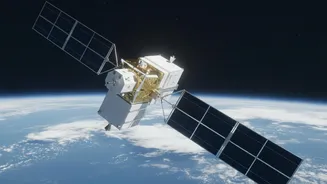
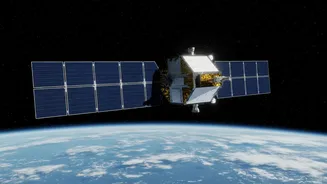
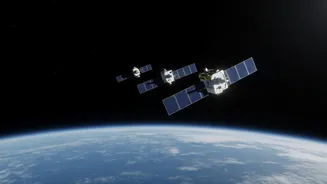
The 'routine decisions' in the headline refer to the relentless, 24/7 job of keeping satellites safe, functional, and efficient—a task becoming too large for humans alone. As constellations grow from hundreds to thousands of satellites, the amount of data on their health, position, and environment is overwhelming. AI is being deployed as a 'force multiplier' for ground crews. Instead of human operators manually checking telemetry data from every single satellite, AI systems monitor the entire fleet simultaneously, flagging subtle anomalies that could predict future failures long before they become critical. This is a move from passive monitoring to predictive, behavioural analysis, where the system learns what 'normal' looks like and alerts operators only when something deviates.
Solving Orbital Traffic Jams
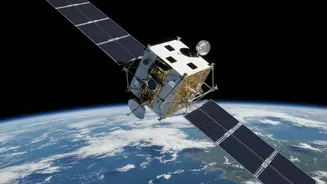
One of the most critical tasks being handed over to AI is collision avoidance. Earth's orbit is dangerously congested with over 11,000 active satellites and millions of pieces of space debris. The risk of a catastrophic collision is a daily concern. Traditionally, avoiding a potential collision is a labour-intensive process involving ground-based tracking and manual decision-making. Now, agencies like the European Space Agency (ESA) and private companies are developing automated systems. These platforms use AI to assess collision risks in real-time, decide if an avoidance manoeuvre is necessary, and even autonomously issue the commands for a satellite to move out of harm's way. This cuts down response times from hours to minutes, a crucial advantage when objects are hurtling towards each other at thousands of kilometres per hour.
More Than Just Avoiding Crashes
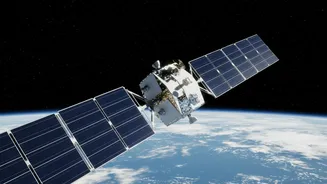
AI's role extends far beyond just playing orbital traffic cop. It's about total mission optimisation. AI algorithms can manage a satellite's power consumption, optimise fuel use to extend mission lifespan, and manage complex communication links between satellites and ground stations. For Earth observation satellites, AI can optimise imaging schedules based on real-time factors like cloud cover and client priorities. Instead of a human operator making these complex, multi-variable decisions, the AI can process all the data and find the most efficient solution instantly. This allows satellite operators to maximise the value and efficiency of their multi-million dollar assets in orbit.
Why This Matters For India
For India, embracing AI in space is a strategic imperative. ISRO is already using AI in its missions, from the Chandrayaan-3 landing to processing vast amounts of satellite data for weather and disaster prediction. With ambitious plans for the Gaganyaan human spaceflight program and the development of a new fleet of AI-powered surveillance satellites, automating operations is essential. Events like SMOPS-2026, held in Bengaluru, cement India's position as a hub for this next-generation space technology. By developing and deploying these systems, ISRO not only ensures the safety and success of its own missions but also builds capabilities for the new space economy, offering smarter, more sustainable mission management to the world.