




A New Sentinel in the Sky
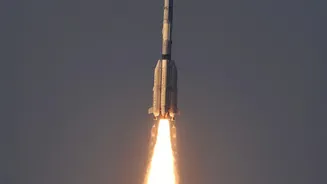
The star of the recent mission is the Earth Observation Satellite, EOS-05. Weighing in at 2,367 kg, it is the heaviest satellite of its kind ever to be launched by a Geosynchronous Satellite Launch Vehicle (GSLV). The satellite was successfully placed
into a sub-geosynchronous transfer orbit approximately 18-19 minutes after a pre-dawn liftoff from the Satish Dhawan Space Centre in Sriharikota. Dubbed an 'eye in the sky', EOS-05 is designed to operate from a geosynchronous orbit at an altitude of about 36,000 kilometres. At this height, its orbital period will match the Earth's rotation, allowing it to seemingly hover over a fixed point on the globe. This unique vantage point enables it to provide near real-time imaging of the Indian subcontinent, a significant upgrade from satellites in lower orbits.
The Powerhouse Rocket
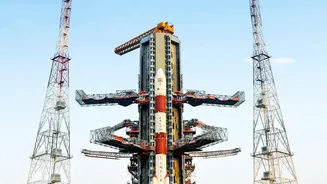
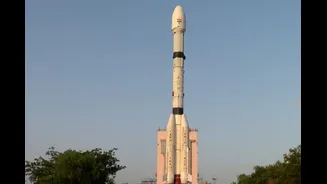
Lifting such a heavy payload to a high orbit required the power of ISRO's GSLV, specifically the GSLV-F17 rocket. This 51.7-metre tall, three-stage vehicle has steadily evolved. The first GSLV mission carried a payload of just 1,536 kg; today, thanks to continuous improvements in its propulsion systems and structural optimization, it can launch significantly heavier satellites like EOS-05. The success of this launch is particularly sweet for ISRO, as the GSLV-F17/EOS-05 mission effectively replaces the unsuccessful GSLV-F-10/EOS-03 mission from 2021, which failed due to an anomaly in its cryogenic upper stage. This successful flight demonstrates the robustness and reliability of ISRO's launch vehicle technology, a cornerstone of India's self-reliance in space. While this launch set a record for the GSLV, ISRO's even more powerful LVM3 rocket (formerly GSLV Mk III) has launched heavier commercial payloads to low Earth orbit, showcasing India's versatile launch capabilities.
Real-World Impact for India
So, what does a state-of-the-art satellite like EOS-05 do for the country? Its applications are vast and vital. As an advanced geo-imaging satellite, it will provide high-resolution pictures of the nation, helping with everything from agriculture and disaster management to urban planning and monitoring natural resources. ISRO's earth observation satellites already provide critical data for weather forecasting, forestry, and water management. EOS-05 will significantly enhance these services by providing continuous, real-time monitoring. In the event of natural disasters like cyclones or floods, it can offer invaluable, up-to-date imagery to aid rescue and relief efforts. For agriculture, it can monitor crop health and soil conditions on a large scale. Furthermore, its capabilities are crucial for national security, providing important strategic data from its fixed position high above.
What This Means for ISRO's Future
This successful launch is more than just a single mission; it's a critical building block for ISRO's ambitious future. Mastering the launch of heavy satellites to high orbits is essential for upcoming projects, including advanced communication satellites and deep space missions. It boosts confidence in the systems that will be crucial for the Gaganyaan programme, which aims to send Indian astronauts into space. Looking ahead, ISRO is planning a series of complex missions, including a lunar sample return mission (Chandrayaan-4) and collaborative projects like the NISAR satellite with NASA, which will be the world's most expensive Earth-imaging satellite. Each successful launch, especially a challenging one like this, validates ISRO’s growing expertise and solidifies India’s position as a leading space power capable of executing complex and strategically important missions.