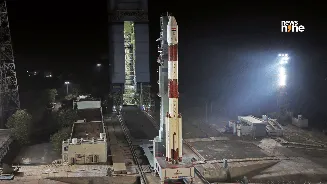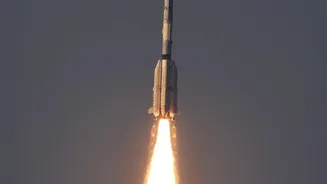








The Indian Space Research Organisation (ISRO) is set to launch the GSLV-F18 mission, carrying the NVS-03 satellite. This is a crucial flight aimed at restoring and enhancing India's own navigation system, known as NavIC.
A Crucial Mission for Indian Navigation
The upcoming launch from the Satish
Dhawan Space Centre in Sriharikota is more than just another rocket launch; it's a pivotal moment for India's strategic autonomy. The main goal of the GSLV-F18 mission is to place the NVS-03 satellite into a Geosynchronous Transfer Orbit (GTO). This satellite is the third in a new generation designed to bolster the Navigation with Indian Constellation (NavIC) system. NavIC is India's answer to the American GPS, providing vital positioning, navigation, and timing services. In recent times, the NavIC constellation has been operating below the minimum number of satellites required for full services, following the retirement of older satellites and a setback with the previous NVS-02 mission. The successful deployment of NVS-03 is therefore essential to restore full operational capability.
The Satellite: NVS-03
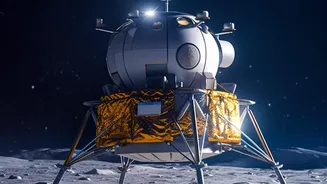
The NVS-03 is a next-generation navigation satellite weighing approximately 2,250 kg. It is part of a planned series of five new satellites to ensure the continuity and enhancement of NavIC services. A key upgrade in the NVS series, including NVS-03, is the introduction of a new L1 frequency band for civilian signals. This is significant because it will widen the compatibility of NavIC with common consumer electronic devices, potentially making 'India's GPS' a household feature. The satellite is also equipped with an indigenously developed rubidium atomic clock, a critical component for providing precise location data. These atomic clocks are the heart of any navigation satellite, and developing them in-house is a major step towards self-reliance.
Why NavIC is a Strategic Asset
The development of NavIC was driven by a need for strategic independence. Relying on foreign navigation systems, like the US-owned GPS, presents a vulnerability, especially during times of conflict when access could be restricted. By having its own regional navigation system, India ensures that its defence forces have guaranteed access to crucial positioning data for military operations, from troop movements to precision-guided munitions. Beyond defence, NavIC has a vast range of civilian applications. It enhances safety and efficiency in transportation and logistics, aids in disaster management by providing early warnings and assisting rescue operations, and supports agriculture and resource mapping. The system is designed to provide coverage over India and a region extending about 1,500 kilometres beyond its borders, with a stated accuracy of better than 20 metres for the public service.
The Journey to Orbit
The GSLV rocket will not place NVS_03 directly into its final orbit. Instead, it will deliver the satellite to a Geosynchronous Transfer Orbit (GTO). A GTO is a highly elliptical 'parking' orbit, with its lowest point (perigee) just a few hundred kilometres above Earth and its highest point (apogee) at around 37,000 km, near the final operational altitude. Once the GSLV has done its job and separated, the NVS_03 satellite will use its own onboard propulsion system to perform a series of engine firings. These manoeuvres will gradually raise its perigee and circularise its path, moving it into its final geosynchronous orbit, where it will appear to stay over a fixed longitude of the Earth.
Overcoming Past Hurdles
This mission carries high stakes, particularly after the NVS_02 satellite failed to reach its intended orbit in January 2025 due to a propulsion system malfunction. An investigation traced the issue to the satellite's pyro system, which controls valves for the fuel and oxidiser. In an unusual but carefully considered move to prevent a repeat failure, ISRO is launching NVS_03 with its pyro valves already in an open state, eliminating the step that failed in the previous mission. This decision highlights ISRO's methodical approach to problem solving and its determination to ensure the success of this vital launch. The success of GSLV_F18 and the subsequent orbital manoeuvres of NVS_03 are critical to getting the NavIC program firmly back on track.