






A Lifeline to the Summer Capital
In the late 19th century, Shimla was the summer capital of British India, a cool sanctuary from the scorching plains. The annual migration of the entire colonial administration from Calcutta was a colossal and arduous task. The British Empire, at the height
of its power, needed a more efficient and reliable connection. The answer was a railway, a seemingly impossible project that would snake its way up the steep and treacherous Shivalik Hills. The idea, first floated decades earlier, gained serious momentum with the opening of the Delhi-Kalka line in 1891, making a branch line to Shimla a feasible, albeit daunting, prospect.
An Engineering Feat Against All Odds
Construction of the narrow-gauge line began in 1898 under the direction of Chief Engineer Herbert Septimus Harington. The task was monumental. Over a distance of just 96 kilometres, the railway had to ascend more than 1,400 meters, navigating dense forests and deep gorges. The project required the construction of over 800 bridges and, most remarkably, over 100 tunnels carved through the challenging terrain. With limited machinery, much of the work was done by hand, a testament to the thousands of labourers who toiled in hostile conditions to bring this vision to life. The railway opened on November 9, 1903, inaugurated by Lord Curzon, the Viceroy of India.
Legends of the 102 Tunnels
The tunnels of the Kalka-Shimla Railway are not just engineering structures; they are steeped in legend. The most famous is Tunnel No. 33, the longest on the route, named after Colonel Barog. The popular story tells of a tragic miscalculation by Barog, who began digging the tunnel from both ends, only for them to miss each other in the middle. Humiliated after being fined a single rupee by the government, he is said to have taken his own life. The successful tunnel was later completed nearby under a new engineer, H.S. Harrington, reportedly with the guidance of a local sage, Baba Bhalku, who used his intuitive knowledge of the mountains to help find the correct alignment. A museum in Shimla is now named in Bhalku's honour, recognising the blend of local wisdom and colonial engineering that defined the project.
Arching Across Deep Valleys
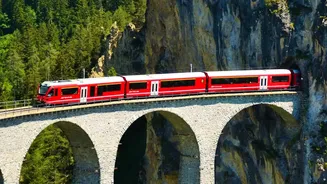
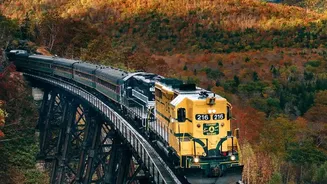
Equally impressive are the more than 800 bridges that span the valleys. Many are multi-arched viaducts that resemble ancient Roman aqueducts, a testament to timeless engineering principles. Bridge No. 226 is a magnificent five-tiered gallery bridge, while Bridge No. 541 at Kanoh stands as another architectural masterpiece. These structures were built with brick and stone, often without mortar, showcasing incredible craftsmanship. They allowed the railway to maintain a gentle gradient across seemingly impassable ravines, creating the illusion of a train floating through the landscape. The sheer number and scale of these bridges underscore the project's complexity and the builders' refusal to be defeated by nature.
From Colonial Route to National Heritage
What began as a symbol of imperial power has transformed into a cherished piece of national heritage. In 2008, the Kalka-Shimla Railway was inscribed as a UNESCO World Heritage Site, recognized for its outstanding engineering and its cultural significance. Today, the journey is not about administrative efficiency but about experiencing a living piece of history. Passengers on the 'toy train' are transported to another era as they pass through historic stations, rumble over viaducts, and plunge into the darkness of tunnels carved over a century ago. The slow pace of the train, once a necessity of engineering, is now its greatest charm, allowing travellers to fully absorb the breathtaking Himalayan scenery.