




The State of Play in 2026
The Mumbai-Ahmedabad High-Speed Rail (MAHSR) project is visibly advancing. Union Railway Minister Ashwini Vaishnaw confirmed in September 2026 that progress is rapid. A significant milestone is the completion of the first coach manufactured for testing,
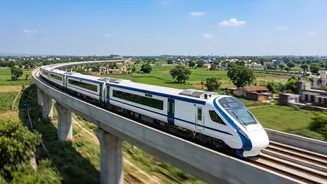
a key step towards developing India's domestic high-speed train capabilities. On the ground, civil construction is proceeding quickly, with the Vapi-Surat section expected to be finished by December 2026. Work on piers, girders, and track beds is advancing simultaneously across Gujarat and Maharashtra, with several station structures now complete. The project, managed by the National High Speed Rail Corporation Ltd (NHSRCL), is a tangible reality, with over 290 km of viaduct reportedly built and work on major river bridges showing significant progress.
Timeline: When Will It Actually Run?
While construction is moving fast, the timeline for full operation is phased and has been adjusted. The first service is expected to begin in August 2027. This initial run will not cover the full 508-km corridor. The first operational stretch is planned for the Surat-Bilimora section in Gujarat. Following this, other sections are expected to open, including Vapi-Surat and Vapi-Ahmedabad. While testing for India's indigenously developed bullet train is slated for May or June 2027, the entire Mumbai-Ahmedabad corridor is now anticipated to be fully completed by 2028 or even 2030, a significant delay from original targets. For now, the 2027 launch on a partial segment is the most critical date to watch.
The Soaring Cost of Speed
One of the most pressing issues for the project in 2026 is its escalating budget. Originally estimated at ⁰1.1 lakh crore, the project's cost has nearly doubled. Recent reports in August 2026 placed the revised cost at approximately ⁰2.1 lakh crore, with a proposal for the new budget under consideration by the Union Cabinet. The Railway Ministry has attributed the sharp increase to several factors, including significant delays in land acquisition, particularly in Maharashtra, and pandemic-related shutdowns. While the Japan International Cooperation Agency (JICA) provided initial funding, much of the additional cost is expected to be covered by government budgetary support. This revised figure raises important questions about the financial viability and long-term economic returns of this massive undertaking.
More Than a Train: The 'Make in India' Push
Beyond connecting two major cities, the bullet train project is a catalyst for India's manufacturing ambitions. The development of an indigenous high-speed train, in line with the 'Atmanirbhar Bharat' initiative, is a crucial element. The first locally made coach body frame is already complete and undergoing testing. This focus on domestic production aims to reduce reliance on imported technology and components for future high-speed rail projects. The experience, knowledge, and industrial ecosystem being built for the MAHSR corridor are intended to serve as a standardized template for a planned network of seven other high-speed rail lines across the country, connecting cities like Delhi, Patna, Hyderabad, and Chennai.