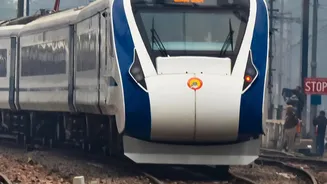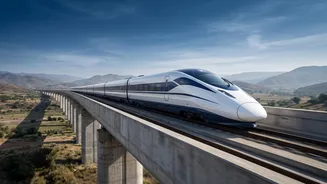






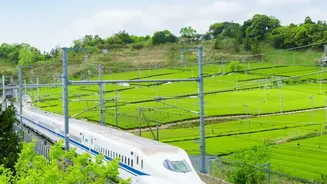
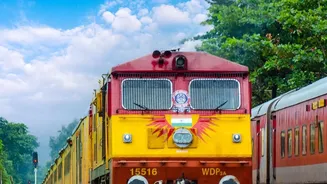

The Vision for a High-Speed North
India's high-speed rail ambition is branching out. While the Mumbai-Ahmedabad corridor is under construction, the government has its sights set on a series of interconnected northern corridors. Managed by the National High Speed Rail Corporation Limited
(NHSRCL), the plan involves several key routes designed to connect the national capital with major economic, religious, and political hubs. Two of the most prominent proposed lines are the Delhi-Amritsar corridor, stretching approximately 465 km through Haryana and Punjab with a spur to Chandigarh, and the even more ambitious Delhi-Varanasi corridor, an 813-km line. More recently, plans have been announced to extend the network eastward from Varanasi through Patna, all the way to Guwahati in Assam, creating a mammoth 1,500-km artery across North and Northeast India.
Stuck in the Planning Phase
Despite exciting announcements, the northern corridors are firmly in the 'planning stage'. This phase is a multi-year process involving extensive groundwork before even a single track can be laid. For the Delhi-Varanasi and Delhi-Amritsar lines, the NHSRCL has been conducting LiDAR surveys (a laser-based mapping technology) and preparing Detailed Project Reports (DPRs). A DPR is a comprehensive blueprint that assesses everything from the technical feasibility and environmental impact to projected ridership and financial viability. The DPR for the Delhi-Varanasi corridor has been submitted to the Ministry of Railways and is awaiting further approvals before it can be presented to the Union Cabinet. Until these reports are fully approved, key details like the final route alignment, station locations, and construction schedules remain unconfirmed.
The Challenge of Land and Cost
The single biggest hurdle for high-speed rail projects globally, and especially in a densely populated country like India, is land acquisition. Acquiring long, continuous, and litigation-free parcels of land required for the tracks is a monumental task that often leads to significant delays and cost escalations. The experience with the Mumbai-Ahmedabad corridor, which faced years of delays due to land acquisition issues, serves as a powerful lesson. Beyond land, the financial commitment is staggering. High-speed rail projects cost enormous sums, often running into lakhs of crores. For instance, the Delhi-Varanasi corridor alone is estimated to cost around ₹1.71 lakh crore. Securing funding, whether through government budgets, international loans, or public-private partnerships, is a critical step that dictates the pace of the entire project.
What Happens Next?
The path forward for the northern corridor is one of incremental steps. The immediate future hinges on the Union Cabinet's approval of the submitted DPRs. Once a project gets the green light, the long and complex process of land acquisition will begin, which could take years. Following that, tenders for construction and technology systems can be floated. While the government has expressed strong intent, with Railway Minister Ashwini Vaishnaw announcing projected travel times like Delhi to Agra in 59 minutes and Delhi to Varanasi in under four hours, no official completion timeline has been set. The focus remains on getting the foundational work right, learning from the challenges of the Mumbai-Ahmedabad project, and ensuring the immense investment is viable in the long run. For now, the northern bullet train remains a promising vision on paper, waiting for the green signal to start its slow but steady journey towards becoming a concrete reality.