


The Anatomy of a Perfect One-Pot Meal
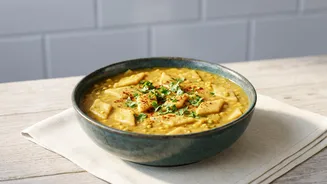
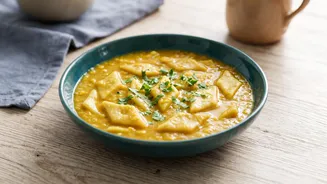
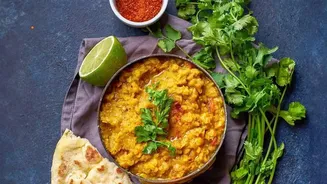
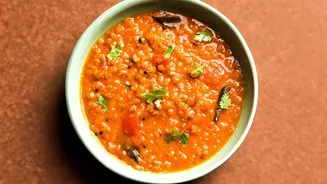
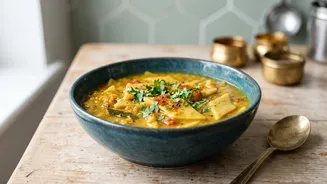
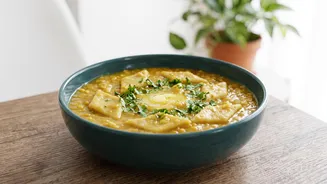
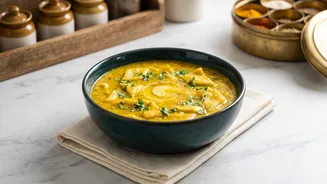
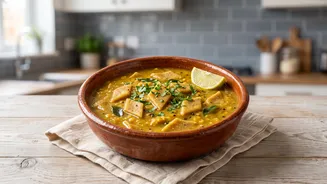
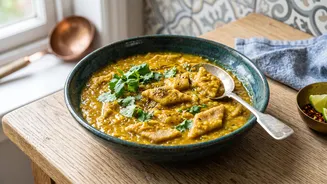
At its heart, Dal Dhokli is a beautifully simple concept: tender, spiced diamonds of whole wheat flour dough (the 'dhokli') are simmered in a flavourful stew of split pigeon peas (toor dal). Often described as an Indian-style pasta, the dish is a complete
meal in a bowl. The dal itself is a masterful balance of sweet, sour, and spicy flavours, achieved with ingredients like jaggery for sweetness, kokum or tamarind for tang, and a tempering of mustard seeds, cumin seeds, cloves, and curry leaves for warmth and aroma. The dhokli, made from a simple dough of whole wheat flour (atta), spices, and a little oil, absorbs the flavours of the dal as it cooks, becoming soft and satisfying. The result is a dish with a complex, layered taste and a deeply comforting texture.
A Dish Rooted in Resourcefulness
Dal Dhokli is a celebrated delicacy from the western states of India, primarily Gujarat and also popular in Rajasthan. Its origins are rooted in the practical genius of home cooking, embodying the principle of creating a substantial meal from humble, everyday ingredients. Traditionally, it was a clever way to use leftover dal and chapati dough, transforming them into a fresh, wholesome new dish. This resourcefulness has allowed it to endure for generations, passed down through families who have weathered migrations and famines. While cherished as a special Sunday lunch in many Gujarati households, its role as a satisfying, easy-to-make meal has cemented its place as a staple comfort food, particularly on cold or rainy days.
The Nutritional Case for Breakfast
So, what's the 'evidence' for Dal Dhokli as a breakfast food? It lies in its robust nutritional profile. The combination of lentils and whole wheat makes it a well-balanced meal, delivering both plant-based protein and complex carbohydrates. A single serving can contain around 14 to 21 grams of protein, essential for muscle repair and satiety. It's also a good source of dietary fibre, which aids digestion, and provides crucial minerals like iron and magnesium. Unlike many processed breakfast options, Dal Dhokli provides sustained energy, keeping you full and focused for longer. With a calorie count ranging from approximately 300 to 600 per serving depending on preparation, it’s a calorie-dense meal that provides substantial fuel to start the day.
The Modern Verdict: A Breakfast for Today
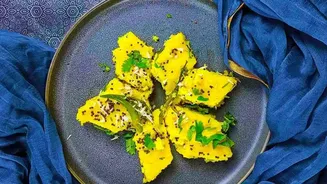
While traditional Gujarati breakfasts often feature lighter fare like Thepla, Dhokla, or Handvo, the case for Dal Dhokli is compelling for modern lifestyles. It can be enjoyed anytime, from breakfast to dinner. The fact that it's a one-pot meal appeals to those with busy schedules, minimising both cooking and cleaning time. For those who work from home or have more flexible mornings, it offers a warm, nourishing start that feels both indulgent and healthy. Furthermore, its history as a dish made from leftovers aligns perfectly with contemporary concerns about reducing food waste. Using last night's dal to create a delicious breakfast is both economical and sustainable. It represents a return to traditional food wisdom, proving that what was sensible for our ancestors is often what's smartest for us today.