







A Pause on Progress or a Necessary Precaution?
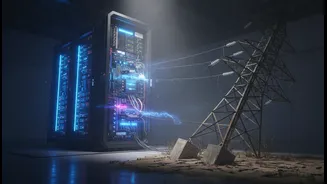
On July 14, 2026, Governor Kathy Hochul signed an executive order halting the permitting of new "hyperscale" data centers for up to one year. The order specifically targets facilities with power demands of 50 megawatts or more—enough to power tens of thousands
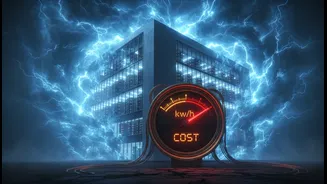
of homes. The stated goal is not to ban AI, but to give the state time to create a regulatory framework. Officials want to study the immense strain these server farms place on electricity and water resources, and find ways to prevent residential utility bills from skyrocketing as a result of AI’s energy appetite. "Progress shouldn't arrive with a higher utility bill, depleted water supplies, or noise pollution," Governor Hochul stated, framing the decision as a protective measure for New Yorkers. Critics, however, argue the move could stifle innovation and push billions in tech investment to other states.
The Unseen Engine of the AI Boom
Why is generative AI so uniquely power-hungry? Unlike a simple Google search, which retrieves existing information, asking an AI to write a poem or analyze data requires a colossal amount of computation. This work is done by thousands of specialized graphics processing units (GPUs) packed into data centers. Training a single large AI model can consume as much electricity as hundreds of homes for a year. But the bigger issue is "inference"—the energy used to answer billions of user prompts every day. According to recent industry analysis, generative AI tasks can consume up to 1,000 times more energy than traditional AI workloads like simple classification. This immense demand for processing power also generates incredible heat, requiring millions of gallons of water for cooling systems, putting a dual strain on local utilities.
A Global Thirst for Power
New York’s moratorium is a local response to a global problem. The AI boom is triggering an unprecedented surge in energy demand worldwide. According to a July 2026 forecast from Gartner, global data center electricity consumption is projected to jump 26% in 2026 alone. By 2027, AI-specific servers are expected to consume more power than all conventional servers combined. The International Energy Agency predicts that without major efficiency gains, the electricity consumption of data centers could double by 2030, with AI as the main driver. This explosive growth is creating a new battleground for tech supremacy, where future AI capacity is directly constrained by the availability of power. Utilities are struggling to keep up, creating backlogs and forcing them to consider new power plants just to service the tech sector.
Virginia's Cautionary Tale
To understand the pressures New York is trying to get ahead of, one only needs to look at Northern Virginia, the world's largest data center market. For years, the state welcomed data center development with tax breaks and friendly policies. Now, its largest utility, Dominion Energy, is facing a massive power crunch. The demand from data centers is projected to skyrocket, far exceeding the grid's reliable capacity. The company has a staggering queue of data centers waiting for a connection, with a backlog that could take years to clear. This has led to intense local opposition, with residents and environmental groups raising alarms about rising electricity rates and environmental damage. The situation in Virginia serves as a stark warning of what happens when the digital world's exponential growth collides with the physical world's linear constraints.