







A Quantum Leap for Bengaluru
In a significant move for India's tech landscape, Alliance University and quantum computing startup QpiAI have partnered to launch the country's first commercially accessible quantum computing experience centre. Located at the university's campus in Bengaluru's
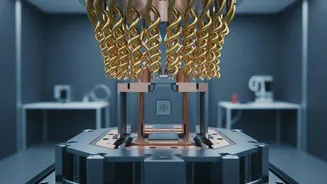
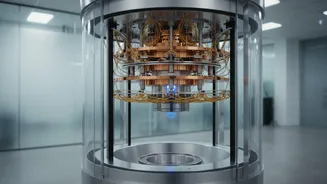
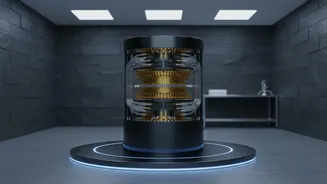
Electronic City, the facility, named QUASAR (Quantum AI School of Advanced Research), provides direct access to an 8-qubit superconducting quantum computer. This initiative is designed to bridge the gap between theoretical research and practical industry application, serving the dense ecosystem of tech companies, startups, and defence and aerospace firms in the region. By placing a quantum machine within reach of innovators, the centre aims to accelerate India’s journey in developing sovereign quantum capabilities.
What is a Qubit and Why Does 8 Matter?
Think of a normal computer bit as a light switch; it can either be on (1) or off (0). A quantum bit, or 'qubit', is more like a dimmer switch. Thanks to a principle called superposition, it can be on, off, or both at the same time. This ability to exist in multiple states at once allows quantum computers to process a vast amount of information simultaneously. While an 8-qubit system may sound small compared to the millions of bits in your laptop, it represents a crucial step for practical research. It is powerful enough for students, researchers, and developers to run real quantum algorithms and experiment with solutions for small-scale, but complex, problems. This hands-on access is a vital training ground, moving the nation's talent beyond simulators and cloud platforms to working with actual quantum hardware.
Solving Tomorrow's Optimisation Puzzles
One of the most promising applications of quantum computing is in optimisation—finding the best possible solution from a massive number of options. For industries like logistics, this could mean calculating the most efficient delivery routes for thousands of vehicles in real-time, saving immense fuel and time. In pharmaceuticals, it could accelerate drug discovery by simulating molecular interactions in ways that are impossible for classical computers. Financial institutions could use it to build far more accurate models for managing risk and optimising investment portfolios. The new 8-qubit centre will allow Indian researchers and companies to begin developing and testing these kinds of optimisation algorithms, building a foundation for solving some of the country's most complex economic and industrial challenges.
Cryptography and the Future of Security
Quantum computing presents both a threat and a promise to digital security. A sufficiently powerful quantum computer could theoretically break many of the encryption methods that protect our banking, communications, and government data today. This has sparked a global race to develop 'quantum-resistant' or 'post-quantum' cryptography. At the same time, quantum principles themselves offer a solution: Quantum Key Distribution (QKD). QKD uses the laws of physics to create theoretically unhackable communication channels. Any attempt to eavesdrop on a quantum key exchange would disturb the qubits, immediately alerting the users to a security breach. The Bengaluru centre provides a vital platform for experimenting with both breaking current codes and building the next generation of quantum-secure cryptographic systems, helping to secure India's digital infrastructure for the future.
India's Place in the Global Quantum Race
This initiative aligns perfectly with the goals of India's National Quantum Mission (NQM), a government-backed programme with a budget of over Rs. 6,000 crore aimed at establishing the country as a global leader in quantum technology. The NQM's objectives include developing indigenous quantum computers with progressively higher qubit counts—aiming for 50 to 1,000 qubits within eight years—and building secure quantum communication networks. While this 8-qubit centre is a private-academic collaboration, it contributes directly to the mission's goal of creating a vibrant ecosystem for quantum R&D and talent development. It complements other national efforts, such as C-DAC's plan to install a more powerful 108-qubit system, ensuring India builds capabilities across different scales and technologies.