





The festive month of October 2026 lit up India’s electric car market, with sales data revealing a massive year-on-year surge. This isn't just a seasonal bump; it's a clear signal that the EV transition is hitting the accelerator.
Putting the Surge into Perspective
Retail sales of battery-electric
passenger vehicles soared to nearly 37,000 units in October 2026. This represents a stunning year-on-year (YoY) growth of roughly 76% compared to the approximately 21,000 units sold in October 2025. This growth is particularly noteworthy as it came during a month where the overall passenger vehicle market saw a decline. As a result, the market share of electric cars in overall passenger vehicle sales more than doubled, climbing to 7.3% from just 3.5% a year prior.
Who Is Leading the Charge?
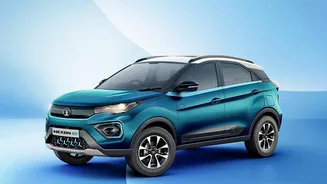
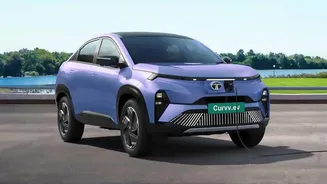
Tata Motors continues to dominate the driver's seat of India's EV market, accounting for a formidable 40.7% market share with over 14,600 cars sold in October. While its leadership is firm, the competition is heating up. Mahindra & Mahindra secured a strong second place, with its electric SUV sales growing an impressive 85.7% YoY to over 8,500 units. JSW MG Motor India held onto the third spot with nearly 6,000 units sold. Together, these top three manufacturers command over 80% of the entire electric passenger vehicle market. New entrants like VinFast also made a significant mark, showcasing the market's dynamic and expanding nature.
The Models Powering the Boom
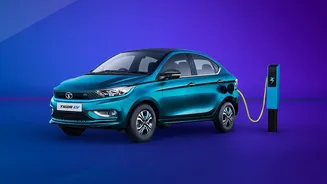
The sales charts are being topped by models that hit the sweet spot of price, range, and features for Indian buyers. The Tata Punch EV emerged as the best-selling electric car in October, closely followed by the Mahindra XEV 9S. Tata's popular Nexon EV and MG's new Windsor EV also posted strong numbers, making up a significant chunk of the total sales. The success of these models, particularly more affordable options like the Punch EV and Tiago EV, shows that electric mobility is no longer a luxury niche but a mainstream consideration for families and urban commuters.
What's Fuelling This Growth?
Several factors are converging to supercharge EV adoption. Persistent high prices for petrol and diesel make the lower running costs of EVs incredibly attractive. This is amplified by robust government support, including lower GST rates (5% for EVs vs. 28% or more for conventional cars) and various schemes under policies like PM E_DRIVE and Production Linked Incentives (PLI) that encourage local manufacturing and reduce upfront costs. A wider variety of models across different price points and an expanding, albeit still developing, charging infrastructure are also giving consumers the confidence to make the switch.
The Road Ahead : Speed Bumps and Open Highways
Despite the impressive growth, challenges remain. The charging infrastructure, while growing, is still a significant hurdle for many potential buyers, particularly outside of major metropolitan areas. The upfront cost of an electric car, though decreasing, can still be a barrier compared to its petrol or diesel counterpart. Sustaining this momentum will depend on continued policy support, faster expansion of public charging networks, and advancements in battery technology that can further bring down costs and improve vehicle range. The October sales figures, however, prove that the foundation for an electric future is firmly in place and the market is accelerating faster than ever.