








The Tale of the Tape: By the Numbers
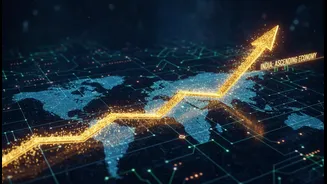
According to the latest analysis from Moody's, India is set to outpace its peers, even as its own growth momentum might see a slight moderation. While a specific growth number for India in 2026 from the most recent Moody's Analytics report was not highlighted,
a previous Moody's Ratings report from May 2026 projected a figure of 6.0%. This stands in contrast to a cooling global economy, which is expected to grow at just 2.5% in 2026, a rate below its potential of over 3%. The forecast underscores India's resilient position amidst widespread economic headwinds. Other organisations have similar outlooks, with the IMF projecting 6.5% growth for India in 2026.
How India Compares to Global Giants
India's projected performance becomes clearer when set against the forecasts for other major economies. China's growth is expected to moderate to 4.6% in 2026. The United States is projected to average 2% growth, while the Eurozone's economy is forecast to expand by a mere 0.8%. Japan's economic outlook appears even more subdued, with growth expected to remain below 0.5%. This divergence paints a picture of a 'K-shaped' global recovery, where some economies, like India, power ahead while others lag behind. Even with a potential slight slowdown, India is forecast to comfortably lead this pack of large economies.
What's Fuelling India's Growth Engine?
Several factors are contributing to India’s robust economic performance. A key driver is strong domestic demand, with both private consumption and government investment playing crucial roles. Government capital expenditure has been a significant stimulant, boosting infrastructure development. The services sector, particularly in financial and professional services, continues to show impressive strength, contributing significantly to the Gross Value Added (GVA). Furthermore, a global surge in investment related to artificial intelligence (AI) has provided a buffer, supporting manufacturing and exports in tech-heavy Asian economies, including India.
Navigating the Headwinds and Risks
The path forward is not without potential obstacles. Moody's identifies geopolitical instability as the most critical risk to the global outlook. For India, a major importer of crude oil, any renewed conflict in the Middle East or disruption to trade routes could cause a spike in energy prices. This would likely fuel inflation, putting pressure on corporate profit margins and squeezing household spending power. Other challenges include persistent global trade uncertainties, the potential for softer external demand for Indian goods and services, and the need for central banks to navigate a difficult course between managing inflation and stimulating growth.
What This Means for India
Sustained high growth has profound implications for the country. It signals a resilient economy capable of weathering global shocks better than many of its peers. For citizens, this translates into the potential for more job creation, rising income levels, and improved living standards. A strong growth forecast also enhances India's attractiveness as a destination for foreign investment, which can further fuel development in key sectors like infrastructure, manufacturing, and technology. It reinforces India's growing influence on the world stage, positioning it as a key engine of global economic momentum. However, experts note that continued policy reforms and a focus on creating a predictable, business-enabling environment are critical to unlock this potential fully and ensure the benefits of growth are widely shared.