







A Trailblazing Mission Goes Silent
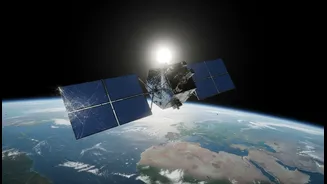
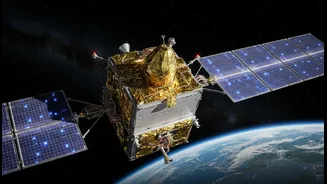
The satellite at the center of the incident is Mission Drishti, the maiden spacecraft from Bengaluru-based space-tech startup GalaxEye. Launched on May 3, 2026, aboard a SpaceX Falcon 9 rocket, it was a satellite of many firsts. Billed as India's largest
privately built Earth observation satellite, Drishti was also the world's first 'OptoSAR' satellite. This groundbreaking technology combined two powerful imaging systems: a standard optical sensor, which works like a high-powered camera, and a Synthetic Aperture Radar (SAR). SAR technology gives a satellite the superpower of sight, allowing it to capture high-resolution images of the Earth's surface regardless of weather conditions or time of day—effectively seeing through clouds and darkness. This dual capability was designed to provide an unprecedented level of detailed, all-weather surveillance for a wide range of applications.
What We Know About the Failure
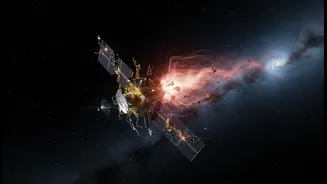
According to statements from GalaxEye, the satellite performed well through the initial stages of its journey, a phase known as Launch and Early Orbit Phase (LEOP). It successfully established communication with the mission control center in Bengaluru and validated several of its key systems. However, during the final stage of this critical deployment phase, the spacecraft encountered a severe geomagnetic solar storm. The company’s initial analysis suggests that radiation from this intense space weather event likely damaged a critical onboard system. Communication with Mission Drishti became intermittent before contact was lost completely. While engineers are working to re-establish a link, the company has acknowledged that the probability of recovering the satellite is very low.
The Strategic Promise of OptoSAR Technology
The loss of Mission Drishti is particularly poignant because of the unique capabilities it promised to deliver. By fusing optical and radar data, the satellite was poised to offer invaluable insights for multiple sectors. For disaster management, it could have provided clear views of flooded or storm-affected areas when traditional satellites are blinded by cloud cover. In agriculture, it could monitor crop health with unparalleled accuracy. For national security and defence, an all-weather, day-and-night imaging capability provides a significant strategic advantage for monitoring borders and maritime areas. The successful operation of Drishti would have been a major validation of GalaxEye's technology and a powerful demonstration of the advanced capabilities emerging from India's private space ecosystem.
A Test of Resilience for 'New Space' India
Despite the unfortunate outcome, GalaxEye is framing the mission as a crucial learning experience. The company’s CEO, Suyash Singh, noted that before the failure, the satellite successfully validated several critical technologies and provided a wealth of operational data that will strengthen future missions. The team proved it could manage the entire lifecycle of a complex mission, from design to in-orbit operations from its own control center. This setback, while significant, is not a full stop. The company remains committed to its long-term goals and has stated plans to launch two larger, upgraded OptoSAR satellites within the next two years, incorporating the hard-won lessons from Mission Drishti. This resolve highlights a growing maturity within India's 'New Space' sector, where risk is understood as an inherent part of the innovation cycle.