


The Science of Stirring
To understand why constant stirring is non-negotiable, we need to look at the science of roasting. The goal is to heat each peanut evenly, triggering the Maillard reaction. This is a chemical process between amino acids and reducing sugars that creates
the rich, brown colour and complex, savoury flavours we crave. Without constant motion, especially in a hot pan, the peanuts that are in direct contact with the heat source will scorch before those on top are even warm. Stirring ensures every peanut gets its fair share of heat, allowing for a slow, uniform transformation. It prevents hot spots, resulting in a consistent colour and crunch from one nut to the next, rather than a mix of burnt, raw, and perfectly roasted pieces.
Choosing the Right Peanut
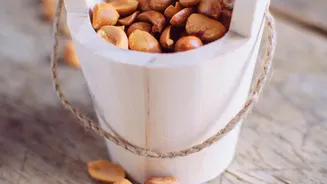
While any raw peanut can be roasted, some varieties are better suited for the task. Runner peanuts are a popular choice due to their uniform size and shape, which naturally promotes even roasting. They are the most common variety grown in the U.S. and are frequently used for peanut butter because of their excellent roasting characteristics. Virginia peanuts, often known as the larger 'ballpark' variety, also roast well, particularly in the shell. Spanish peanuts, which are smaller with reddish-brown skins, have a higher oil content that results in a very rich flavour when roasted. For the classic market-style experience, starting with raw, unshelled peanuts—preferably of a uniform size like Runners—is your best bet.
Your Roasting Toolkit
You don’t need fancy equipment, but the right pan makes a world of difference. A heavy-bottomed pan, like a traditional Indian kadai or a cast-iron skillet, is ideal. These pans retain and distribute heat more evenly than their thinner counterparts, providing a stable thermal environment for the peanuts. The sloped sides of a kadai are particularly useful, making it easy to keep the peanuts in constant motion. Street vendors often add sand or salt to the pan, which acts as a medium to transfer heat incredibly evenly to every surface of the peanut shell. At home, you can achieve a similar effect with a generous amount of coarse salt, or simply by using a dry, heavy pan and relying on diligent stirring.
A Step-by-Step Guide
Begin by heating your heavy pan over medium-low heat. A lower temperature is key; high heat will burn the outside before the inside can cook properly. Once the pan is warm, add your raw peanuts in a single layer. Now, the work begins. Start stirring immediately and continuously. Use a spatula or a large spoon to move the peanuts around the pan, ensuring they tumble over each other and no single nut sits on the hot surface for too long. After about 10-15 minutes, you’ll notice the shells starting to turn a light golden brown and you'll hear the first signs of a faint cracking or popping sound. The air will fill with that unmistakable nutty aroma—this is your primary cue that they are nearing doneness.
The Crucial Cool-Down
One of the most common mistakes in roasting nuts is forgetting about carryover cooking. Peanuts continue to roast from their own residual heat even after you remove them from the pan. To prevent them from going from perfect to burnt, you need to pull them from the heat just before they look completely done. The ideal moment is when they are a light golden-brown and smell fragrant. Immediately transfer them from the hot pan to a cool baking sheet or large plate in a single layer. This halts the cooking process and allows them to cool and crisp up properly. They will not be fully crunchy while hot, but will develop their signature snap as they cool.