


The International Space Station just received a major electrical upgrade. In a multi-year effort culminating in a recent spacewalk, NASA has boosted the orbiting lab's power supply by over 30%, a crucial step for the future of science in space.
A Major Power-Up in Orbit
NASA has
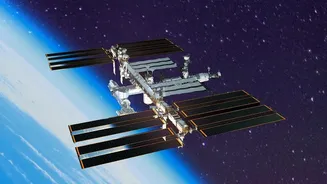
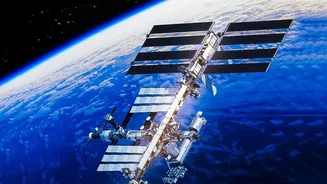
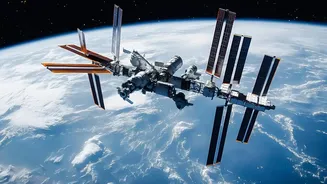
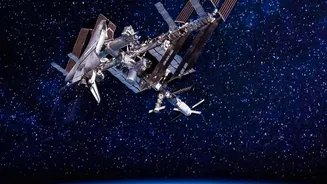
officially completed a significant power augmentation for the International Space Station (ISS), increasing its total power-generating capability from approximately 160 kilowatts to 215 kilowatts. This 55-kilowatt boost, an increase of more than 30%, is the result of a multi-year project designed to ensure the station can continue to operate as a premier laboratory in low-Earth orbit for the rest of its lifespan, which is planned to run through 2030. The extra electricity is vital for powering a new generation of scientific experiments, supporting the needs of a larger crew, and accommodating commercial modules and activities. Before the upgrade, the station's original solar arrays, some of which have been operating for over two decades, had seen their efficiency naturally degrade over time. This upgrade effectively revitalizes the station's power grid, preparing it for the next chapter of operations and research.
How the Upgrade Was Done
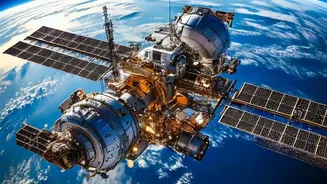
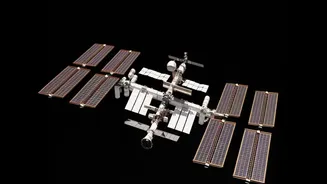
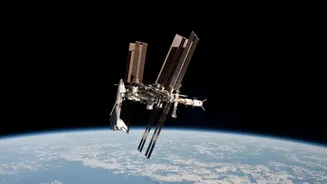
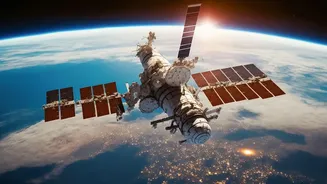
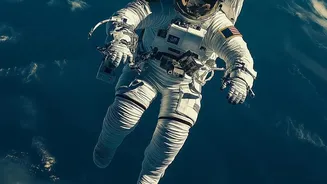
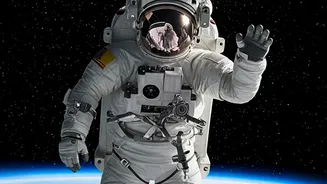
The power boost comes from the installation of eight new solar arrays, known as International Space Station Roll-Out Solar Arrays (iROSAs). These advanced arrays were installed over the existing, larger solar wings. Despite being smaller than the original arrays, the iROSAs are more efficient, utilizing newer solar cell technology to generate more power from a smaller surface area. The process was a monumental undertaking that began in February 2021 and required a total of 18 spacewalks to complete. Astronauts had to venture outside the station to install mounting brackets and then attach the new arrays. The final iROSA was installed on November 5, 2026, by NASA astronaut Anil Menon and Canadian Space Agency astronaut Joshua Kutryk during a nearly seven-hour spacewalk. The arrays were delivered to the station via SpaceX Dragon cargo missions and then carefully positioned using the station's robotic arm, Canadarm2, before being bolted into place by the spacewalking astronauts.
More Power, More Science
The immediate benefit of the increased power capacity is the ability to run more science and technology experiments simultaneously. Many modern scientific instruments are power-hungry, and the previous 160-kilowatt supply was becoming a limiting factor. With 215 kilowatts available, the ISS can now support a broader range of complex research in fields like materials science, biotechnology, and physics that could lead to breakthroughs benefiting life on Earth. It also provides the necessary power to support an expansion of commercial activities aboard the station, opening the door for more private companies to conduct research and develop new technologies in the unique microgravity environment. Furthermore, the additional power ensures the station's critical life support and operational systems have ample energy, enhancing the safety and capabilities for the astronauts living and working aboard the orbiting outpost.
Future-Proofing for the Final Frontier
This power upgrade is about more than just maintaining the ISS; it is a strategic investment in the future of human spaceflight. The space station serves as a crucial testbed for technologies that will be needed for long-duration missions to the Moon and Mars as part of NASA's Artemis program. By ensuring the station has a robust and reliable power system, NASA and its international partners can test advanced life support systems, new computing technologies, and other critical hardware in a relevant deep-space-analogue environment. The iROSA technology itself is an important advancement, demonstrating how compact, lightweight solar arrays can be deployed for future spacecraft and habitats on the lunar surface. This project ensures the ISS will remain a cornerstone of space exploration and technology development for the remainder of its operational life, bridging the gap to humanity's next giant leap.