



What Exactly Is an AI Scribe?
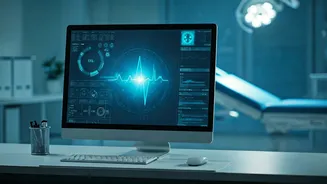
Imagine your doctor could give you their full attention, without once turning to a computer to type. That's the promise of an AI scribe. These are advanced software tools that use ambient artificial intelligence to listen to the conversation between a doctor and
a patient. Using natural language processing, the AI transcribes the dialogue in real-time, intelligently identifies clinically relevant information, and automatically formats it into a structured medical note. The final summary often includes the patients symptoms, the doctors observations, the diagnosis, and the proposed treatment plan, ready to be reviewed and saved into the electronic health record. The goal is to eliminate the burdensome task of manual note-taking, a major contributor to physician burnout.
A Global Trend Sparked by Burnout
The rise of AI scribes is a direct response to a crisis in healthcare: doctor burnout. Physicians report spending an enormous amount of time on administrative tasks, with some studies suggesting it takes up nearly as many hours as patient care itself. In India, where doctors often see over 50-100 patients a day, this documentation burden is even more acute, leading to long hours and cognitive exhaustion. A recent survey by the Royal Australian College of General Practitioners (RACGP) has put a number on this trend, revealing that the use of AI scribes among its doctors nearly doubled, from 22% in August 2024 to 40% in November 2025. While this data is from Australia, it reflects a global shift as doctors everywhere look for ways to reclaim their time and focus on patients rather than paperwork.
The Promise: More Time for Patients
The primary benefit is giving doctors back their time. By automating note-taking, AI scribes can significantly reduce the hours spent on documentation, sometimes called "pajama time" because its often done late at night at home. This freed-up time allows for more meaningful interaction during consultations. Doctors can maintain eye contact, listen more attentively, and engage in deeper conversation without the distraction of a keyboard. Proponents argue this leads to better patient rapport, more accurate data capture (as the AI records everything), and ultimately, improved quality of care. For doctors, it can mean a better work-life balance and reduced risk of burnout.
The Risks: Privacy, Accuracy, and Consent
However, the rapid adoption of AI scribes has also raised significant concerns. The most obvious risk is patient privacy. These tools are recording and processing highly sensitive health information. Patients must give explicit, informed consent, understanding that their conversation is being recorded and analysed by a third-party AI. Questions around where this data is stored—especially if its on servers outside of India—and how its protected are critical. There is also the risk of inaccuracies. AI models can "hallucinate" or create information, misinterpret accents or complex medical terms, and miss crucial non-verbal cues. The doctor remains legally responsible for the accuracy of the medical record, meaning they must meticulously review and edit every AI-generated note, which can sometimes take as long as typing it themselves.
The Outlook for India
In India, the potential impact of AI scribes is immense. With a high patient load and a stretched healthcare system, any tool that improves efficiency is welcome. Several companies are already offering AI scribe solutions tailored for the Indian market, with features like multilingual support to handle consultations that switch between English, Hindi, and other regional languages. The governments push for digital health infrastructure could also accelerate adoption. However, the challenges of privacy and the need for robust regulation are just as pressing. As this technology becomes more common, patients in India may soon be asked for their consent to have an AI in the room. The key will be ensuring these tools are implemented in a way that is transparent, secure, and genuinely enhances patient care without compromising it.