



On the long, monotonous stretch of highway connecting Lucknow and Bareilly, a sweet aroma offers a welcome break. For decades, the town of Maigalganj has served as an unlikely pilgrimage site for one reason: its legendary gulab jamuns.
An Unlikely Sweet Stop
Maigalganj isn't
a sprawling metropolis or a designated tourist hotspot. It's a modest town in Uttar Pradesh's Lakhimpur Kheri district that happens to be strategically located on National Highway 30. For the thousands of commuters, truck drivers, and families making the hours-long journey, this town has become an essential halt. The reason isn't a historical monument or a scenic viewpoint, but something far more visceral and satisfying: a collection of sweet shops lining the roadside, all selling the same iconic local delicacy. Cars and buses pull over in a steady stream, their occupants making a beeline for the large pans where dark, glistening spheres bob gently in warm sugar syrup. This impromptu pit stop has become a cherished ritual for regulars and a delightful discovery for first-timers, turning a simple highway town into a celebrated destination for food lovers.
The Secret of the 'Kala Jamun'
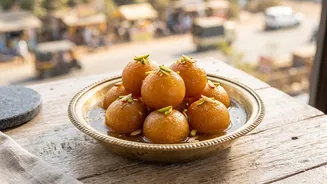
What makes Maigalganj's offering distinct from the countless other gulab jamuns across India? The first clue is its appearance. These are not the typical golden-brown orbs; they are a deep, dark, almost black hue, earning them the name 'kala jamun'. This colour is the result of a meticulous cooking process. The dough, made from fresh, locally sourced khoya (dried evaporated milk solids), is kneaded to a specific consistency. The balls are then fried on a low flame for an extended period, allowing the sugar in the milk solids to caramelize slowly and deeply, which imparts the signature dark colour and a slightly firm exterior. This crust gives way to a surprisingly soft and grainy interior that soaks up the sugar syrup without becoming overly mushy. The syrup itself is often less sweet than in other versions, allowing the rich, caramelized flavour of the khoya to shine through. It is this perfect balance of texture and taste that has cemented its reputation.
A Legacy Simmering for Generations
The tradition of making these famous sweets is not a recent phenomenon. It is a legacy that dates back several decades. As the story goes, the first shops were established to offer a refreshing and energy-giving treat to tired travellers on what was then a much more arduous route. The pioneers perfected their recipe using the high-quality milk available in the region, known for its rich dairy produce. Over the years, the business passed from one generation to the next. Today, the highway is flanked by dozens of shops, many bearing similar names and each claiming to be the 'original' or the 'most famous'. While it's hard to verify which one truly came first, this friendly competition has ensured that the quality remains high across the board. These are not large corporations but small, family-run establishments where the art of making the perfect gulab jamun is a matter of immense pride and a well-guarded family secret.
More Than Just a Dessert
For those who stop in Maigalganj, the experience is about more than just satisfying a sweet craving. It's about participating in a regional tradition. The ritual involves first eating a few pieces fresh and hot from the kadhai, feeling the warmth of the syrup and the rich texture of the jamun. This is almost always followed by a second, equally important step: packing a box to take home or as a gift for friends and family. The gulab jamuns of Maigalganj are known for their relatively long shelf life, making them the perfect edible souvenir. For many families, no trip along this highway is complete without this stop. It marks a moment of pause, a shared pleasure that breaks the monotony of the road. It has become a landmark defined not by concrete or steel, but by flavour and memory, passed down through stories told by fellow travellers.