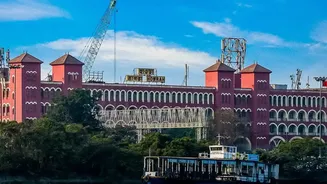


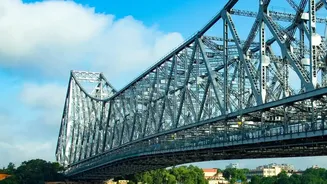
Kolkata carries many titles, but none capture its grand colonial past quite like the 'London of India'. This nickname isn't just a quaint phrase; it’s a direct link to a time when the city was the jewel of the British Empire.
The Imperial Capital's Legacy
To understand the 'London
of India' moniker, one has to travel back to when Kolkata, then Calcutta, was the capital of British India from 1772 to 1911. During this period, it grew into the second most important city in the British Empire, after London itself. The British East India Company and later the Crown invested heavily in creating a city that would reflect their power and administrative might. They established government offices, courts, and cultural institutions, transforming Calcutta into the political and commercial heart of the subcontinent. This history is not just in books; it’s etched into the very layout of the central parts of the city, which were designed to mirror the grandeur of a European capital.
Echoes of London in Stone and Marble
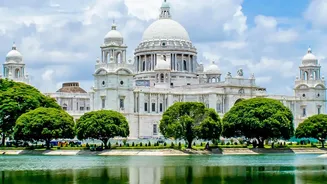
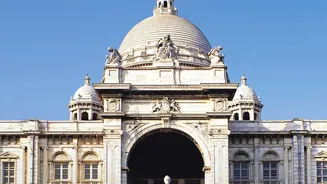
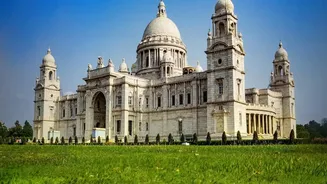
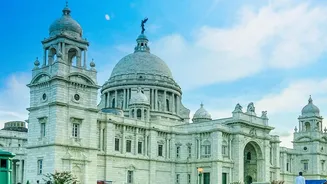
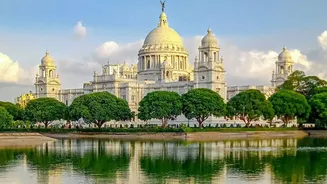
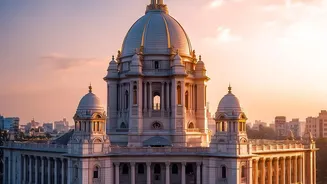
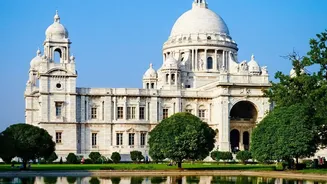
The most visible reason for the nickname is the city's stunning colonial architecture. The British constructed numerous buildings using styles popular in Europe at the time, including Neoclassical, Gothic, and Victorian designs. The most spectacular example is the Victoria Memorial, a massive white marble monument built between 1906 and 1921 to honour Queen Victoria. Often called the 'Taj of the Raj', its design blends British and Mughal elements, but its purpose as a grand imperial monument was clear. Another key structure is St. Paul's Cathedral, a magnificent Indo-Gothic church completed in 1847. Its tower was even modelled after the Bell Harry Tower of Canterbury Cathedral, creating a direct architectural link to England.
A Walk Through Dalhousie Square
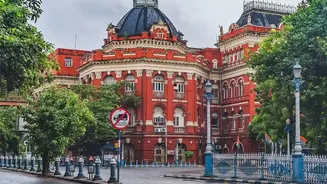
For a traveller looking to experience colonial Calcutta, the best place to start is B.B.D. Bagh, formerly known as Dalhousie Square. This area was the administrative core of British India and remains a hub of heritage buildings. Here you'll find the impressive Writers' Building, a 150-meter-long structure that once housed the clerks of the East India Company. Nearby stands the General Post Office (GPO), a striking building with a grand dome built on the site of the original Fort William. The entire square, arranged around the central Lal Dighi water tank, feels like a preserved piece of the 19th century. Walking through this 'office para' (neighbourhood of offices) is like stepping back in time, with each Corinthian pillar and stately facade telling a story.
Your 'London of India' Travel Itinerary
To best explore this side of Kolkata, plan a walking tour focused on its colonial heartland, ideally between October and March to avoid the intense heat and monsoon. Start your day at the Victoria Memorial, exploring its lush gardens and museum galleries. From there, it’s a short walk to the Maidan, the city's vast green space, and St. Paul's Cathedral. Head north towards B.B.D. Bagh (Dalhousie Square) to see the Writers' Building, the GPO, and St. John's Church, one of the oldest in the city. Don't just look at the buildings; notice the cultural details that linger, like the iconic yellow Ambassador taxis and the historic tram system, which add to the city's old-world charm. For a moment of peace, end your day with a stroll along Prinsep Ghat, where the neoclassical monument offers beautiful views of the Hooghly River at sunset.