







An Object on a Collision Course
In early 2022, astronomers tracking objects in space noticed something unusual: a four-tonne piece of space junk was on an unavoidable collision course with the Moon. The object, a spent rocket booster tumbling through the cosmos for years, was projected
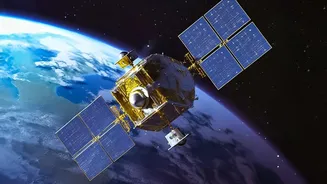
to hit the far side of the Moon on March 4, 2022. Initial analysis by observers, including astronomer Bill Gray who first raised the alarm, identified the object as the upper stage of a SpaceX Falcon 9 rocket. This rocket had successfully launched the Deep Space Climate Observatory (DSCOVR) for NASA back in 2015. After completing its mission, the booster was left in a chaotic deep-space orbit, and its trajectory was now set to end with a dramatic lunar impact, travelling at thousands of kilometres per hour.
A Case of Mistaken Identity
The story took a sharp turn just weeks before the predicted impact. After re-examining the data, Bill Gray issued a correction. The object wasn't from SpaceX after all. Further analysis strongly suggested the true culprit was the upper stage of a Chinese Long March 3C rocket, likely from the 2014 Chang'e 5-T1 mission, an experimental flight to test technology for a lunar sample return. This development transformed the event from a simple story of commercial space debris into a geopolitical mystery, especially after Chinese officials denied the booster was from their mission. The incident highlighted a major issue: the lack of a comprehensive system for tracking discarded hardware in deep space. Unlike in low-Earth orbit, where debris is more carefully monitored, objects sent further afield often become ghosts in the solar system until they reappear unexpectedly.
The Impact and a Surprising Discovery
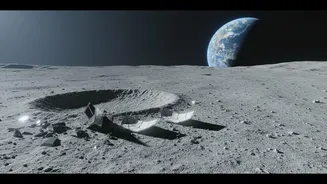
On March 4, 2022, the mystery rocket slammed into the lunar surface as predicted, far from any human-made structures or historic landing sites. For months, the exact location of the crater was unknown. Then, in June, NASA's Lunar Reconnaissance Orbiter (LRO) pinpointed the impact site. What it found was astonishing. Instead of a single, uniform crater, the rocket had created a peculiar double crater. An 18-metre crater was superimposed on a 16-metre one, forming a shape unlike any seen from previous rocket impacts, such as those from the Apollo program's S-IVB stages. Scientists were intrigued. This wasn't the signature of a typical spent rocket, which usually has most of its mass concentrated at the engine end. The double crater suggested the impacting object had large masses at both ends.
Clues in the Crater
The unique double crater provided a crucial clue that helped solidify the object's identity. While a standard SpaceX Falcon 9 upper stage has a heavy engine at one end and a light, empty fuel tank at the other, the Chinese rocket booster from the Chang'e 5-T1 mission was different. It was carrying a service module and a support structure for a sample return capsule, which could account for the significant mass at both ends of the object. Therefore, the shape of the crater strongly supported the theory that the impactor was the Chinese rocket, despite the official denial. For scientists, the accidental impact became an unplanned experiment. The crash excavated material from below the lunar surface, providing a fresh look at the Moon's geology in that region. While unintentional, it offered a rare chance to study the physics of high-velocity impacts on the lunar surface.
The Growing Problem of Space Junk
While this particular event posed no danger, it serves as a wake-up call. As more nations and private companies like SpaceX launch missions to the Moon and beyond, the amount of debris in cislunar space—the area between Earth and the Moon—is growing. This event was the second known unintentional rocket impact on the Moon, and more are expected. Astronomers and space agencies are now using incidents like this to highlight the need for better tracking and regulation. An abandoned rocket stage from a 2025 SpaceX launch is currently predicted to be the next piece of hardware to hit the Moon, with an expected impact in August 2026. This coming event gives scientists a chance to observe a known impact in real-time, but also reinforces the urgency of managing our footprint as we become a multi-planetary species.