






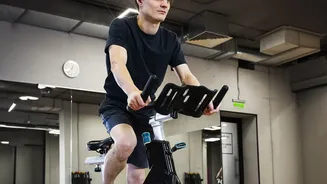
The Problem with Prolonged Sitting
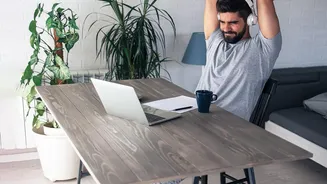
Our bodies are not designed to be stationary for eight hours a day. A sedentary lifestyle, common for many office workers, is linked to a host of health issues, including an increased risk for obesity, heart disease, diabetes, and certain cancers. On
a daily basis, it can cause muscle tension in the neck, shoulders, and back, as well as tight hips and poor posture. Beyond the physical toll, long periods of inactivity can also negatively impact mental health, contributing to feelings of anxiety and a decline in focus. The solution isn't necessarily a complete career change, but rather integrating small, consistent moments of movement throughout your day. These brief breaks can improve circulation, boost energy, and restore focus, making you more productive and healthier.
Seated Cat-Cow for Spinal Flexibility
This movement is a classic for a reason: it awakens the spine and relieves tension in the back and neck. Sit at the edge of your chair with both feet flat on the floor. Place your hands on your knees. As you inhale, arch your back, push your chest forward, and look up toward the ceiling (Cow Pose). As you exhale, round your spine, tuck your chin to your chest, and gently pull your navel inward (Cat Pose). Flow between these two positions for five to eight breaths, syncing your movement with your breath to gently massage the spine and open up the chest.
Desk Chair Spinal Twist
Twists are excellent for aiding digestion and releasing tension in the lower back. Sit sideways in your chair, or if it swivels, sit tall and use your feet to turn your body to one side. Grasp the back of the chair with both hands. On an inhale, lengthen your spine, sitting up as tall as possible. On an exhale, use your hands to gently deepen the twist, looking over your shoulder. Hold for three to five deep breaths, feeling the stretch through your torso. Release slowly and repeat on the other side. This movement helps decompress the vertebrae after hours of hunching.
Eagle Arms for Shoulder and Upper Back Relief
Typing and mousing can create significant tension in the shoulders and upper back. Eagle Arms provides a deep stretch to this area. Extend your arms straight out in front of you. Cross your right arm over your left, then bend your elbows. Bring the backs of your hands together, or if you have the flexibility, wrap your right hand around to press your palms together. Lift your elbows to shoulder height and gently press your forearms away from your face. You should feel a stretch across your shoulder blades. Hold for 30 seconds, breathe deeply, and then switch sides.
Standing Forward Fold to Release Hamstrings
When we sit, our hamstrings remain in a shortened, contracted state, which can lead to tightness and lower back pain. Stand up and step a foot or two away from your desk. With your feet hip-width apart, exhale and hinge forward from your hips, keeping your back straight. Rest your hands on your desk or let your arms hang toward the floor. Keep a slight bend in your knees to protect your lower back. Let the weight of your head release any tension in your neck. Hold for 30 seconds to a minute, breathing into the back of your legs.
Wrist and Finger Stretches
Don't forget your hands. Constant typing can lead to repetitive strain. Extend one arm in front of you with the palm facing up. With your other hand, gently bend your fingers down toward the floor until you feel a stretch in your forearm. Hold for 20-30 seconds. Then, flip your hand so the palm faces down and gently press your fingers toward the floor again. Repeat on the other side. Follow this by making gentle fists and then spreading your fingers wide, repeating five times to improve circulation.