


The Classic Recipe for Meteor Colours
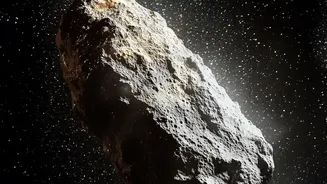
For decades, the explanation for the vibrant colours of meteors was straightforward and focused on the composition of the meteoroid itself. As these small fragments of asteroids or comets blaze through our atmosphere, they heat up and vaporise, causing
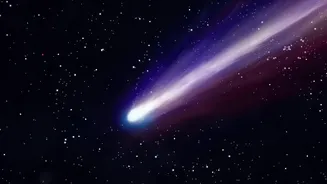
different chemical elements to glow with distinct colours, much like a fireworks display. A flash of orange-yellow was attributed to sodium, while iron would produce a yellow glow. A blue-green streak suggested the presence of magnesium, and a violet hue pointed to calcium. This chemical fingerprinting has been a fundamental tool for astronomers, allowing them to analyse the make-up of these celestial visitors from afar. The basic principle was that the rock determined the light show.
NASA's Revealing Snapshot
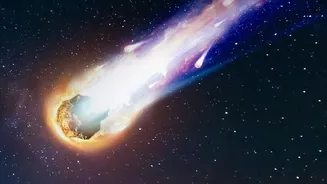
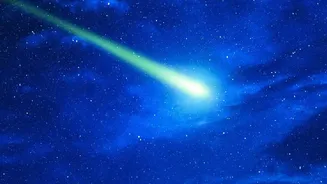
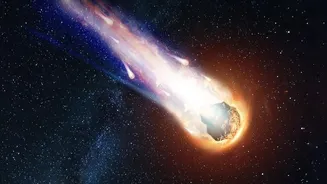
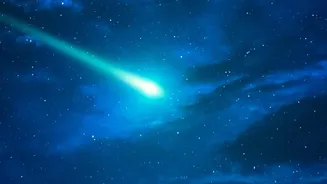
The headline-making image, featured as NASA's Astronomy Picture of the Day on August 3, 2026, captures a bright meteor streaking through the sky. While beautiful, its scientific importance lies in how it frames the phenomenon. The explanation accompanying the image notes that the meteor's glow is created partly by the meteoroid itself vaporising, but also by it “heating and exciting surrounding air in Earth's atmosphere”. This phrasing officially brings the atmosphere's role to the forefront. It’s not just the pebble from space that’s glowing; the air it rips through is also putting on a light show. This isn't a brand new discovery, as scientists have known the atmosphere plays a part, but this public emphasis helps shift our common understanding from a simple monologue by the rock to a dynamic dialogue between the rock and the sky.
A Duet of Light: Rock and Air
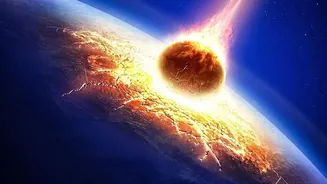
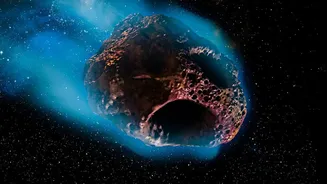
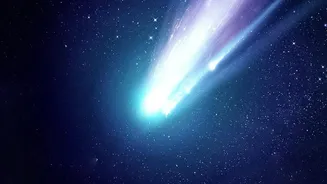
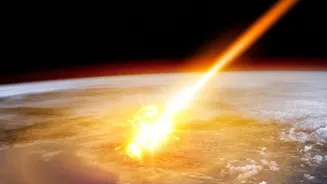
So, how does the atmosphere contribute? As a meteoroid enters the atmosphere at incredible speeds—often tens of kilometres per second—it doesn't just burn up due to friction. It violently compresses the air in front of it, creating a pocket of intensely hot, glowing plasma. This superheated air, primarily composed of nitrogen and oxygen, emits its own light, which tends to be reddish. Therefore, the colour we see is a combination of two sources: the elements from the vaporising meteoroid and the glowing atmospheric gases around it. The speed of the meteor becomes a critical factor. In slower meteors, the red glow from the atmosphere can be more prominent. In faster meteors, the colours from the meteoroid's own composition tend to dominate the display.
Untangling the Colours for Better Science
This more complex understanding doesn't make the old rules obsolete; it refines them. By using techniques like spectroscopy, which breaks light down into its constituent colours, scientists can now more accurately separate the light signature of the meteoroid from the light signature of the heated air. Understanding this interplay allows for a much more precise analysis of what these visitors from space are made of. This is crucial for several reasons. It helps us map the chemical composition of different asteroid families and comet trails, giving us a clearer history of our solar system's formation. Furthermore, a better grasp of how objects interact with our atmosphere at high speeds has practical applications, from improving spacecraft re-entry models to refining our strategies for planetary defence against larger asteroid threats.