



Decoding SMOPS-2026
The International Conference on Spacecraft Mission Operations, or SMOPS-2026, recently brought together the world's leading minds in space exploration. Jointly organised by the Indian Space Research Organisation (ISRO) and other international bodies,
the Bengaluru-based event served as a critical forum for space agencies, scientists, and industry leaders to map out the next generation of space missions. The theme, "Innovative Operations for Smart and Sustainable Space Mission Management," underscored a pivotal shift in the industry. While topics ranged from human spaceflight to cybersecurity, one area received significant attention: the increasing reliance on automation and artificial intelligence to manage spacecraft.
The Automation Imperative
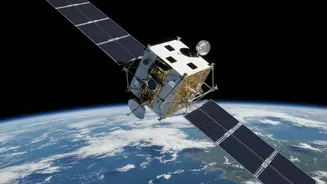
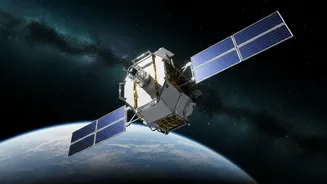
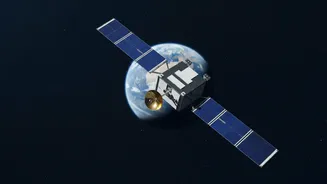
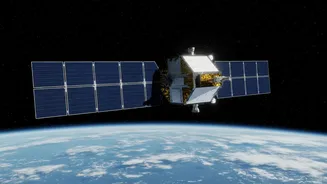
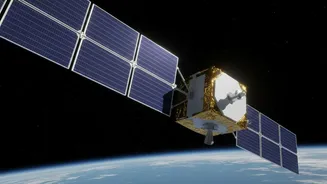
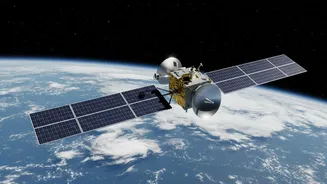
Discussions at SMOPS-2026 made it clear that spacecraft automation is no longer a futuristic concept but a present-day necessity. As humanity ventures farther into the cosmos and deploys vast constellations of satellites in Earth's orbit, the old model of a human operator for every action becomes untenable. Communication delays to deep-space probes like those heading to Mars or beyond can take minutes or even hours, making real-time ground control impossible during critical manoeuvres. Closer to home, the sheer volume of satellites creates a complex traffic management problem that requires split-second, automated decisions to avoid collisions. ISRO Chairman V. Narayanan highlighted the need for international collaboration to tackle these emerging challenges, with AI-driven automation being a key part of the solution.
From Remote Control to True Autonomy
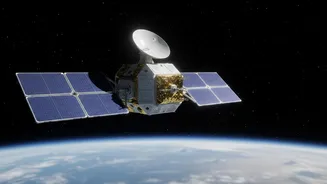
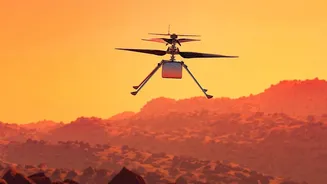
It's important to distinguish between remote operation and true autonomy. For decades, spacecraft have been operated from the ground, receiving commands and executing them. Autonomy is different. It involves a spacecraft using onboard AI and sensors to make its own decisions in real-time without waiting for instructions from Earth. This could mean a Mars rover independently navigating around an obstacle to find a better route, a satellite adjusting its own orbit to avoid debris, or a deep-space probe putting itself into a safe mode upon detecting a system failure. Recent demonstrations, like the US Air Force Research Laboratory using a neural network to control a satellite's attitude, prove this technology is moving from simulation to reality.
The Promises of Self-Flying Spacecraft
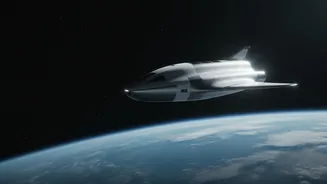
The benefits of successful autonomous operations are immense. For one, it dramatically reduces operational costs by minimizing the need for large, 24/7 ground control teams. More importantly, it enables missions that would otherwise be impossible. Exploring the unpredictable oceans under the ice of Jupiter's moon Europa, for example, would require a craft capable of independent exploration where communication is severely limited. Autonomy also enhances mission safety and success rates by reacting to unexpected events far faster than a human operator could. Furthermore, AI-powered systems can sift through vast amounts of scientific data, prioritizing what gets sent back to Earth and even identifying new targets of interest on their own.
Challenges on the Path Forward
Despite the momentum, the road to fully autonomous spacecraft is paved with challenges. The primary concern is reliability and trust. Mission operators need to be certain that an AI will make the right decision in a life-or-death scenario millions of miles from home. Developing and validating software for the harsh, unpredictable environment of space is incredibly difficult. There are also significant security concerns, as autonomous systems could present new vulnerabilities to cyber threats. Finally, there's a cultural hurdle; the space industry has a long tradition of caution and a reluctance to adopt new technologies without a proven flight heritage, something autonomous systems are only now beginning to build.