




A Galactic Neighbor Under the Microscope
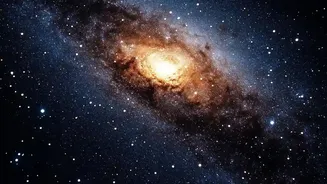
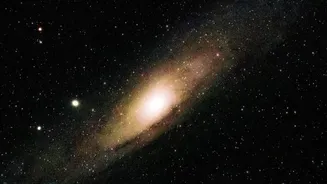
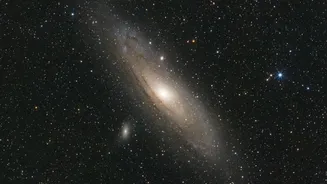
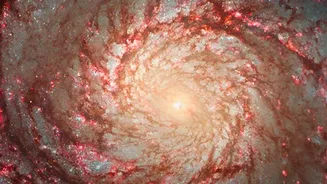
At 2.5 million light-years away, the Andromeda galaxy (M31) is our closest major galactic neighbor. It’s so close, in fact, that it’s visible to the naked eye from a dark-sky location. For astronomers, this proximity makes Andromeda an invaluable natural
laboratory. It’s a spiral galaxy like our own Milky Way, but we have the advantage of an outside-in perspective, allowing us to study its structure and history in ways we simply can't for our home galaxy. A new study, combining data from two huge Hubble surveys, has provided the most detailed look yet at Andromeda's recent history, treating its stars like a fossil record of past events.
Cosmic Detective Work with Hubble
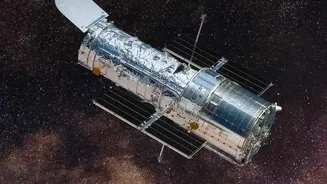
The research relies on two ambitious projects: the Panchromatic Hubble Andromeda Treasury (PHAT) and its southern counterpart, PHAST. Over years, Hubble meticulously imaged two-thirds of Andromeda’s sprawling disk, resolving an incredible 200 million individual stars. By analyzing the color and brightness of these stars, astronomers can build a timeline of when they were born. Massive, bright blue stars burn hot and die young, indicating recent star formation, while smaller, redder stars are long-lived, representing an older population. The team divided the vast image into thousands of smaller regions to reconstruct the star birth history across the entire galaxy.
The Long, Slow Fade
The study confirms what previous research suggested: Andromeda experienced a massive burst of star formation about 2 billion years ago, likely from a merger with another galaxy. But the new data paints a detailed picture of what came after. Around 500 million years ago, Andromeda was forming stars at a rate of about one solar mass per year, similar to the Milky Way's current rate. However, that activity has been steadily declining since. By 40 million years ago, the rate had dropped by half. Today, it has plummeted to just one-fifth of a solar mass per year, indicating the galaxy is entering a much quieter phase of its life.
A Ring of Fading Fire
Interestingly, the decline isn't uniform across the galaxy. Much of Andromeda's recent star formation has been concentrated in a massive ring structure, located about 32,000 light-years from the galactic center. It is the slowing activity within this specific ring that is driving the galaxy's overall decline. This suggests Andromeda isn't running out of the raw gas and dust needed to make stars; rather, it's naturally winding down after its more boisterous, youthful periods of activity. Lead author Tobin Wainer likened it to taking a breather after running a marathon.
A Bully in the Neighborhood?
The study also turned up a tantalizing clue about a potential galactic interaction. In the region of Andromeda closest to its small satellite galaxy, M32, star formation dropped off even more sharply about 60 million years ago. While astronomers can't say for certain that an interaction with M32 is the cause, its proximity makes it a prime suspect for disrupting the gas in that part of Andromeda's disk. This finding could help scientists model the past encounters between these two neighboring galaxies.