




A Window to the Bronze Age
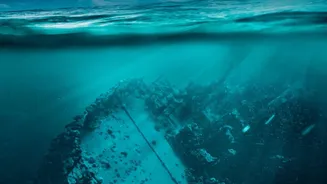
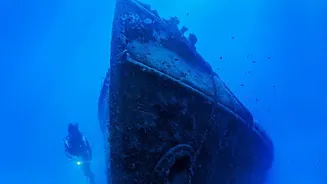
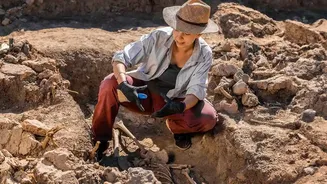
Off the coast of Turkey, near Kekova Island, underwater archaeologists have made a discovery that could rewrite the history of maritime trade. At a depth of nearly 100 feet, they found not a ship, but its ghost. The wooden hull of the vessel had long
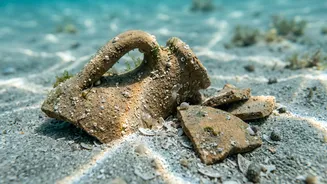
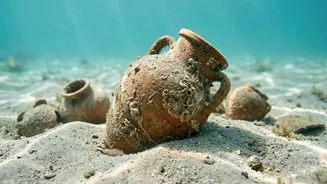
since disintegrated, eaten away by marine organisms over the millennia. What remained, however, was its precious cargo: more than 30 large ceramic jars, known as amphorae, and three stone anchors, all resting on the seabed. Led by archaeologist Hakan Öniz of Akdeniz University, the team has dated the find to the Early Bronze Age, between 4,400 and 4,700 years ago. This would make it the oldest known shipwreck in the world, a vessel that sailed the Mediterranean around the same time the first pyramids were being built in Egypt.
The Treasures in the Jars
The amphorae are more than just ancient pottery; they are time capsules. Analysis of the clay indicates they were crafted in workshops in the Jordan Valley, providing a crucial clue about the ship's origins. Researchers believe these jars were used to transport valuable commodities like olive oil or wine, the lifeblood of ancient commerce. Remarkably, some of the intact jars still contain a viscous residue, the faint remnants of their contents. Scientific analysis is underway to determine exactly what these liquids were, which could also include tree resins used for waterproofing or incense. This discovery offers the first hard proof of long-suspected trade routes connecting the Levant (modern-day Israel, Jordan, and Syria) with major Bronze Age hubs like Troy and the Minoan civilization on Crete.
Life Aboard an Ancient Ship
The finds also offer a fascinating glimpse into the daily lives of these ancient mariners. The ship itself was estimated to be a modest sail-powered vessel, about 33 feet long. One of the most intriguing discoveries was a unique ceramic vessel with markings and holes, which researchers believe may have been a churn. This has led to the exciting hypothesis that sailors kept live goats on board during long voyages, using their milk to produce butter or cheese. This detail transforms the wreck from a simple collection of artifacts into a human story, illustrating the resourcefulness required to survive long and perilous journeys across the open sea nearly five millennia ago.
Connecting the Dots of History
Before this discovery, the oldest known shipwreck was a 4,200-year-old vessel found near the Greek island of Dokos. This new find pushes back the timeline of organised, seaborne commerce by several centuries. The style of the pottery found off Kekova Island matches similar jars discovered at archaeological sites near Egypt’s pyramids and in ancient Troy, weaving a tangible thread between these legendary centres of the ancient world. According to Karin Sowada, an archaeologist who worked on the project, the wreck represents a 'missing piece' of the story about ancient trade relations in the eastern Mediterranean. It confirms that complex trade networks were thriving long before the classical Greek and Roman empires that often dominate our historical imagination.