






A Strategic National Asset
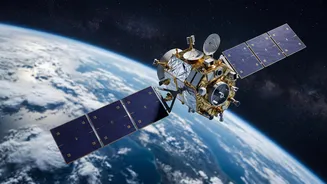
The Indian Space Research Organisation (ISRO) is far more than a government-owned company; it is a strategic asset integral to national security, sovereign capability, and socio-economic development. Its functions extend to defence reconnaissance, communications
infrastructure, and weather forecasting, making it a cornerstone of India's strategic autonomy. Recent statements from both the government and ISRO's leadership have emphatically clarified that the agency will not be privatised. The core reasoning is that its strategic responsibilities, which include critical national security missions, cannot be guided by the profit motives that drive private corporations. Ownership and control of this vital national infrastructure will remain firmly with the government to protect the national interest.
Privatisation vs. Commercialisation
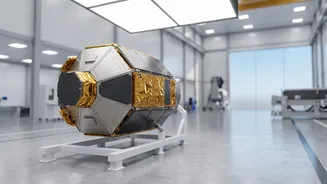
The confusion over ISRO's future stems from a misunderstanding of the government's space reforms. The policy is not to privatise ISRO itself but to commercialise certain mature technologies and routine operations. For decades, ISRO has handled everything from research and development to manufacturing and launching rockets. The new model, outlined in the Indian Space Policy 2023, involves transferring the manufacturing of proven systems like the Polar Satellite Launch Vehicle (PSLV) to private companies. This move is designed to expand India's overall space ecosystem. ISRO Chairman V Narayanan has clarified that around 80% of the agency's budget is already invested in a network of nearly 450 private industries that act as suppliers and partners. The current reforms aim to deepen this partnership, not dissolve the parent agency.
A New Role for ISRO
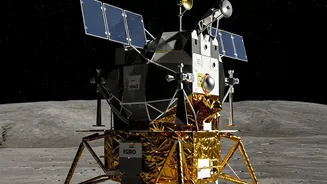
By offloading routine manufacturing, ISRO is being freed up to focus on what it does best: pioneering advanced research and executing complex, high-risk missions. The agency's future lies in frontier science, including deep-space exploration, planetary missions, human spaceflight (Gaganyaan), and developing next-generation launch systems. This strategic shift allows ISRO's scientists and engineers to concentrate on the demanding missions that are currently beyond the scope of the private sector, such as establishing the Bharatiya Antariksh Station by 2035 and a crewed mission to the Moon by 2040. Rather than being diminished, ISRO's role is being elevated to focus purely on cutting-edge R&D and strategic national goals.
IN-SPACe and NSIL: The Enablers
To manage this new hybrid ecosystem, the government has created two key bodies. The Indian National Space Promotion and Authorisation Centre (IN-SPACe) acts as a single-window agency to facilitate and regulate the activities of private space companies, known as Non-Governmental Entities (NGEs). It helps them use ISRO's facilities, shares technical expertise, and authorises their missions. The second body, NewSpace India Limited (NSIL), is ISRO's commercial arm. NSIL's mandate is to commercialise ISRO's products and services, manage technology transfers, and procure launch services from private manufacturers. Together, these organisations create a structured framework where ISRO drives research, IN-SPACe enables private participation, and NSIL handles the business side, allowing the entire Indian space sector to grow.
Expanding India's Global Share
The ultimate goal of these reforms is economic. India's space economy was valued at around $8.4 billion in 2023, representing just 2% of the global market. The government aims to increase this to $44 billion by 2033. Achieving such ambitious growth requires a massive scaling of production and launch capacity that ISRO alone cannot manage. It demands private capital, industrial efficiency, and entrepreneurial energy. By inviting the private sector to build on the mature technologies that ISRO has spent decades perfecting, the country can significantly increase its number of annual launches, build more satellites, and compete more aggressively for international contracts. This creates a scenario where a thriving private sector complements a focused, research-driven ISRO.