




Decoding the SMOPS-2026 Conference
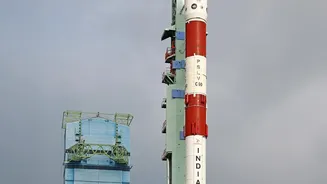
The International Conference on Spacecraft Mission Operations, or SMOPS, is a global gathering of space agencies, scientists, and industry leaders. The 2026 edition, held in Bengaluru, India, was jointly organised by ISRO, the Astronautical Society of India (ASI),
and the International Academy of Astronautics (IAA). The theme centred on creating smart and sustainable management for the next generation of space missions, with a significant focus on the role of automation and artificial intelligence in achieving this. The conference serves as a vital platform for collaboration to address the mounting challenges of an increasingly complex space environment.
The Sky Is Getting Crowded
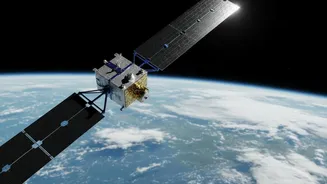
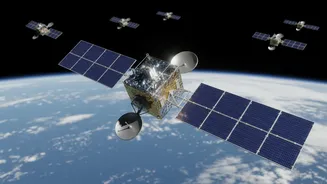
The primary driver behind this push for automation is the sheer volume of objects in orbit. With the rise of large satellite constellations for communications and Earth observation, the complexity of managing these fleets is growing exponentially. Each satellite requires constant monitoring and management, a task that becomes unscalable when managed manually by human operators on the ground. As fleets grow, operators must respond rapidly to dynamic priorities, a challenge that current, human-centric models struggle to meet. This orbital congestion creates a higher risk of collisions and requires more intensive management, stretching the resources of ground-based mission control centres.
What 'Routine Decisions' Actually Mean
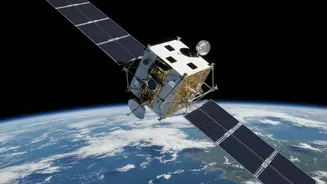
When experts discuss routine decisions, they aren't talking about the complex, mission-critical choices made by scientists. Instead, they refer to the high-volume, predictable tasks that keep a satellite functioning correctly. These include minor, regular orbital adjustments known as station-keeping to counteract gravitational pulls and atmospheric drag. Other examples include managing the satellite's power systems, ensuring batteries are charging and discharging correctly, maintaining thermal balance to protect sensitive electronics, and executing pre-planned collision avoidance manoeuvres for known space debris. While mundane, these tasks are essential for the health and longevity of any spacecraft.
The Practical Case for Onboard Autonomy
The argument for automating these decisions is overwhelmingly practical and economic. Automation simplifies these mundane tasks, liberating human operators to focus on more critical, nuanced decision-making that requires their judgment. This leads to a significant reduction in operational costs, a crucial factor as the industry expands. An autonomous system can respond instantly to a minor anomaly or execute a manoeuvre without waiting for a signal from a ground station, which might be out of range. This increases mission efficiency, enhances safety by enabling faster responses to collision threats, and ultimately boosts the revenue-generating potential of commercial constellations by maximizing their operational uptime.
More Than Just Simple Scripts
The automation being discussed at events like SMOPS-2026 goes far beyond simple, pre-programmed scripts. The industry is moving toward implementing artificial intelligence and machine learning, allowing a spacecraft to adapt to new developments and respond dynamically to real-world conditions. Instead of just following a rule, an AI-powered system can analyse incoming sensor data, diagnose a developing issue, and implement a solution independently. This represents a significant leap from ground-in-the-loop interventions to true onboard autonomy, where the spacecraft thinks for itself within a defined set of parameters.
Navigating the Risks and Challenges
Despite the clear benefits, the path to fully autonomous spacecraft is not without its hurdles. A primary concern is ensuring the reliability and safety of these systems; a software bug in an autonomous system could have catastrophic consequences. As demonstrated by past mission failures caused by software errors, insufficient testing can lead to disaster. Another significant challenge is cybersecurity, as autonomous systems could present new vulnerabilities for malicious actors to exploit. Furthermore, there is the challenge of developing space-qualified processors that are powerful enough to run advanced AI models but also resilient enough to withstand the harsh radiation environment of space. Therefore, the adoption of autonomy is expected to be a gradual process, building trust through extensive testing and retaining human oversight for critical scenarios.