




An Old Friend, Seen in New Light
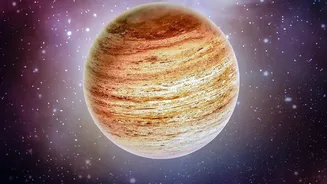
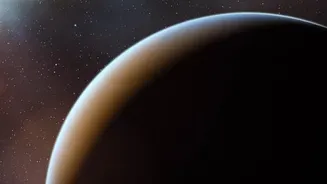
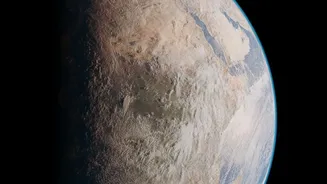
First discovered in 2017, LHS 1140 b quickly became a star candidate in the search for life. It’s a super-Earth, about 1.7 times the size and 5.6 times the mass of our own planet, orbiting within its star's habitable zone. This 'Goldilocks' region is where
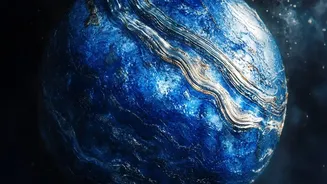
conditions could be just right for liquid water to exist on a planet's surface. For years, scientists debated its nature. Was it a dense, rocky world, or something else entirely? New, more precise measurements have revised its density downwards, suggesting it isn't just rock. This has led to two tantalizing possibilities: it could be a dense mini-Neptune or, more excitingly, an ocean world holding a vast amount of water.
The Crucial Confirmation of an Atmosphere
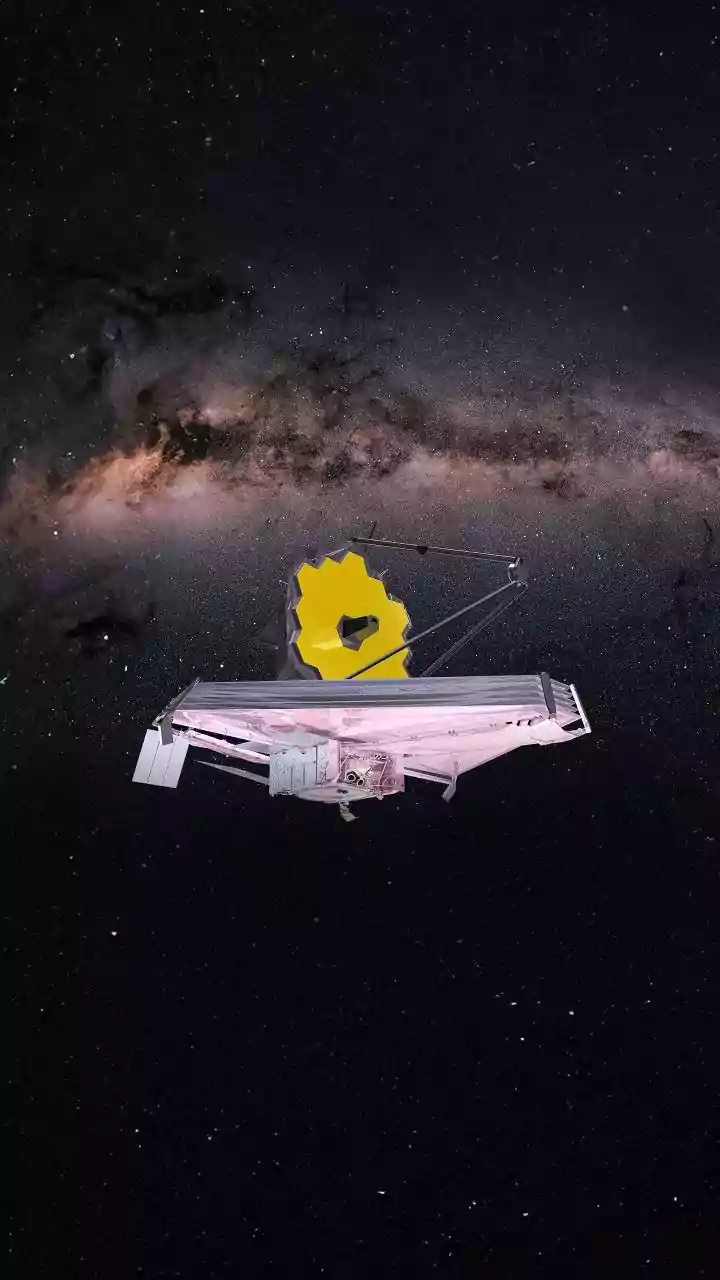
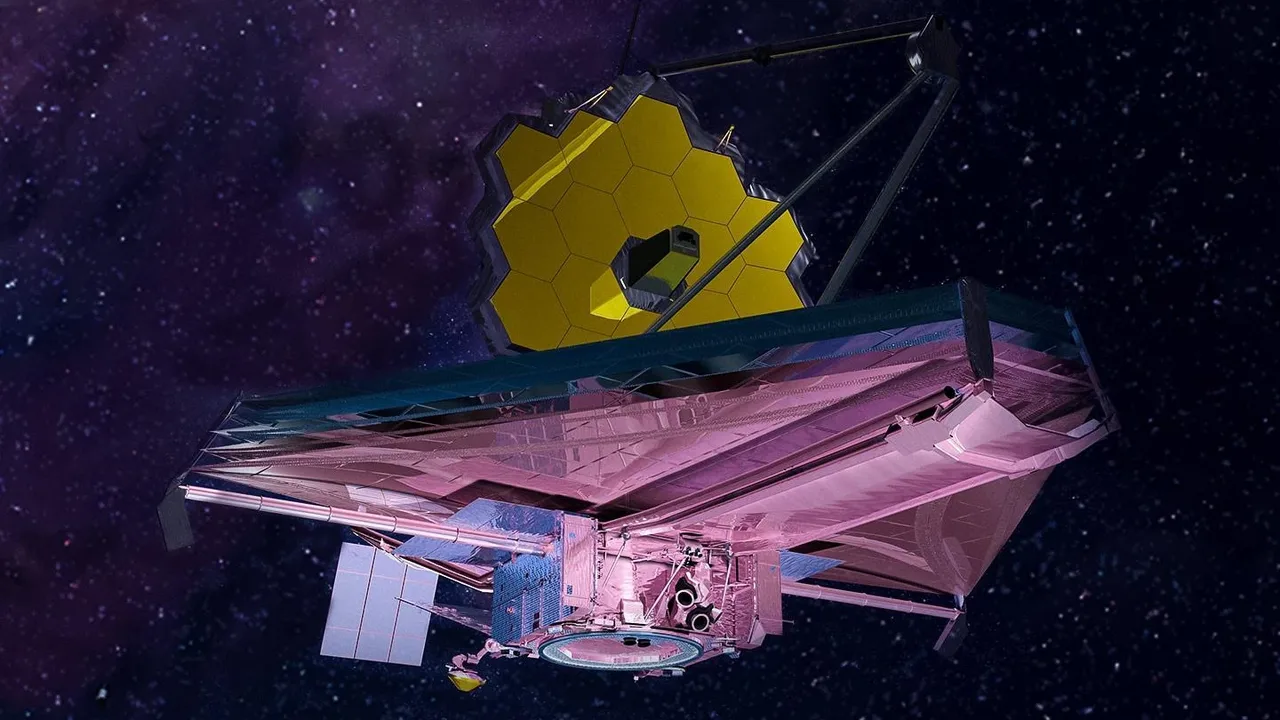
The most significant recent breakthrough is the confirmation that LHS 1140 b has an atmosphere, a first for a rocky planet in a habitable zone. This milestone discovery didn't come from directly seeing the air, but from detecting helium escaping from the planet into space. Observations in 2024 using the Magellan Clay telescope in Chile spotted the helium signature, which models predicted would be present if an atmosphere existed. Follow-up studies with the James Webb Space Telescope (JWST) have since ruled out a hydrogen-dominated atmosphere, which would be typical for a gassy mini-Neptune. Instead, the evidence points towards a heavier atmosphere, possibly rich in nitrogen, water vapour, and carbon dioxide—the kind of secondary atmosphere that could be generated by a planet's geology and is crucial for sustaining a stable climate.
From 'If' to 'What Kind'
This confirmation has shifted the entire scientific conversation. The question is no longer if LHS 1140 b has an atmosphere, but what kind of world it creates. The planet's lower-than-expected density suggests that 10-20% of its mass could be water. This has led to a fascinating new model: LHS 1140 b could be a 'snowball' or 'eyeball' planet. Because it orbits a dim red dwarf star and is likely tidally locked—meaning one side always faces the star—it might be a frozen world with a permanent liquid ocean on its star-facing side. Models suggest this 'bull's-eye' ocean could be vast, perhaps half the size of our Atlantic, with potentially comfortable temperatures of around 20 degrees Celsius at its centre.
A Planet Orbiting a Different Sun
The host star, LHS 1140, is a small, cool red dwarf. Orbiting such a star comes with a unique set of challenges and opportunities for life. On the one hand, red dwarfs are known for their violent flares of radiation, especially in their youth, which could strip away a young planet's atmosphere. However, LHS 1140 appears to be a relatively quiet and old star, at least 5 billion years old, suggesting the planet may have been spared the worst of this activity. This longevity is a major advantage, giving potential life far more time to evolve than it has had on Earth. The planet's ability to retain an atmosphere for billions of years under these conditions is a hugely promising sign.
The Next Chapter in an Epic Search
While the presence of an atmosphere is a landmark finding, the details remain tantalizingly out of reach. Scientists have seen tentative hints of nitrogen, but confirming this—along with searching for biosignatures like carbon dioxide, methane, and water—will require years of further observation with the JWST. The telescope can only view the planet during a few windows each year, making data collection a slow, patient process. This global scientific effort, involving researchers and observatories from around the world, mirrors the collaborative spirit of modern astronomy. Projects like India's own AstroSat, the country's first multi-wavelength space observatory, contribute to this vast collective endeavour to understand our place in the cosmos. Each discovery, whether from Chile, space, or elsewhere, adds another piece to the puzzle.