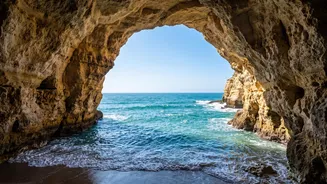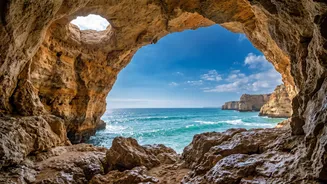

The Algarve's golden coastline is famous for secret beaches and sunlit grottos. But to truly understand these magnificent sea caves, you must first look to the towering cliffs above them—the silent, golden storytellers of this dramatic landscape.
The Golden Architects of the Coast
Stretching
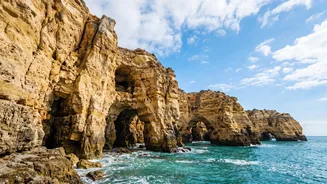
for miles along Portugal’s southern coast, the cliffs of the Algarve are more than just a beautiful backdrop; they are the architects of the region's most famous natural wonders. This coastline, particularly between Lagos and Albufeira, is known as the 'Costa de Ouro' or Golden Coast, named for the warm, ochre hue of its rock formations. These cliffs are composed primarily of Miocene-era limestone, a sedimentary rock formed roughly 20 million years ago from the compressed shells and skeletons of marine life when this area was a shallow sea. This limestone has two key properties that make the Algarve's cave systems possible: it is relatively soft and it dissolves slowly in slightly acidic water, making it highly susceptible to the artistic forces of erosion.
A Masterclass in Erosion
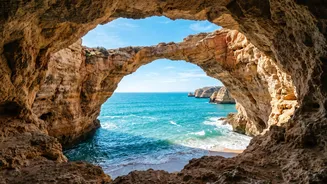
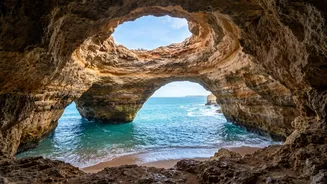
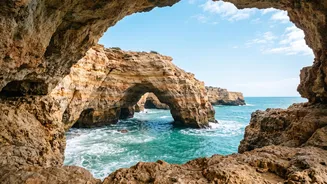
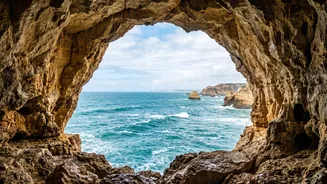
The creation of the Algarve’s sea caves is a lesson in the patient, relentless power of nature. It's a dual process working from above and below. The Atlantic Ocean provides the brute force; waves relentlessly crash against the base of the cliffs, forcing water and compressed air into small cracks and fissures. This hydraulic action gradually pries the rock apart, widening weaknesses into notches, then tunnels, and eventually, grand chambers. Simultaneously, rainwater, which is naturally slightly acidic, seeps down through the porous limestone from the clifftops, dissolving the rock in a process geologists call karst dissolution. Over thousands of years, these two forces meet, sculpting the awe-inspiring arches, grottoes, and sea stacks that define landmarks like Ponta da Piedade.
Benagil Cave: The Crowning Jewel
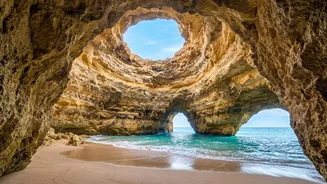
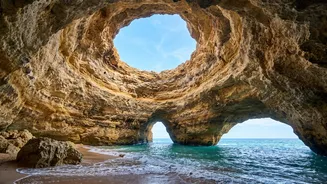
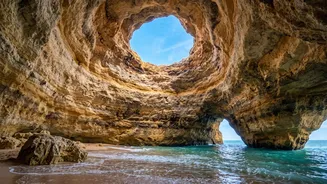
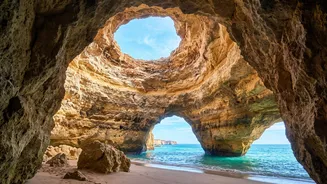
No cave exemplifies this process more perfectly than the world-famous Benagil Cave, often called the 'Cathedral'. This magnificent sea cave is renowned for the circular opening in its roof, known as an 'olho' or eye. This feature was created when the cave's ceiling, thinned by erosion from both the sea below and rainwater from above, eventually collapsed. The collapse left a natural skylight that pours sunlight onto a hidden beach within the domed chamber, creating a truly magical scene. The cave’s interior walls tell a geological story, with smoother, scalloped rock near the water showing the work of the waves, and rougher, pitted surfaces higher up revealing the effects of rainwater.
Ponta da Piedade: A Labyrinth of Stone
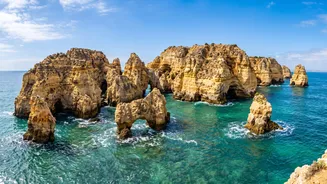
Near the town of Lagos lies Ponta da Piedade, a stunning headland that presents a fantasy landscape of rock pillars, natural tunnels, and hidden grottoes. Unlike the singular chamber of Benagil, Ponta da Piedade is an intricate maze sculpted from the same golden limestone. Here, erosion has chiselled the cliffs into imaginative shapes that have earned names like 'The Kissing Couple' and 'The Elephant'. The clear, turquoise waters reflect the sunlight against the golden rock, creating an otherworldly atmosphere inside the various grottoes. It is a prime example of how the same geological forces can create a wide variety of coastal features, from solitary caves to complex networks of arches and stacks.
How to Witness the Wonder
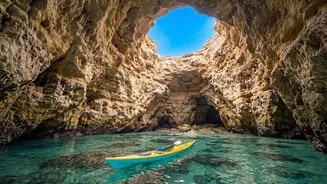
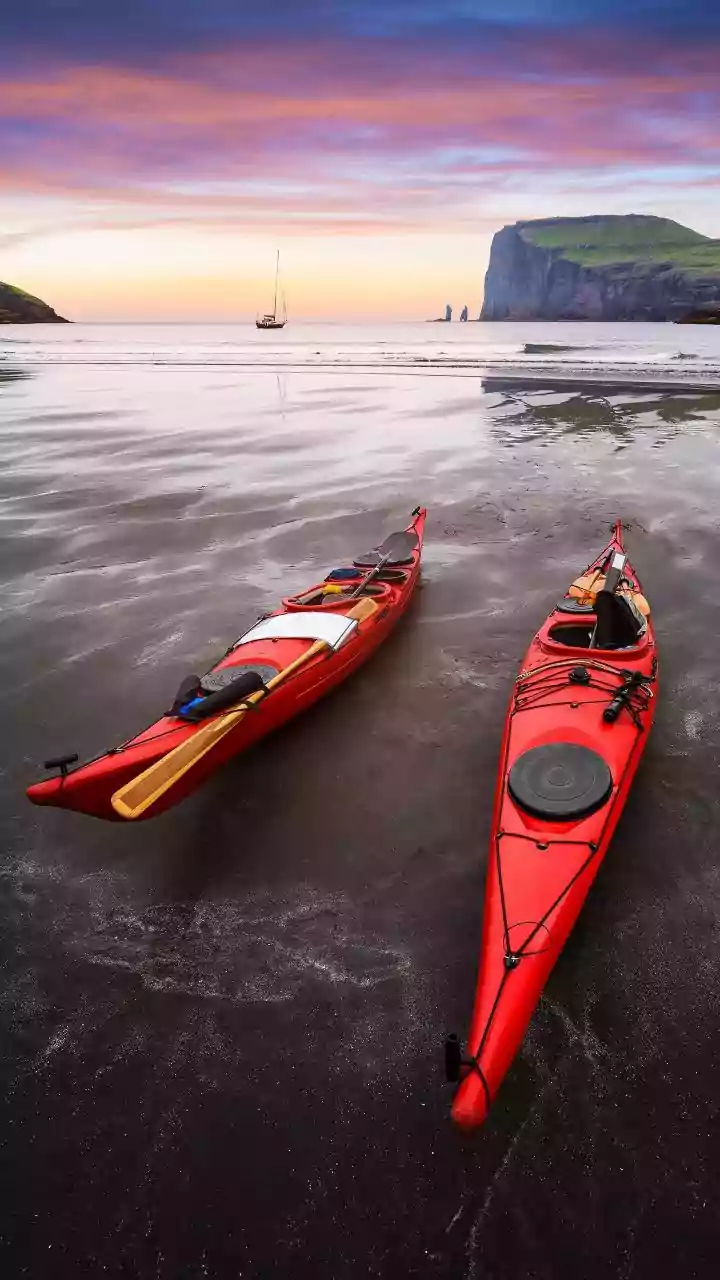
Experiencing these geological marvels up close is essential. The vast majority of caves are only accessible from the water. Boat tours are the most popular and accessible option, often departing from marinas in Lagos, Portimão, and Albufeira. These tours offer a comfortable way to see a wide stretch of coastline and numerous caves in a single trip. For a more intimate and adventurous experience, guided kayak or stand-up paddleboard (SUP) tours allow you to get closer to the rock formations and glide into smaller grottoes that larger boats cannot access. While it used to be possible to land on the beach inside Benagil Cave, regulations now prohibit this to preserve the site and ensure safety, making all visits a view from the water.