




What Is This New Safety Push?
The new safety framework centres on Vehicle-to-Vehicle (V2V) communication, a form of connected-car technology that allows vehicles to 'talk' to each other in real-time. Cars, trucks, and even two-wheelers can wirelessly exchange data about their speed,
direction, and braking status several times per second. Recently, India’s Ministry of Road Transport and Highways (MoRTH) proposed a plan to make V2V systems mandatory for all new vehicles manufactured from October 2028. This move follows global trends and aims to create a network of cooperating vehicles that can anticipate and prevent accidents before a human driver could possibly react. This technology doesn't rely on a driver’s line of sight; it works around corners, through fog, and beyond the large truck blocking your view.
Why Focus on Sudden Braking?
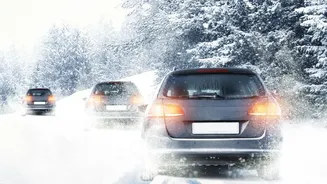
Of all the potential warnings this technology can provide, the Electronic Emergency Brake Light (EEBL) is considered a primary and highly practical application. The reason is simple: it directly addresses one of the most common causes of collisions—rear-end shunts caused by a sudden stop. When one car brakes hard, it triggers a chain reaction. A human driver’s reaction time, combined with the braking distance of their vehicle, often isn't enough to prevent a crash, especially in dense traffic. V2V technology transmits a braking alert from the lead car to all following vehicles almost instantaneously. This digital warning can arrive seconds before a driver would visually notice the hazard, giving them crucial extra time to slow down safely and potentially preventing a multi-car pile-up.
How the Technology Works
The system, often called Cellular Vehicle-to-Everything (C-V2X), uses a dedicated short-range communication signal to broadcast a small packet of data. When a car’s internal systems detect an emergency braking event, it automatically sends out a standardized alert. Nearby vehicles equipped with the same technology receive this message, and their onboard systems can flash a warning on the dashboard, sound an alert, or even pre-charge the brakes for a faster response. This is a significant leap beyond current Advanced Driver Assistance Systems (ADAS), which rely on their own cameras and radar. While ADAS can only react to what it can 'see', V2V technology provides information about events happening hundreds of metres ahead, completely out of sight.
Challenges on the Road to Adoption
While the safety benefits are clear, the path to widespread adoption has hurdles. The single biggest challenge is achieving critical mass; the system is only effective when a large percentage of vehicles on the road are equipped with it. During the initial years, newly equipped cars will share the road with millions of older, non-connected vehicles. Another significant challenge is standardization. For the system to work, all manufacturers must use the same communication protocols so that a Tata can talk to a Maruti, a Mahindra, and a Mercedes-Benz. India's proposed AIS-230 standard aims to solve this. Finally, there are complexities specific to Indian roads, including mixed traffic conditions with pedestrians and cyclists, varied road quality, and ensuring the system works reliably in dense urban canyons and remote rural areas.
The Future of Driving Safety
The mandate proposed by MoRTH is a foundational step. It signals a shift from reactive safety features like airbags to proactive, preventative systems that stop accidents from happening in the first place. Starting with mandatory compliance for V2V-equipped vehicles from October 2027, the full mandate in 2028 will include two-wheelers, passenger cars, and commercial trucks, a crucial step for India's diverse traffic. The sudden-braking alert is just the beginning. The same technology will eventually warn of cars running red lights, pedestrians stepping into traffic, and approaching emergency vehicles. It lays the groundwork for a fully intelligent transport system where vehicles, traffic signals, and infrastructure all communicate to make journeys smoother and, most importantly, safer for everyone.