


A Trio in a Gravitational Tug-of-War
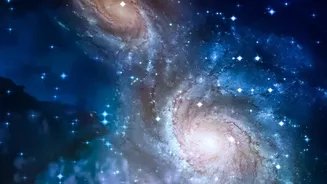
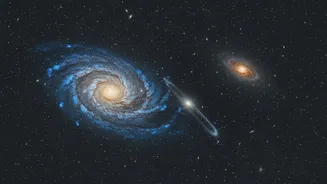
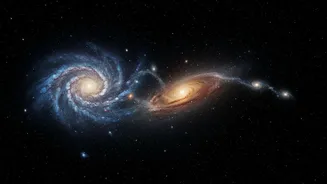
The subject of this stunning portrait is a galactic group known as NGC 7764A, located approximately 425 million light-years away in the constellation Phoenix. The image showcases three distinct galaxies that appear to be caught in a complex gravitational
dance. In the upper right, two galaxies are visibly interacting, their structures distorted and pulled into long streams of stars and gas called tidal tails. This gives the dramatic, albeit misleading, impression that they've been struck by the third, 'bowling-ball-shaped' galaxy in the lower left. From our unique vantage point, the interacting pair even happens to resemble the starship Enterprise from Star Trek.
The Slow Dance of Galactic Mergers
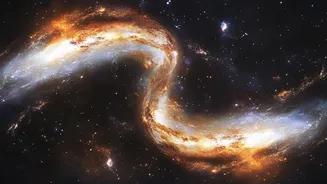
While the image looks like a snapshot of a high-speed collision, the reality is a process that unfolds over hundreds of millions of years. Galactic interactions are driven by the relentless pull of gravity. As galaxies draw near, their mutual gravitational forces begin to warp their shapes, triggering bursts of new star formation as clouds of gas and dust are compressed. The chances of individual stars colliding are incredibly small due to the vast distances between them. Instead, the galaxies engage in what scientists call "violent relaxation," where the orderly rotation of stars is disrupted, and their orbits become chaotic. It is through these major and minor mergers that large galaxies, like our own Milky Way, are built over cosmic time.
A Cosmic Time Machine
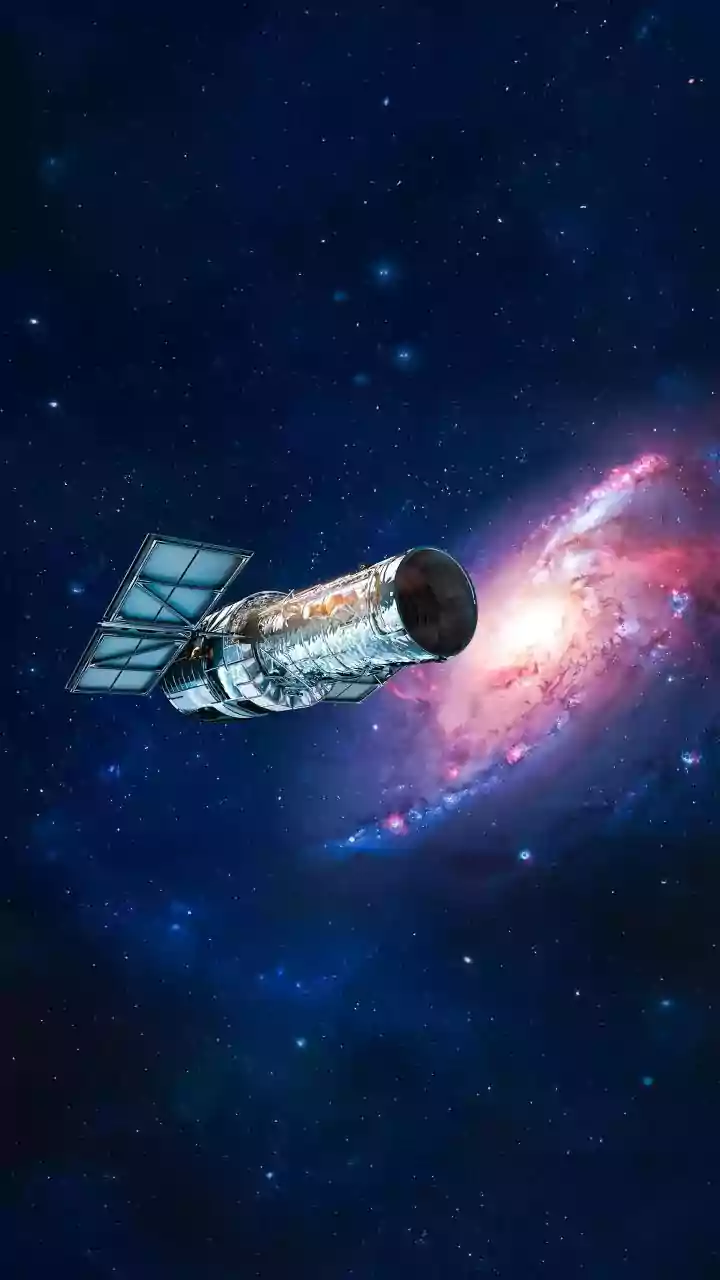
Because NGC 7764A is 425 million light-years away, we are seeing it as it was 425 million years ago—the time it took for its light to travel across space and reach Hubble's lens. In effect, telescopes like Hubble act as time machines, allowing astronomers to see the universe's past. This particular scene captures a key process in galactic evolution. It’s unclear if the third galaxy is currently part of the interaction or is simply a close neighbor. Regardless, observing such systems provides crucial clues about how galaxies form, grow, and eventually settle into new, more massive structures, often becoming large elliptical galaxies.
What This Teaches Us About Perspective
This image is more than a scientific curiosity; it's an invitation to adopt a cosmic perspective. Popularized by scientists like Neil deGrasse Tyson, this concept is about grasping our place in the vastness of the universe. Seeing galaxies merge over eons highlights the immense scales of time and space, dwarfing our everyday concerns. It’s a humbling viewpoint that connects us to the universe on a fundamental level, reminding us that the same physical laws shaping these distant galaxies also govern our own world. This perspective doesn't diminish human life but rather imbues it with a sense of wonder and interconnectedness with the cosmos.
A Preview of Our Own Future
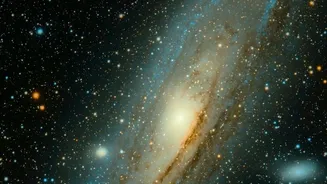
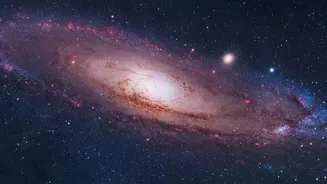
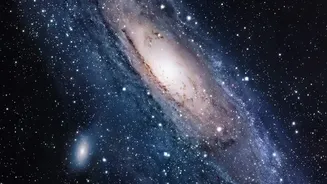
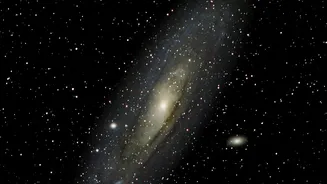
The cosmic drama of NGC 7764A is not just an alien spectacle; it's a preview of our own galaxy's distant future. The Milky Way is on a collision course with our nearest large galactic neighbor, the Andromeda Galaxy. In about 4.5 billion years, they will begin a similar, long process of merging to form a single, new galaxy. By studying systems like NGC 7764A, astronomers can better model and understand the fate of our own cosmic home. These images connect us to a universe that is not static or empty, but dynamic, creative, and constantly evolving through violent and beautiful collisions.