





The Anatomy of Vulnerability
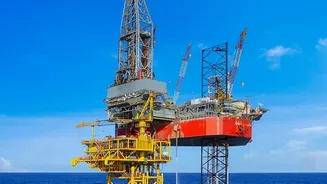
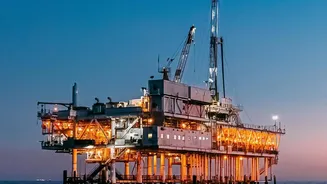
India is the world's third-largest energy consumer, a testament to our growing economy. But this growth is powered overwhelmingly by imported fuel. In fiscal year 2024-25, India's dependence on imported crude oil reached a record 89.4%. For natural gas,
the figure is around 50%. Much of this supply travels through volatile maritime chokepoints like the Strait of Hormuz, which handles a significant portion of India's oil imports. A conflict or blockade in such a region isn't a distant news story; it's a direct threat to our energy security. Recent geopolitical tensions have served as a stark reminder of this fragility, causing crude oil prices to spike and forcing a rapid rethink of procurement strategies. A prolonged disruption could trigger domestic fuel shortages, impact industrial production, and send inflationary shocks through the entire economy, affecting everything from transport costs to food prices.
The Economic Shockwave of a Blockade
When energy supply chains are disrupted, the economic consequences are immediate and severe. The first and most obvious impact is on price. A sudden scarcity of oil and gas would lead to a surge in prices at the pump and for household LPG cylinders, as seen during recent Middle Eastern tensions where Brent crude prices jumped dramatically in a short period. This directly translates to higher costs for transport, manufacturing, and agriculture. Beyond the immediate price shock, a blockade creates immense uncertainty, making it difficult for businesses to plan and invest. Industrial sectors that rely on gas could face rationing, hurting production and economic growth. The government, in turn, faces a difficult balancing act: absorb the cost through subsidies, straining the fiscal deficit, or pass it on to consumers, fueling inflation and potentially causing social unrest. Recent events, such as the drop in India's fuel exports due to disruptions in the Strait of Hormuz, show how quickly these scenarios can become reality.
Renewables: An Economic Shield
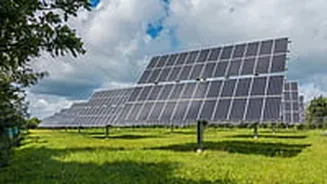
This is where the strategic case for renewable energy becomes crystal clear. It is no longer just an environmental issue; it is a matter of economic sovereignty and national security. Unlike oil or gas, which must be imported from politically sensitive regions, solar and wind energy are domestic resources. The 'fuel'—sunlight and wind—is free and not subject to geopolitical manipulation. Every unit of electricity generated from a solar panel or wind turbine is a unit that doesn't have to be imported. India has already made enormous strides, achieving some of the lowest costs for solar power globally. In 2024, India's renewable capacity helped avoid an estimated $14.9 billion in fossil fuel costs. By pursuing its ambitious target of 500 GW of non-fossil fuel capacity by 2030, India is not just fighting climate change; it is building a powerful economic shield against external shocks. Initiatives like the National Green Hydrogen Mission further aim to reduce fossil fuel imports by over ₹1 lakh crore by 2030, reinforcing this strategic shift toward self-reliance.
Energy Efficiency: The Unsung Hero
The other side of the energy security coin is efficiency—using less energy to achieve the same or better results. While increasing renewable supply is crucial, reducing demand is equally powerful and often more cost-effective. Energy efficiency is the 'first fuel' because the cheapest, cleanest, and most secure unit of energy is the one that is never used. For a country like India, where energy demand is set to grow faster than anywhere else in the world, the potential for savings is immense. The industrial sector holds the highest potential for energy savings, but gains can be made across transport, agriculture, and residential sectors. Simple measures, from adopting energy-efficient appliances to improving industrial processes, collectively reduce our overall import dependence, ease pressure on the grid, and lower costs for businesses and consumers. As geopolitical volatility becomes the new normal, making energy efficiency a first-order priority is no longer just good policy; it's a critical strategy for economic survival and sustained growth.