




Your 30-Day Visa-Free Welcome
In a significant move to boost tourism and cultural exchange, Uzbekistan has introduced a visa-free regime for citizens of India. Indian passport holders can now enter and stay in the country for up to 30 days without needing to apply for a visa in advance.
This development, announced during a high-level state visit, simplifies travel plans immensely, removing a key barrier for tourists eager to explore the Central Asian nation. While the visa is waived, travellers should ensure their passport is valid for the duration of their trip. It is also recommended to carry proof of accommodation and an onward or return ticket. The new policy is supported by growing connectivity, with 14 direct flights operating between India and Uzbekistan weekly, making the journey as straightforward as the entry process.
Samarkand: Jewel of the Silk Road
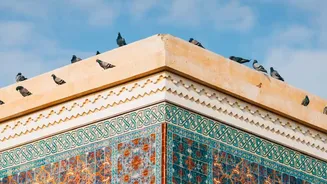
No trip to Uzbekistan is complete without visiting Samarkand, a city whose name alone evokes images of grandeur. Its centrepiece is the majestic Registan Square, an awe-inspiring ensemble of three grand madrasahs adorned with intricate tilework and towering arches. You can spend hours mesmerised by the azure domes and detailed mosaics of the Sher-Dor, Ulugbek, and Tilla-Kari madrasahs. Other essential sights include the colossal Bibi-Khanym Mosque, a testament to Tamerlane's imperial ambition, and the Gur-e-Amir mausoleum, the final resting place of the great conqueror. Another highlight is the Shah-i-Zinda necropolis, a stunning street of mausoleums decorated in shimmering blue tiles that creates a truly ethereal atmosphere.
Bukhara: A Living, Breathing Museum
Often described as the most complete medieval city in Central Asia, Bukhara feels like stepping onto a perfectly preserved film set. Its historic centre is a UNESCO World Heritage site, with hundreds of monuments and a warren of narrow, winding alleys. The skyline is dominated by the 47-metre-high Kalyan Minaret, which has stood for nearly 900 years. The area around it, known as Poi Kalyan, includes the grand Kalyan Mosque and the active Mir-i-Arab Madrasah. A short walk away is the Lyabi-Hauz complex, a tranquil plaza built around a pool, surrounded by centuries-old mulberry trees and madrasahs. It's the perfect spot to sip green tea and watch the world go by. Don't miss the Samanid Mausoleum, an architectural masterpiece of 10th-century baked brickwork.
Khiva: The Walled City of Dreams
Khiva offers a unique experience, as its historic core, known as Itchan-Kala, is a completely walled inner city. Entering through its massive gates feels like travelling back in time. Contained within these mud-brick ramparts are over 50 monuments, including mosques, mausoleums, and palaces. The most iconic landmark is the Kalta-Minor Minaret, an unfinished but spectacular tower covered in turquoise and blue tiles. You can climb the Juma Mosque's minaret for a panoramic view of the sand-coloured city, marvel at its 218 carved wooden columns, or explore the Kunya-Ark, the former fortress-residence of Khiva's rulers. Because Itchan-Kala is compact and largely free of traffic, it’s best explored on foot, allowing you to get lost in its ancient alleyways and discover hidden courtyards.
Planning Your Uzbek Adventure
The best times to visit Uzbekistan are during the spring (April to May) and autumn (September to October), when the weather is pleasant and ideal for sightseeing. The local currency is the Uzbek som (UZS), and it's advisable to carry a mix of cash and cards. Getting between the main historic cities is easier than ever, thanks to modern, high-speed trains like the 'Afrosiyob' that connect Tashkent, Samarkand, and Bukhara, offering a comfortable and efficient way to travel the ancient Silk Road routes. When it comes to food, be sure to try the national dish, plov, a hearty and flavourful rice pilaf cooked with meat, carrots, and onions. Each region has its own variation, offering a delicious taste of the local culture.