


A Cosmic Collision of Epic Proportions
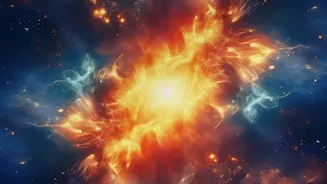
Around 10 billion years ago, long before our Sun or Earth existed, the young Milky Way was struck head-on by another, smaller galaxy. Astronomers have given this unfortunate interloper a memorable name: Gaia-Sausage-Enceladus (GSE). It's called 'Gaia'
after the space telescope that helped uncover it, and 'Sausage' because of the elongated, sausage-like shape of the orbits of its leftover stars, which can still be seen today. This event was not a minor fender-bender; it was the last major merger in our galaxy's history and it fundamentally reshaped our cosmic home, scattering the smaller galaxy's stars and gas throughout the Milky Way.
Reading the Galactic Scars
How can scientists possibly know what happened so long ago? The answer lies in galactic archaeology. By using powerful tools like the European Space Agency's Gaia mission, astronomers can precisely map the positions, movements, and chemical compositions of billions of stars. They noticed something peculiar about the vast, sparse sphere of stars surrounding our galaxy, known as the stellar halo. While stars in the main disk orbit the galactic center at high speed, the stars in the halo are rotating very slowly. This long-standing mystery puzzled scientists for years. Seeking an explanation, researchers at Durham University ran powerful supercomputer simulations to see how galaxies like ours evolve.
The Great Galactic Flip
The simulations revealed a stunning possibility. The models that ended up with a slowly rotating stellar halo—just like the one in our Milky Way—almost always had two things in common: they had experienced a massive, head-on collision, and their entire disk had flipped by more than 90 degrees. Researchers believe the immense gravitational force of the Gaia-Sausage-Enceladus merger exerted a torque on the early Milky Way, causing its entire disk to slowly, gradually reorient itself over hundreds of millions of years. So, 'sideways' doesn't mean our galaxy is precariously balanced; it means its plane of rotation today is dramatically different from the one it formed in, all because of that ancient impact.
A New History for the Milky Way
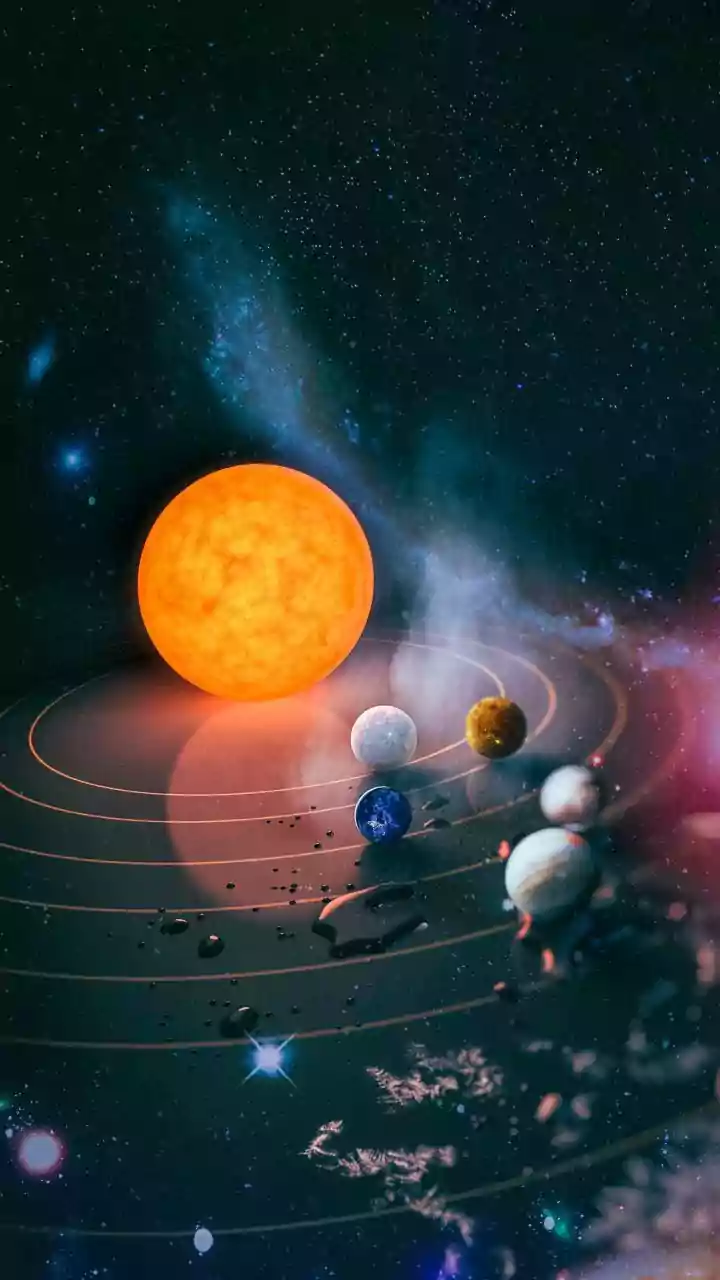
This theory rewrites a crucial chapter of our galaxy's life story. It suggests the Milky Way's evolution was far from a peaceful, steady process of star formation. Instead, it was punctuated by a violent event that set its future course. The collision with GSE didn't just puff up the stellar halo and create its strange, slow rotation; it tilted the entire system. The flat, spiral disk of stars where our own solar system resides likely formed after this titanic flip, settling into the new plane of rotation dictated by the collision. This could mean that even the Sun's path through the galaxy might have been very different if this ancient crash had never happened.
Why This Ancient Event Matters Today
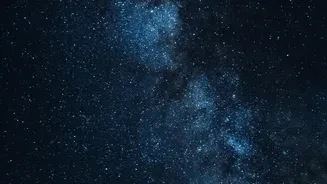
Understanding this 10-billion-year-old event helps us place our own existence in a grander cosmic context. It tells us that the relatively stable and calm Milky Way we inhabit today is the product of an incredibly dynamic and violent past. These mergers, while destructive, are also creative. They deliver new stars and gas, trigger bursts of star formation, and ultimately build the large, complex galaxies we see across the universe. This discovery, pieced together from the faint light of ancient stars and powerful simulations, is a testament to how much of our own origin story is still written in the sky, waiting to be read. It reminds us that even across billions of years, the echoes of a single event can still define the shape of home.