




What is Okra Water?
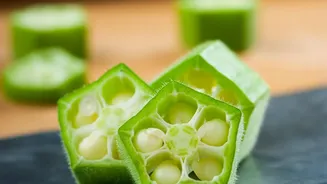
Known as bhindi in many Indian households, okra has long been a staple in our kitchens. But for skincare? The trend involves soaking okra pods in water, which releases a viscous, gel-like substance known as mucilage. This slime, packed with nutrients,
is what has the beauty world buzzing. Social media platforms are flooded with videos of people applying this homemade goo to their faces, claiming it leaves their skin hydrated and glowing. The process is simple: slice okra, soak it in water for several hours or overnight, and then use the resulting slippery liquid as a facial mask or serum.
The Alleged Skin Benefits
The claims surrounding okra water are impressive. Its high water content and mucilage act as a natural humectant, drawing moisture into the skin for deep hydration. This makes it particularly appealing for those with dry or dehydrated skin. Okra is also rich in vitamins A, C, and K. Vitamins A and C are antioxidants that help fight free radicals, which contribute to premature ageing, and also play a role in boosting collagen production. This can improve skin elasticity and firmness, potentially reducing the appearance of fine lines. Some users also report a soothing effect on irritated skin, thanks to okra's anti-inflammatory properties.
From Kitchen Staple to Viral Sensation
The journey of okra from a humble vegetable to a viral skincare ingredient follows a now-familiar pattern. It starts with a traditional or 'kitchen-table' use, often rooted in folk medicine. Then, DIY enthusiasts on platforms like TikTok and Instagram popularise it, sharing their homemade recipes and seemingly miraculous results. This grassroots movement creates a massive wave of consumer interest. Before long, beauty bloggers are testing it, magazines are writing about it, and skincare brands start to take notice. The low cost and accessibility of okra make it a perfect candidate for a viral DIY trend, allowing anyone to try it at home.
The 'Food-to-Face' Playbook
Okra is just the latest star in a long line of food ingredients that have successfully crossed over into the beauty world. This 'food-to-face' trend is driven by a consumer desire for 'clean' and 'natural' products. The logic is simple: if an ingredient is safe and healthy enough to eat, it must be good for your skin. This perception has fueled the rise of countless products featuring kitchen-inspired ingredients. The lifecycle is predictable: a food gains a reputation as a 'superfood' for its internal health benefits, the DIY community adapts it for topical use, and then cosmetic companies formulate it into a stable, marketable product.
Not Just Okra: A Pantry Full of Stars
For Indian consumers, this trend is nothing new. We've been using kitchen ingredients for beauty for generations. Turmeric (haldi) for brightening, chickpea flour (besan) for cleansing, and saffron (kesar) for a radiant glow are all mainstays. Other global examples that have followed this path include rice water, which gained popularity for its hair-strengthening and skin-brightening properties, much like okra water. Ingredients like papaya, yogurt, honey, and green tea have all made the successful leap from the kitchen cupboard to the bathroom shelf, proving the enduring appeal of food-based skincare.
A Word of Caution on DIY
While the allure of a cheap and natural fix is strong, dermatologists advise caution with DIY skincare trends. Raw ingredients from your kitchen are not formulated for the skin. They can cause allergic reactions, irritation, or even chemical burns in some cases, as seen with trends like using raw lemon juice on the skin. Furthermore, homemade concoctions lack preservatives, making them a breeding ground for bacteria and mold, which you certainly don't want to apply to your face. While a commercial product containing okra extract has been tested for safety and stability, the DIY version has not.