






A Ticking Time Bomb in the Himalayas
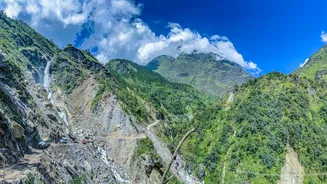
In Nepal's northern border region of Sindhupalchok, a new and dangerous threat has emerged from the mountains. Following relentless monsoon downpours, a significant landslide has dammed the Lende River, a tributary of the larger Bhote Koshi. This has led
to the formation of a large and unstable lake, holding back millions of cubic metres of water. Authorities have issued urgent warnings to communities downstream, including those in the Bhotekoshi Rural Municipality, to remain on high alert for a potential outburst flood. The situation is precarious; if the natural dam made of loose rock and soil fails, it could release a sudden, catastrophic wall of water, mud, and debris, endangering thousands of lives and critical infrastructure along the river corridor.
Born from Catastrophe
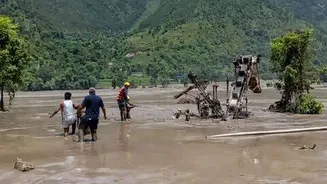
This latest crisis did not occur in isolation. It is a direct consequence of a wider, ongoing disaster that began just days ago. On August 26, an enormous ice and rock avalanche from a glacier high in the Himalayas crashed into the Lende River valley, triggering a flash flood of unprecedented scale and speed. The initial surge was so powerful it registered as a seismic event and sent water levels in the Bhote Koshi and Trishuli rivers downstream soaring by as much as nine metres in just 30 minutes. The deluge swept away villages, roads, bridges, and hydropower projects, causing a tragic loss of life across Nepal and in neighboring Tibet. This new landslide dam on the Lende River has formed in an area already destabilized by this initial disaster, compounding the risk for a region still reeling from the devastation.
A Perilous Pattern of Disasters
For the residents of Sindhupalchok and the wider Bhote Koshi river basin, this is a familiar and terrifying scenario. The region is one of the most disaster-prone in Nepal, scarred by a history of devastating floods and landslides. The memory of the 2021 Melamchi flood, which originated in the same district and caused widespread destruction, is still fresh. These events are part of a disturbing trend. Scientists have repeatedly warned that climate change is making the Himalayas increasingly unstable. Rising global temperatures are accelerating glacier melt, weakening the permafrost that glues mountain slopes together, and making monsoon rains more erratic and intense. This results in a landscape where catastrophic landslides and glacial lake outburst floods (GLOFs) are becoming more frequent and severe.
Racing Against Time
In response to the immediate threat, Nepalese authorities are scrambling to take action. Security forces, including the Nepal Police and Armed Police Force, have been deployed to monitor the landslide dam and the river's water levels. An early warning system is in effect, with SMS alerts being sent to residents in at-risk areas, urging them to be prepared to evacuate to higher ground at a moment's notice. Chinese authorities are also closely monitoring the situation from across the border, where the initial disaster originated, and have shared satellite imagery to aid the response. However, the options for mitigating the danger are limited and fraught with risk. Any attempt to manually drain the lake could potentially destabilize the fragile dam, inadvertently triggering the very flood everyone fears.
A Regional Warning Sign
The crisis on the Lende River is more than a localized emergency for Nepal; it is a stark warning for the entire South Asian region. The Himalayas are the water tower for a vast portion of the continent, and their growing instability has cross-border implications. The Bhote Koshi flows into the Trishuli and eventually the Narayani (known as the Gandak in India), a major river system that flows through Bihar and Uttar Pradesh. Disasters originating in Nepal's high mountains can and do have devastating downstream impacts in India. This event underscores the shared vulnerability to climate-induced hazards and highlights the urgent need for enhanced regional cooperation on disaster preparedness, early warning systems, and long-term climate adaptation strategies to protect the millions of people who call the Himalayan foothills and plains home.