







The Black Box Problem
For years, a major hurdle for AI in critical fields has been the "black box" problem. An AI model might produce a brilliant, breakthrough answer, but it often struggles to show its work. Its reasoning can be a complex web of calculations that is nearly
impossible for a human to follow and verify. In a field as precise as mathematics, where every single step of a proof must be logically sound, simply trusting the final answer is not an option. This has been a significant barrier to deploying AI for high-stakes scientific discovery, as unverified claims can contain subtle but critical errors. Mathematicians have warned that the growing use of AI poses challenges, including the risk of unreliable proofs.
What are Machine-Checkable Certificates?
Enter machine-checkable certificates. Think of them as an AI providing an exhaustively detailed, step-by-step recipe for its conclusion. This isn't a proof written in natural human language, which can be ambiguous. Instead, it's written in a formal, logical language that a computer program, known as a proof assistant, can systematically check. This process is called formal verification. The proof assistant, such as the popular system known as Lean, goes through the AI's argument line by line. If a single logical step doesn't follow from the previous one, the entire proof is rejected. This removes the need for human interpretation and the months-long peer review process that traditionally follows a major mathematical claim.
A Breakthrough by OpenAI's Astra
This theoretical concept was recently put into practice on a grand scale. In early August 2026, OpenAI announced that its new AI model family, named Astra, had solved or made substantial progress on ten mathematical problems that had remained open for decades. These weren't minor exercises; they spanned complex fields from group theory to high-dimensional geometry. Crucially, alongside the 249-page manuscript, OpenAI released machine-checkable certificates for every single result. The certificates were published on the code-hosting site GitHub, allowing anyone to download them and run the verification software themselves, providing a new level of transparency and trust.
Why This Changes Everything
The ability to produce verifiable proofs fundamentally changes the dynamic of AI in science. For the first time, an AI's claim can be independently and immediately validated without having to trust the company that created the model. It addresses the core weakness of many past AI capability announcements, where the company making the claim was also the only party able to evaluate it. This verifiability principle—the idea that AI improves fastest and performs best in areas where its output can be automatically checked—is why AI has excelled in domains like software code and mathematics. By providing these certificates, AI is not just giving an answer; it is providing indisputable evidence of its correctness.
Beyond Pure Mathematics
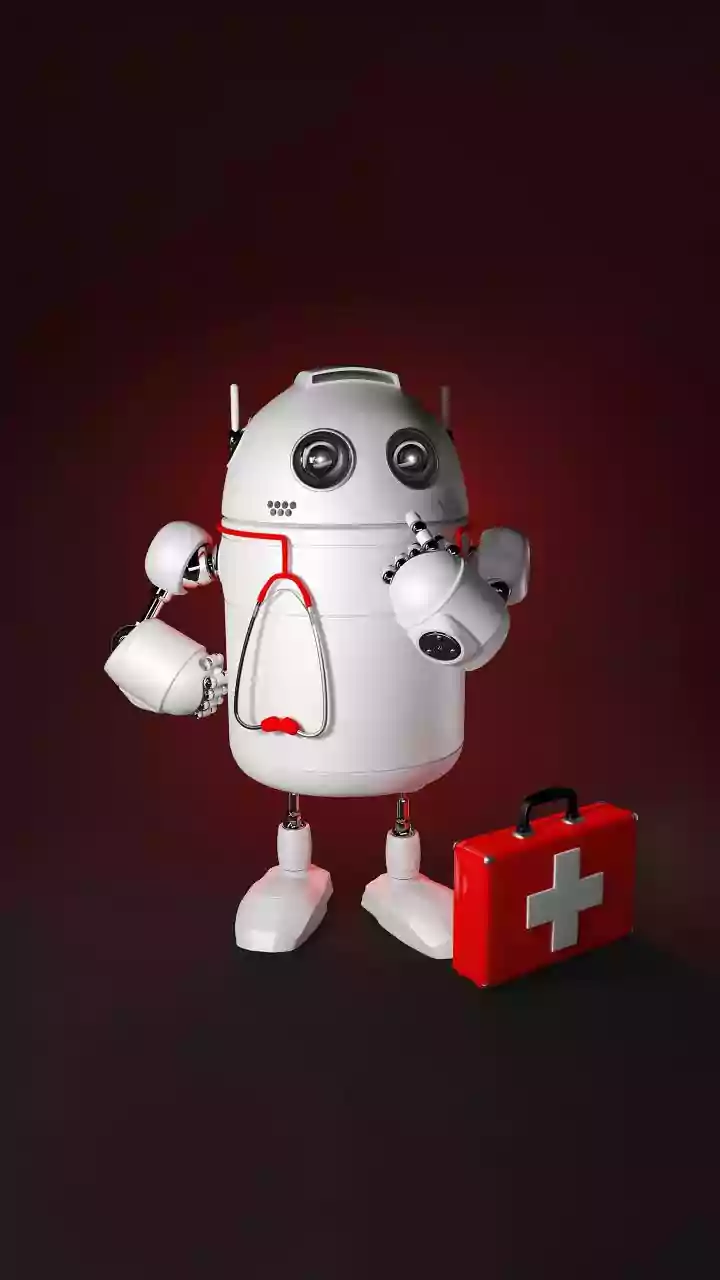
The implications of this technology extend far beyond academic mathematics. The same principles of formal verification are critical for ensuring the safety and reliability of software in high-stakes industries like aerospace, medical diagnostics, and finance. As AI generates more and more code that runs our critical infrastructure, the old model of "ship it and fix it later" is becoming untenable. Machine-checkable proofs offer a path toward building AI systems we can rigorously trust. If an AI can prove a complex mathematical theorem, the same underlying verification methods could one day ensure an AI-designed algorithm for a self-driving car or a financial trading system operates exactly as intended, without dangerous flaws.