








Remind Me, What Is BRICS?
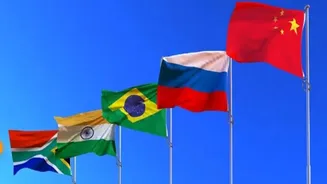
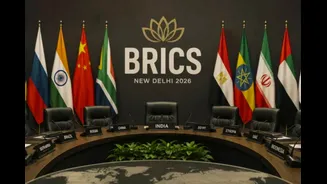
BRICS is a grouping of major emerging economies that began its journey in 2006. Originally composed of Brazil, Russia, India, and China, it expanded to include South Africa in 2011. More recently, the bloc has grown significantly, welcoming Egypt, Ethiopia,
Iran, Saudi Arabia, the UAE, and Indonesia, bringing its total membership to eleven countries. The group was formed to amplify the voice of developing nations on the world stage and to advocate for a more equitable global financial and governance architecture, long dominated by Western powers. It serves as a key platform for South-South cooperation, representing a significant portion of the world's population and economic output.
The Four Pillars of India’s Agenda
For its 2026 chairship, India has adopted the theme: “Building for Resilience, Innovation, Cooperation and Sustainability.” This theme is built upon four distinct pillars that guide its specific policy goals.
First is Resilience, which focuses on strengthening BRICS economies against global shocks like supply chain disruptions, health crises, and climate risks.
Second is Innovation, with a major push for cooperation in technology. This includes promoting digital public infrastructure, inspired by the success of India's own platforms, alongside collaboration in artificial intelligence and fintech.
Third, Cooperation aims to deepen policy coordination and trade facilitation among members, moving the bloc towards more practical, on-the-ground outcomes rather than just political declarations.
Finally, Sustainability addresses the urgent need for collective action on climate change, green finance, and a just energy transition that respects the development priorities of each member nation.
More Than Just a Summit
India's approach is about making the BRICS agenda more tangible and people-centric. The chairship is not just a single summit but a year-long series of engagements, with over 350 meetings planned across various cities in India, covering everything from finance and trade to health and agriculture. This signals a concerted effort to move the bloc beyond high-level rhetoric and towards creating practical frameworks that can deliver real benefits. For example, proposals include creating a BRICS Digital Public Infrastructure Repository to share technological solutions and a logistics framework to strengthen supply chains between member countries. This emphasis on tangible results is designed to make cooperation within the bloc more effective and impactful for its diverse populations.
The Main Takeaway: Strategic Autonomy in Action
Beyond the detailed policy points, the main takeaway from India's 2026 BRICS agenda is its masterful exercise in strategic autonomy. In a world increasingly defined by great power competition, India is using its BRICS presidency to carve out a distinct path. The goal is to champion the cause of the Global South and push for a multipolar world order without being drawn into an explicitly anti-Western camp.
India is carefully balancing its active participation in BRICS—a bloc that includes China and Russia—with its deepening strategic partnerships with the United States, Europe, and other Quad members. By focusing on a development-centric agenda, such as digital innovation and sustainable growth, India aims to steer BRICS towards constructive cooperation rather than confrontation. This approach reinforces India's long-standing foreign policy principle: engaging with all sides to maximize its own room for manoeuvre and advance its national interests. It is a clear signal that for New Delhi, being 'non-West' does not mean being 'anti-West'.