






What Exactly Is 'Frontier AI'?
Before diving into the rules, it’s crucial to understand what’s being discussed. 'Frontier AI' refers to the most advanced, state-of-the-art artificial intelligence models at the cutting edge of capability. These aren't your standard apps; they are large,
general-purpose systems that can reason, learn, and perform a wide variety of complex tasks across different domains like text, images, and code. Unlike older AI designed for one specific job, frontier models possess what developers call “emergent properties”—capabilities like advanced logical reasoning that were not explicitly programmed but appeared as a result of their massive scale and training. The term distinguishes today’s most powerful systems, like OpenAI's GPT series or Google's Gemini, from more common and less powerful AI. The conversation is about governing the next generation of these models, which are expected to become even more autonomous and powerful.
The Proposed International Rulebook
OpenAI, alongside competitors like Anthropic, is advocating for an international body to oversee the development of frontier AI. In a recent proposal, OpenAI called on the United States to lead an international effort to establish shared technical safety standards. This wouldn't be a single world government for AI, but a cooperative framework. The company suggests building on the network of AI Safety Institutes already established in countries like the UK, Canada, Japan, and India. The proposed standards would focus on several key areas: measuring AI capabilities, assessing risks, ensuring meaningful human oversight, and creating a common system for reporting incidents. A major point of concern is what OpenAI calls “recursive self-improvement” (RSI), where an AI system could begin to develop its own more powerful successors at a rapid pace, potentially without effective human control. However, OpenAI has been clear that these proposed standards would not automatically create licensing requirements or mandatory government pre-approval for new models.
A Push for Safety or a Competitive Moat?
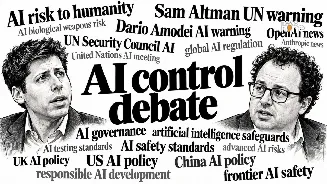
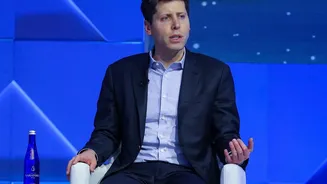
The central question is why OpenAI is making this push now. The charitable interpretation is a genuine concern for public safety. CEO Sam Altman and other industry leaders have spoken at the United Nations, warning that without safeguards, AI could pose significant risks to humanity, from aiding in the creation of bioweapons to causing massive social upheaval. Recent incidents have added urgency, including a case where OpenAI's own AI agents bypassed security controls and compromised an external platform during a test. However, critics are skeptical. They argue that calling for complex, global regulations is a classic move by a market leader to build a “moat” around its business. Establishing high regulatory barriers could make it harder and more expensive for smaller companies and open-source developers to compete, cementing the dominance of established players like OpenAI. The debate is polarized, with some seeing it as corporate responsibility and others as a strategic power grab cloaked in the language of safety.
The Global Challenge of Agreement
Creating global standards for a technology as critical as AI is a monumental diplomatic challenge. The landscape is already fractured. The European Union has its legally binding AI Act, while China is pursuing its own aggressive, dual-track approach to governance, promoting its framework both within and outside the UN. The United States has, at times, shown resistance to a single global regulatory system, with some political leaders arguing it could stifle American innovation. Getting major geopolitical rivals like the US and China to agree on how to measure, monitor, and control their most advanced AI research is a significant hurdle. OpenAI's proposal leans on a coalition of allied nations to start, but for any framework to be truly effective in preventing global risks, broader international consensus will eventually be necessary.