



A New Era for Indian Space
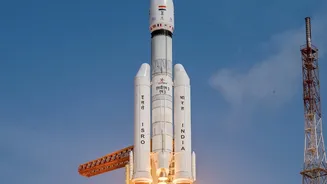
For decades, the Indian Space Research Organisation (ISRO) was the sole custodian of India's space ambitions. Today, the landscape is transforming at an accelerated pace. A pivotal shift in government policy, marked by the opening of the sector in 2020
and the establishment of the Indian National Space Promotion and Authorization Centre (IN-SPACe), has catalyzed a new commercial era. IN-SPACe acts as a single-window agency, enabling private firms to access ISRO's extensive infrastructure, from launchpads to testing facilities. This has spurred a boom in entrepreneurship, with the number of space startups growing from just one in 2014 to over 400 in 2026. This 'Space 2.0' is not just about supporting ISRO; it's about creating an independent, globally competitive commercial ecosystem.
The Technology Driving the Change
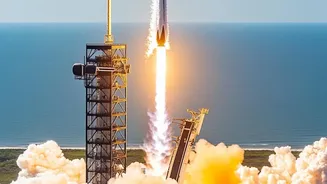
At the heart of this transformation are groundbreaking launch technologies designed for efficiency and cost-effectiveness. Chennai-based Agnikul Cosmos, for instance, has pioneered the world's first single-piece 3D-printed rocket engine, the Agnilet. Traditional engines require assembling thousands of components; Agnikul’s semi-cryogenic engine is printed as a single, ready-to-use piece, dramatically reducing manufacturing time and complexity. The company also developed a mobile launchpad, allowing for launches from various locations to optimize mission costs. Another key player, Hyderabad-based Skyroot Aerospace, has focused on building its Vikram series of rockets, which use carbon-composite airframes and 3D-printed engines. Their Vikram-1 rocket successfully reached orbit in July 2026, making India only the third country after the US and China with a private orbital launch capability.
Meeting the Demand for Small Satellites
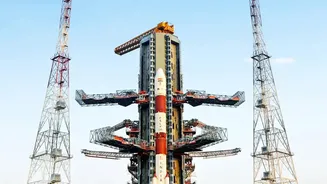
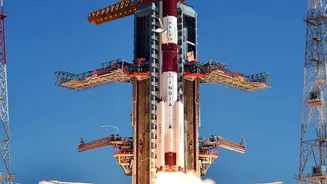
The primary driver behind this innovation is the explosive growth in the global small satellite market. These smaller, often shoebox-sized satellites are used for everything from Earth observation and communications to weather forecasting and logistics. Historically, small satellite operators had to 'rideshare', hitching a ride on larger rockets like ISRO's Polar Satellite Launch Vehicle (PSLV), which often meant long waits and a lack of control over launch schedules. Private companies like Skyroot and Agnikul are developing launch vehicles specifically designed for this market, offering dedicated, on-demand launches that are faster and more flexible. This focus is positioning India to capture a larger share of the global space economy, which for India is projected to grow from around $8-9 billion today to over $40 billion by the 2030s.
The Trailblazers of India's NewSpace
Beyond the launch vehicle developers, a diverse ecosystem of startups is emerging. Skyroot Aerospace, founded by former ISRO scientists, made history with its suborbital Vikram-S launch in 2022 and its successful orbital mission in 2026. Agnikul Cosmos, incubated at IIT Madras, has garnered global attention for its unique 3D-printing technology and successfully tested its suborbital demonstrator 'SOrTeD' in May 2024. Other companies are carving out different niches. Pixxel is building a constellation of hyperspectral Earth-observation satellites, while Digantara is focused on space situational awareness to track satellites and debris. This diversity shows the sector is maturing beyond just launch services into data, analytics, and in-space infrastructure.
Challenges on the Path to Orbit
Despite the rapid progress, the path for these private players is not without obstacles. Access to capital remains a significant challenge; while investment is growing, it pales in comparison to the multi-billion dollar funding seen in the US space sector. The regulatory landscape, though improving, is still evolving, with a comprehensive Space Activities Act yet to be enacted. Furthermore, the space industry is inherently high-risk, with complex technology and no room for error. Building robust, reliable systems requires immense technical expertise and rigorous testing. As these companies scale up, they will face intense global competition and the continuous need to innovate to stay competitive in the fast-paced commercial space race.