





Meet PM2.5: The Invisible Threat
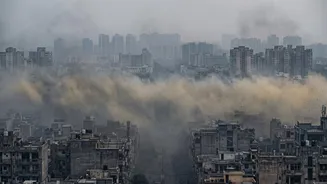
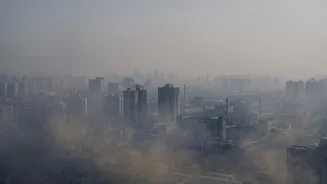
The key villain in Delhi's smog is something called PM2.5. These are tiny, invisible particles with a diameter of 2.5 micrometres or less, which is about 30 times smaller than a single strand of human hair. Their sources are numerous and familiar: vehicle
exhaust, industrial emissions, power plants, construction dust, and seasonal crop burning in neighbouring states. Because they are so microscopic, PM2.5 particles don't just get stuck in the upper airways. They can travel deep into the lungs, bypass the body's natural defences, and even enter the bloodstream, posing a significant health risk. During Delhi's peak pollution months, from October to February, PM2.5 levels can skyrocket, often reaching many times higher than the safety limits set by the World Health Organization (WHO).
A New Understanding of Cancer
For decades, the prevailing theory of how carcinogens cause cancer was relatively straightforward: substances like those in tobacco smoke directly damage a cell's DNA, causing mutations that, over time, lead to uncontrolled cancerous growth. While this is true, it doesn't fully explain the rising number of lung cancer cases among people who have never smoked. Groundbreaking research, particularly from scientists at the Francis Crick Institute and University College London, has uncovered a different mechanism—one where air pollution acts not as a direct mutagen, but as a tumour promoter.
Waking Up 'Sleeper' Cancer Cells
It turns out that as we age, our cells naturally accumulate genetic mutations. Some of these, like EGFR mutations, are linked to cancer but can lie dormant in healthy lung tissue for years without causing any harm. They are like 'sleeper' cells. The new research reveals that when we inhale PM2.5 particles, it triggers a chronic inflammatory response in the lungs. This inflammation acts like an alarm clock for these dormant, mutated cells. The body sends immune cells called macrophages to the site, which then release a signalling molecule called interleukin-1β (IL-1β). It is this inflammatory signal that 'wakes up' the cells with pre-existing mutations, encouraging them to grow and multiply, eventually forming a tumour.
Inflammation Is the Trigger
This mechanism fundamentally changes our understanding of pollution-linked cancer. The fine particles don't necessarily need to cause a new DNA mutation. Instead, they create the perfect inflammatory environment for already-mutated cells to become cancerous. In lab studies with mice, scientists demonstrated this link clearly. Mice with EGFR mutations who were exposed to PM2.5 developed more cancers, more quickly. Crucially, when they blocked the inflammatory molecule IL-1β with an antibody, tumour growth was completely stopped, even when the mice were still exposed to pollution. This pinpoints inflammation as the critical trigger in the process.
The Scale of the Risk in Delhi
This scientific insight is especially alarming for residents of Delhi and other highly polluted cities. The WHO's stringent 2021 guideline for annual average PM2.5 exposure is 5 micrograms per cubic metre (µg/m³). In Delhi, the annual average is often around 100 µg/m³, and during winter, daily concentrations can spike to over 250 µg/m³ or even higher. Studies have shown that long-term exposure to these levels is projected to significantly increase the mortality risk from lung cancer. It’s not just an irritant causing coughs and colds; the air is actively promoting a cellular pathway that leads to a deadly disease. The connection is no longer just a correlation but a clear, evidence-backed mechanism.