






India's Rise as a Global Refining Hub
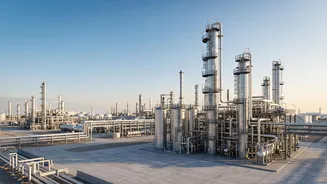
Since 2022, India has significantly increased its purchases of discounted Russian crude oil, cementing its position as a critical global refining hub. Indian refineries, particularly sophisticated private facilities in Gujarat, have been processing this
crude into higher-value products like gasoline (petrol) and diesel. This strategy has allowed India to satisfy its domestic energy needs while also exporting refined fuels to the global market, effectively connecting Russian supply with international demand. In June and July 2026, India's imports of Russian crude reached record levels of over 2.6 million barrels per day, accounting for more than half of the country's total crude imports. This influx of Russian oil has been a key factor in India's expanding role in the world's energy trade.
The Curious Case of Petrol to Russia
The irony is hard to miss: Russia, a dominant crude oil exporter, has been forced to import petrol. This unprecedented situation stems from sustained Ukrainian drone attacks on Russian refineries, which have severely disrupted domestic production. Reports indicate that these attacks, numbering over 30 in July and August 2026 alone, have at times reduced Russian gasoline production by as much as 70%. To combat the resulting shortages and rising prices at home, Moscow has turned to imports, with India emerging as a key supplier. Over the past two months, Indian refiners have supplied nearly 1 million barrels of gasoline to Russia, a trade flow that analytics firm Kpler confirms is a new development.
Egypt's Role as a Transit Point
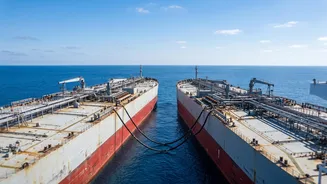
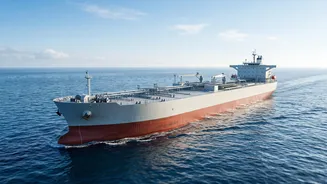
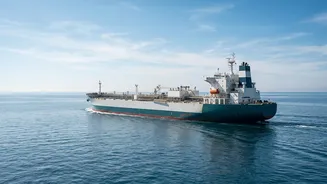
The journey of Indian petrol to Russia is not a direct one. Instead, it involves a crucial stopover in the waters off Egypt. Data from market intelligence firms shows that tankers carrying Indian-origin gasoline sail to the Mediterranean, often near Egyptian ports like Ain Sokhna or Port Said. Here, they engage in ship-to-ship (STS) transfers, moving the cargo to other vessels. These operations are often conducted covertly, with ships turning off their Automatic Identification System (AIS) transponders to avoid tracking. The new vessel, sometimes part of a 'shadow fleet', then carries the cargo to its final destination in Russia. This use of intermediaries and complex logistics helps obscure the full journey of the fuel from its origin to its end user.
A Web of Commercial Interests
This trade is facilitated not by governments, but by a network of international commodity traders. Indian refiners, like Nayara Energy—in which Russian state oil giant Rosneft holds a significant stake—sell the petrol on the open market. Traders then purchase these cargoes and, based on global demand and pricing, route them to buyers. While the Indian government states its companies are not directly selling to Russia, it acknowledges that fuel may reach there via these independent commercial channels. For Russia, this route is an expensive but necessary stopgap to prevent even greater economic losses from domestic fuel shortages. The Russian government is reportedly subsidizing these imports to cover the high costs associated with the long voyage and multiple trading intermediaries.
A New Global Energy Map
This circular trade flow—where petrol refined from Russian crude is sold back to Russia via India and Egypt—is a stark illustration of how global energy markets have been reshaped. It highlights both the pragmatism of India's energy strategy and the creative, complex ways traders are navigating a landscape fractured by sanctions and conflict. The reliance on ship-to-ship transfers and sanctioned vessels shows the lengths to which buyers and sellers will go to meet supply and demand. While not a direct violation of sanctions for India, the route demonstrates the interconnectedness of the global refining system and how disruptions in one region can create surprising and intricate new supply chains thousands of miles away.